
 E-Paper



Photos: China’s firms go high tech to crack the billion-a-day egg market
Automation is on the way in and small farms on the way out in a country that consumes more than about a billion eggs a day. As China overhauls production standards, farmers raising hens for eggs are also shifting to modern standardised processes, expected to raise quality and safety. That’s an important step in a country where melamine-tainted eggs and eggs with high antibiotic residues have featured in a series of food safety scandals in recent years. It is also spurring demand for higher priced branded eggs over those sold loose in fresh produce markets.
Updated on: Jul 12, 2018 12:02 PM IST

Share via


Copy link

1/10
 View Photos in a new improved layout
Updated on Jul 12, 2018 12:02 PM
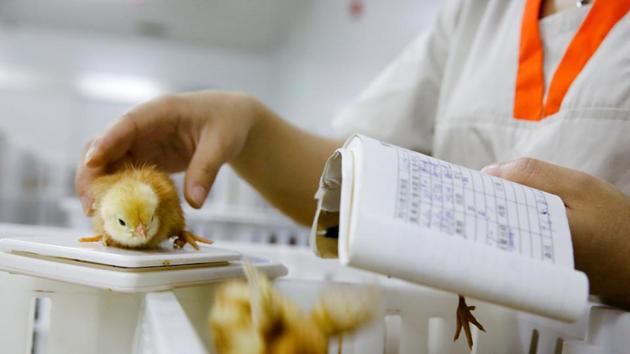
A worker weighs a recently hatched layer chick at the Huayu hatchery in Handan, Hebei province, China. As the country overhauls production of everything from pork to milk and vegetables, farmers raising hens for eggs are also shifting from backyards to factory farms, where modern standardised processes are expected to raise quality and safety. (Thomas Peter / REUTERS)
2/10
 View Photos in a new improved layout
Updated on Jul 12, 2018 12:02 PM
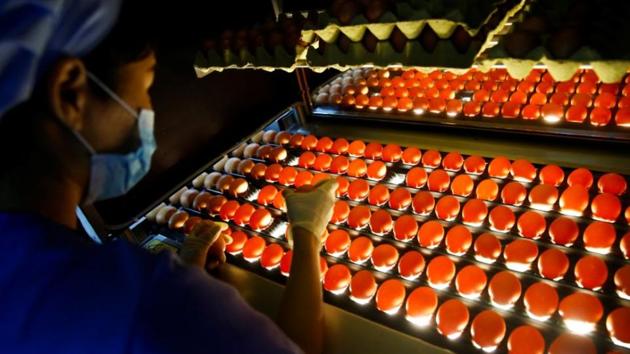
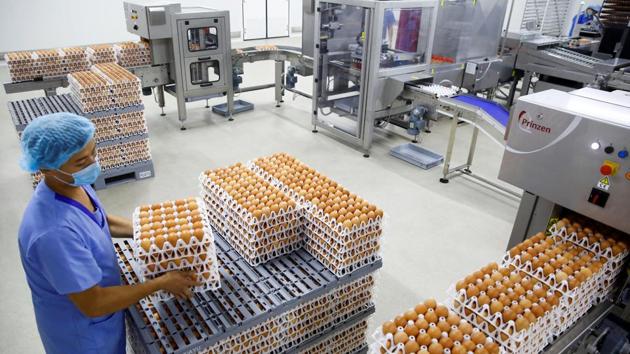
A woman inspects eggs for cracks at the Huayu hatchery. Behind a row of sealed red incubator doors in a new facility in northern China, about 400,000 chicks are hatched every day, part of the rapidly modernising supply chain in China’s $37 billion egg industry – the world’s biggest. (Thomas Peter / REUTERS)
3/10
 View Photos in a new improved layout
Updated on Jul 12, 2018 12:02 PM
A worker checks hatched layer chicks at the hatchery. “These days if you’re a small farmer, your eggs won’t get into the supermarkets,” said Yuan Song, analyst with China-America Commodity Data Analytics. Tough new regulations on treating manure and reducing the environmental impact from farms have also pushed many small farmers out. (Thomas Peter / REUTERS)
4/10
 View Photos in a new improved layout
Updated on Jul 12, 2018 12:02 PM
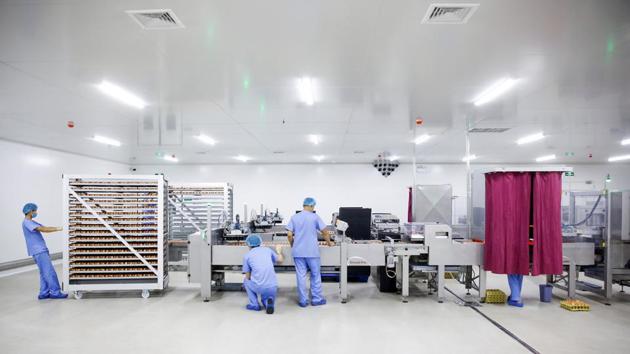
Employees work on machines that prepare chicken eggs for hatching. An automatic grading machine, which can handle 60,000 eggs an hour, sorts eggs into two acceptable sizes before they enter incubators - uniform eggs produce similar sized chicks that will have the same feeding ability. (Thomas Peter / REUTERS)
5/10
 View Photos in a new improved layout
Updated on Jul 12, 2018 12:02 PM
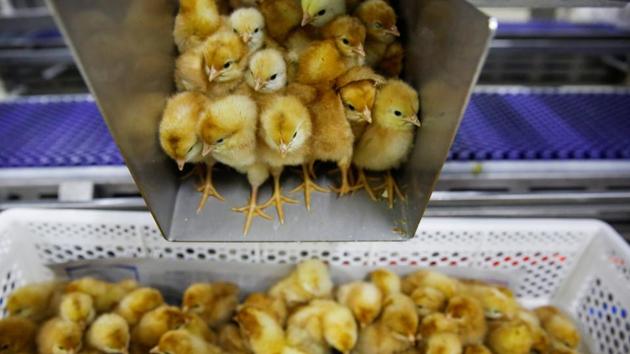
Workers separate females from male day-old chicks at the Huayu hatchery. This highly automated plant, owned by a joint venture between China’s Huayu Agricultural Science and Technology Co Ltd and EW Group’s genetics business Hy-Line International, is the world’s biggest hatchery of layer chicks, or birds raised to produce eggs rather than meat. (Thomas Peter / REUTERS)
6/10
 View Photos in a new improved layout
Updated on Jul 12, 2018 12:02 PM
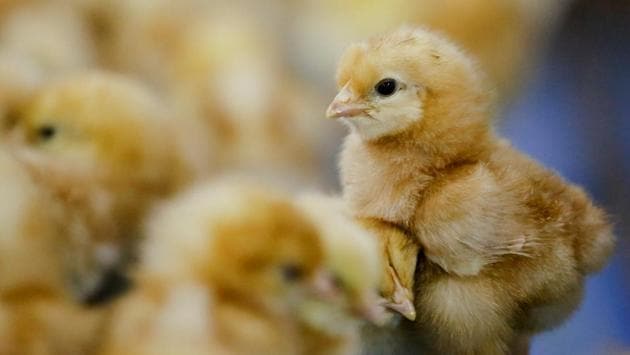
By producing 200,000 females a day, or around 60 million layers a year (one day a week is for cleaning), China can meet demand from larger farms who want to buy day-old-chicks in one batch, said Jonathan Cade, president of Hy-Line International. “That’s the best way to start off with good biosecurity,” he said. (Thomas Peter / REUTERS)
7/10
 View Photos in a new improved layout
Updated on Jul 12, 2018 12:02 PM
Breeders like Huayu are trying to grow by taking market share from others. In addition to the new Handan hatchery, it is building another in Chongqing, which will bring annual production to 180 million chicks. “Only 20 staff will be needed in the new plant, compared with around 100 in Huayu’s older hatchery,” said Huayu chairman Wang Lianzeng. (Thomas Peter / REUTERS)
8/10
 View Photos in a new improved layout
Updated on Jul 12, 2018 12:02 PM
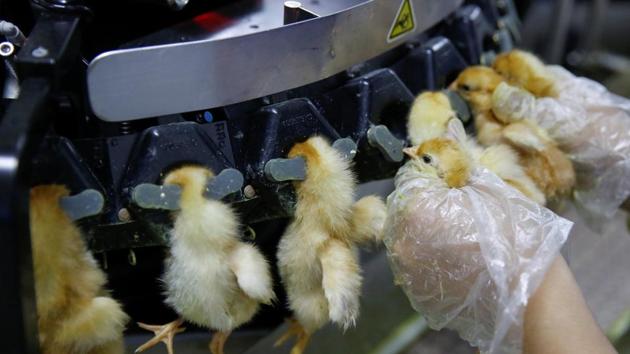
Once hatched, female chicks go to automated beak-clipping machines that process around 3,500 chicks an hour. (Thomas Peter/ REUTERS)
9/10
 View Photos in a new improved layout
Updated on Jul 12, 2018 12:02 PM
Prices and demand for eggs and poultry plunged last year, after hundreds of people died from contracting bird flu, the important key to industrial scale facilities will be managing the risks of disease. Following the strict procedures on hygiene, advanced ventilation and environmental controls are being used to keep new chicks healthy in the hatchery. (Thomas Peter / REUTERS)
10/10
 View Photos in a new improved layout
Updated on Jul 12, 2018 12:02 PM


