
 E-Paper



Photos: China’s street dancers undeterred by hip-hop crackdown
It is not uncommon for children as young as three to take English lessons, piano classes and other after-school activities in China, where the pressure to compete can be all-consuming. Hip-hop inspired street dance is the newest in this list of activities drawing children and adults alike, despite the state’s scepticism over its influence and the cultural baggage it imports from the west. Dancers say everyday folks are very accepting, even if China's media regulators are not, so for now, street dance thrives –if only within the confines of studios.
Updated on: Nov 20, 2018 11:48 AM IST

Share via


Copy link

1/11

 View Photos in a new improved layout
Updated on Nov 20, 2018 11:48 AM
Students practice street dance at T.I Studio in Beijing. In China, where children are often saddled with a packed schedule of extracurricular activities before they even enter grade school, some parents are making room for a surprising pursuit: hip-hop dance classes. (Wang Zhao / AFP)
2/11
 View Photos in a new improved layout
Updated on Nov 20, 2018 11:48 AM
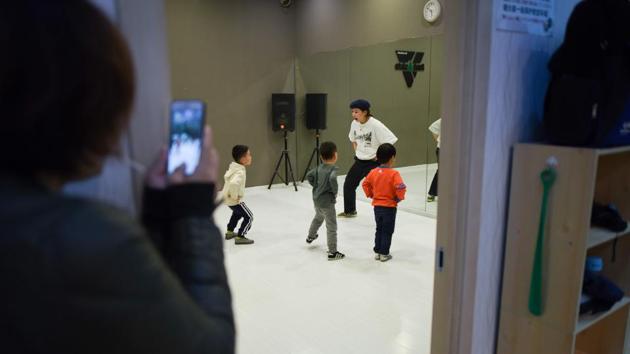
Inside a dance studio in central Beijing, a group of kids bopped up and down to an American hip-hop beat as they mimicked their teacher, a young woman in a dark blue beret and loose clothing. Some practised in earnest -- bending their arms just so -- while others giggled, treating the class more like play. (Wang Zhao / AFP)
3/11
 View Photos in a new improved layout
Updated on Nov 20, 2018 11:48 AM
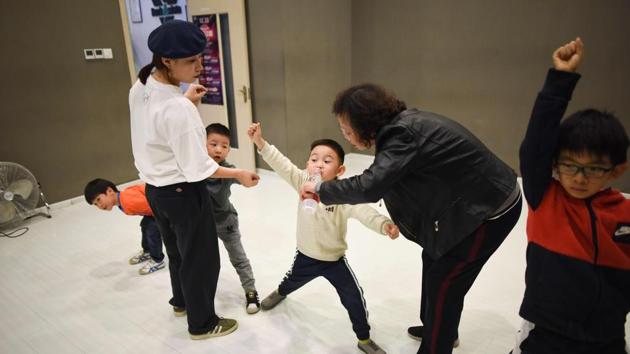
“I want my son to be more extroverted. Kids these days lack spunk,” explained Liu Li, the mother of a shy four-year-old. It is not uncommon for children as young as three to take English lessons, piano classes and other more traditional after-school activities in China, where the pressure to compete with other students can be all-consuming. (Wang Zhao / AFP)
4/11
 View Photos in a new improved layout
Updated on Nov 20, 2018 11:48 AM
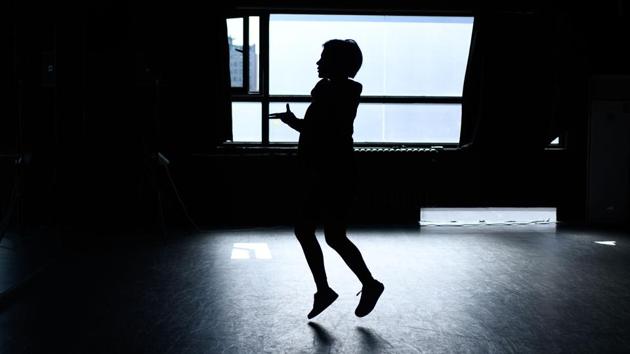
Though China’s nascent street dance scene took root as early as the 2000s -- thanks in part to Korean boy band H.O.T. -- it wasn’t until recently that the style exploded into mainstream culture. Underground street dancers were thrust into the limelight after TV competitions featuring celebrity judges, such as “Street Dance of China”, blew up. (Wang Zhao / AFP)
5/11
 View Photos in a new improved layout
Updated on Nov 20, 2018 11:48 AM
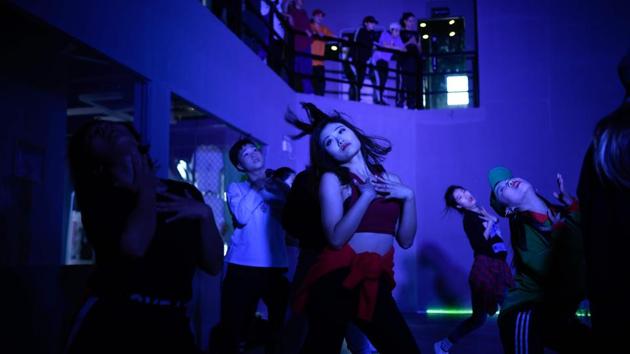
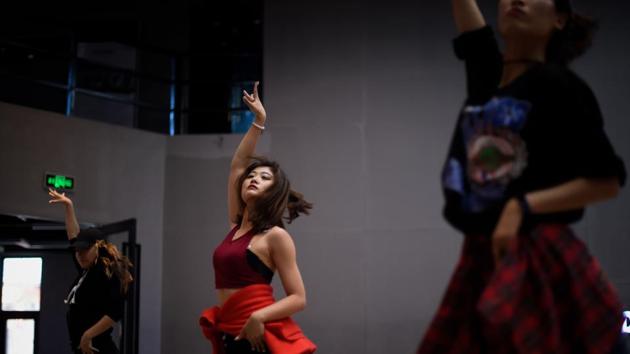
Young parents view the dance style as a cure for introversion while others see it as a form of exercise that embraces self-expression at the expense of tradition. “All parents want their daughters to be well behaved and find a stable job, then find a good husband, get married, and have kids,” said Ya Xin, a 25-year-old dancer. (Wang Zhao / AFP)
6/11
 View Photos in a new improved layout
Updated on Nov 20, 2018 11:48 AM
Ya moved to Beijing in May to pursue dance full-time, renouncing her 9-to-5 gig at a government bureau in Hebei province. Her parents were not pleased. “They didn’t agree, but I am willing to push back,” she said. “They are not paying for my living expenses, so doing what I want isn’t their burden.” (Wang Zhao / AFP)
7/11
 View Photos in a new improved layout
Updated on Nov 20, 2018 11:48 AM
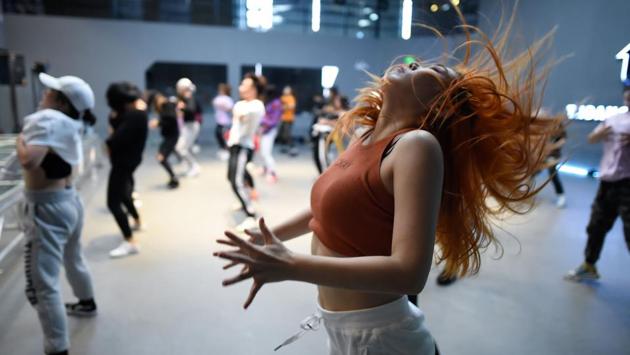
The buzz has not, however, resulted in a movement towards actual dancing in the street, with most practising within studios. There are over 5,000 street dance studios in China, according to reports citing figures from the national dance association which has even developed a certification test for street dance -- though many dancers feel that’s antithetical to street culture. (Wang Zhao / AFP)
8/11
 View Photos in a new improved layout
Updated on Nov 20, 2018 11:48 AM
While street culture elsewhere -- which includes rap and graffiti art -- is often used to expose social ills or dissatisfaction with the status quo, in China, where tattoos and even makeup can be considered politically sensitive, there seems little chance of that happening. Earlier this year, high-profile rap musicians from “Rap of China” faced censure over explicit song lyrics and tattoos. (Wang Zhao / AFP)
9/11
 View Photos in a new improved layout
Updated on Nov 20, 2018 11:48 AM
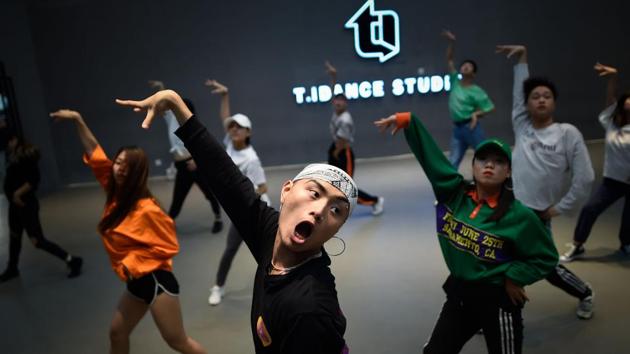
In mid-January a leaked government directive banned airtime for “artists with tattoos, hip-hop music” and content that “conflicts” with party morals. Zhang Jianpeng, a well-known street dancer in China, said he was forced to remove his makeup before going onstage during a televised dance competition. (Wang Zhao / AFP)
10/11
 View Photos in a new improved layout
Updated on Nov 20, 2018 11:48 AM
Chong Yang (C), a coach at T.I Dance Studio, celebrates his birthday at the studio. “On TV shows, you can’t show tattoos” and “men cannot dress like women,” said Zhang whose T.I. Studio prides itself on being a LGBT-friendly space. Everyday folks are “very accepting”, even if media regulators are not, he said, adding that he thought it best to avoid high-profile competitions, since “you can’t be yourself anyway.” (Wang Zhao / AFP)
11/11
 View Photos in a new improved layout
Updated on Nov 20, 2018 11:48 AM


