
 E-Paper



Photos: Delays, lack of awareness raised toll from floods in Japan’s Mabi
July saw Japan’s worst weather disaster in 36 years, torrential rains which killed more than 200 people and left dozens missing. Mabi town, in the Okayama prefecture was among areas hardest hit. The region’s calls to improve flood control date back decades but nothing concrete has been done yet. Procedural delays by the land ministry in prioritising the town’s development plans, a sharp decline in public works spending over the last 20 years, and a lack of accurate evacuation plans or their understanding among residents have all emerged as contributors to the scale damage.
Updated on: Jul 17, 2018 1:12 PM IST

Share via


Copy link

1/9
 View Photos in a new improved layout
Updated on Jul 17, 2018 1:12 PM
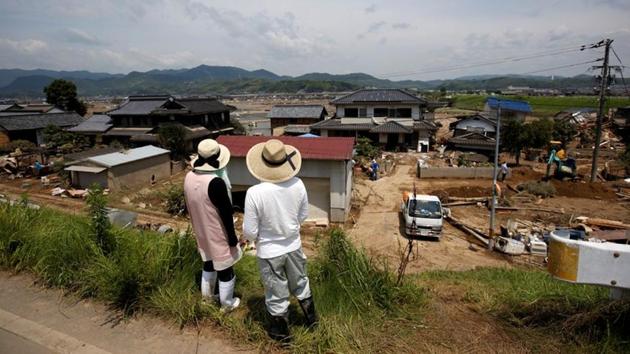
Torrential rains across western Japan triggered floods and landslides that killed more than 200 people this month and left over a dozen missing in Japan’s worst weather disaster in 36 years. Mabi town was one of the hardest hit areas, accounting for most of the 51 killed in Kurashiki. More than a quarter of it was inundated, with floodwaters reaching as high as 4.8 metres in some neighbourhoods. (Issei Kato / REUTERS)
2/9
 View Photos in a new improved layout
Updated on Jul 17, 2018 1:12 PM
Family members of local resident Isao Akutagawa try to remove mud and debris from their house in Mabi town, Okayama Prefecture. “They told us years ago that the Odagawa river levees might break,” said Akutagawa, 79, as he mopped muddy water out of his living room. His home was submerged in a sudden flood when heavy rain caused multiple levees to break. (Issei Kato / REUTERS)
3/9
 View Photos in a new improved layout
Updated on Jul 17, 2018 1:12 PM
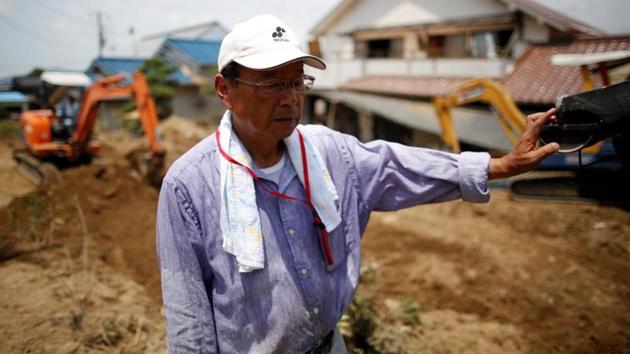
63-year-old Atsushi Yamashita, who lives next to the Odagawa and Takama Rivers, takes a break from removing mud and debris from his destroyed house. Local politicians had been working for years to change the flow of the Odagawa. The flood control project finally won approval in 2010 and construction was set to start this autumn. (Issei Kato / REUTERS)
4/9
 View Photos in a new improved layout
Updated on Jul 17, 2018 1:12 PM
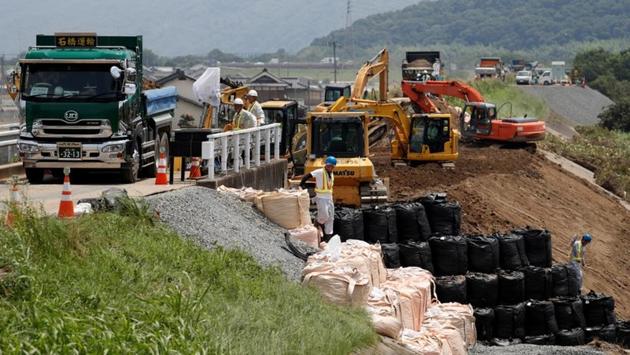
Workers conduct repairs on a destroyed embankment along Odagawa River in Mabi town. Kurashiki City officials said they had asked Japan’s land ministry to start work on the project every year since at least 2005. But it was not deemed high enough priority. However, officials in the city’s emergency management office denied the blame laid on the central government for the delay. (Issei Kato / REUTERS)
5/9
 View Photos in a new improved layout
Updated on Jul 17, 2018 1:12 PM
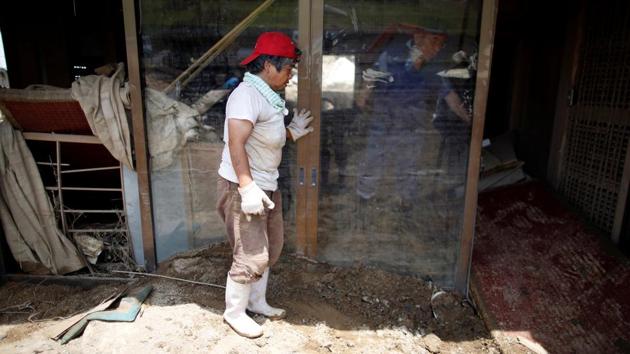
In the last 20 years, public works spending has declined sharply, falling about 60% nationwide from a peak of 14.9 trillion yen in the fiscal year ending in March 1999, government data show. In 2014, 28 billion yen was allocated for a 30-year plan that included a bypass between the Odagawa and Takahashi rivers. Work on that 10-year project was scheduled to get underway later this year. (Issei Kato / REUTERS)
6/9
 View Photos in a new improved layout
Updated on Jul 17, 2018 1:12 PM
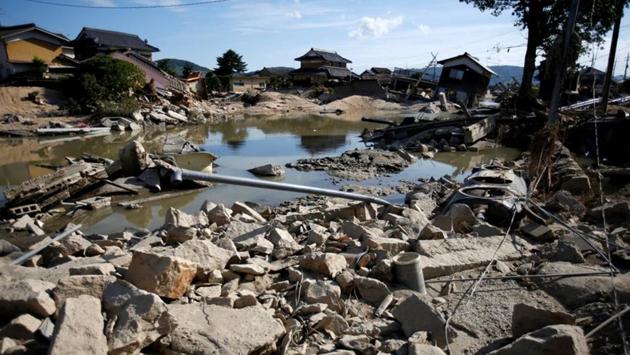
Submerged and destroyed houses seen near the site where embankments broke along Suemasa River in Mabi town. Resident Akutagawa said if the work had only begun a couple of years, disaster might have been averted. But Hiroshi Kono, an emergency management officer at Kurashiki City said approval rests only on the land ministry’s decision after reviewing requests from across Japan. (Issei Kato / REUTERS)
7/9
 View Photos in a new improved layout
Updated on Jul 17, 2018 1:12 PM
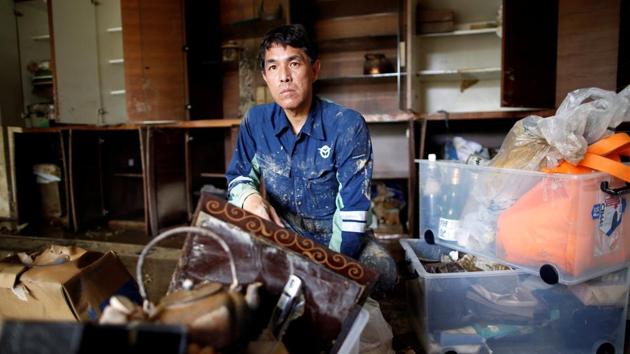
Kairyu Takahashi removes debris from his house. Competition for a dwindling budget was partly behind the delay, as was an environmental impact study, said Takahashi, head of the prefectural legislature, and a member of a committee that discusses regional public works projects. “I feel powerless that I wasn’t able to make the government take action,” he said. (Issei Kato / REUTERS)
8/9
 View Photos in a new improved layout
Updated on Jul 17, 2018 1:12 PM
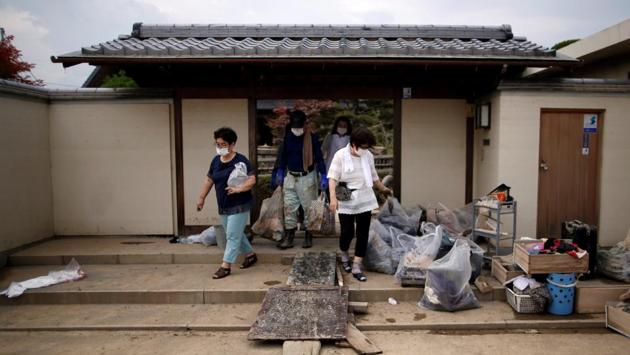
Two years ago, Kurashiki City drafted its own colourful hazard maps, marking all the risky areas. But there were two problems: the city assumed a pattern of prolonged rain over a wide area rather than an intense concentrated downpour as actually occurred, according to online planning documents, and residents say they paid little attention to the maps. (Issei Kato / REUTERS)
9/9
 View Photos in a new improved layout
Updated on Jul 17, 2018 1:12 PM


