
 E-Paper



Photos| Gabriel’s journey: A transgender Spaniard makes the change
In terms of lesbian, gay, bisexual and trans (LGBT) rights, Spain ranks relatively high in surveys. But gender change on official documents, requires being diagnosed as mentally ill after an assessment. This is the case in the majority of European countries. Gabriel Diaz de Tudanca is a 20-year-old Spaniard who, although born a girl, identified as male from early childhood. Supported by his family and friends, he has undergone surgery and hormone treatments and renewed his identity documents to reflect what he feels is his true gender. Reuters photographer Susana Vera accompanied him for three years through his process of change.
Updated on: Jan 23, 2019 12:19 PM IST

Share via


Copy link

1/12
 View Photos in a new improved layout
Published on Jan 23, 2019 12:19 PM
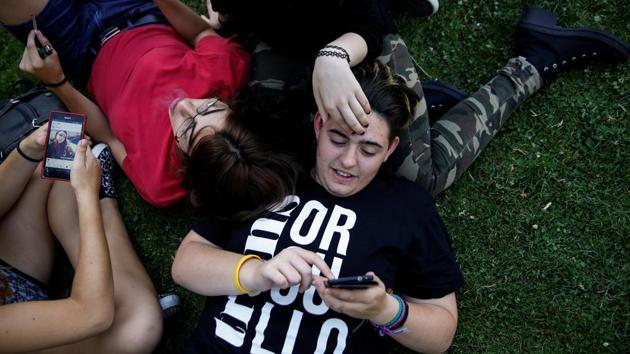
Gabriel Diaz de Tudanca, 17, hangs out with some trans friends at a park in Madrid, Spain on August 3, 2016. “My friends, both cisgender (people whose gender identity matches the sex they were assigned at birth) and trans are really important to me. They helped me overcome my fears of coming out to my parents,” Diaz de Tudanca said. (Susana Vera / REUTERS)
2/12
 View Photos in a new improved layout
Published on Jan 23, 2019 12:19 PM
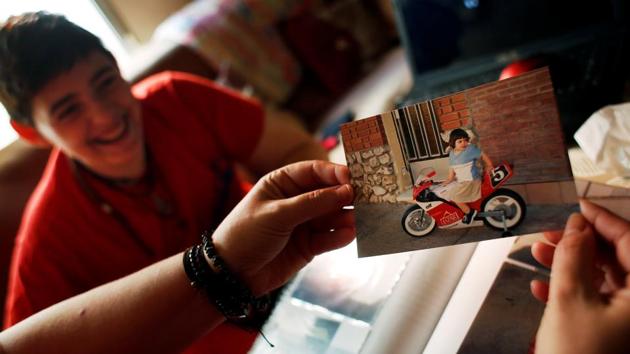
“My mother caught me binding my chest one morning and I told her I did not feel comfortable with the gender I was assigned at birth. She did not understand what I said, but she later told me that if I decided to wear a flower vase on my head, she would not understand it either, but she would accept it and join me doing the same,” Diaz de Tudanca said. (Susana Vera / REUTERS)
3/12
 View Photos in a new improved layout
Published on Jan 23, 2019 12:19 PM
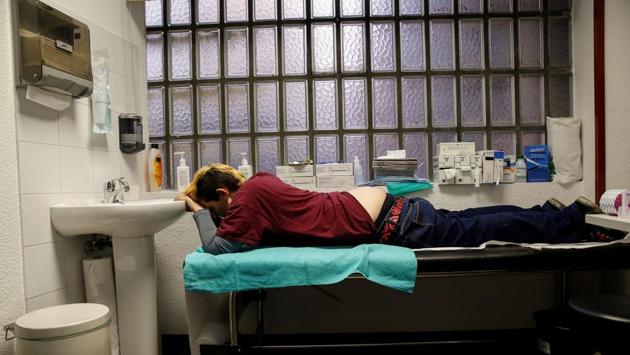
Gabriel aged 16, lays down for his first testosterone shot in Madrid on December 16, 2015. “I was very excited to get started on the testosterone. I was eager for all the changes that were going to come with it…But I didn’t want to make much of a mental picture of the way I could look so as not to feel disappointed afterwards,” Diaz de Tudanca said. (Susana Vera / REUTERS)
4/12
 View Photos in a new improved layout
Published on Jan 23, 2019 12:19 PM
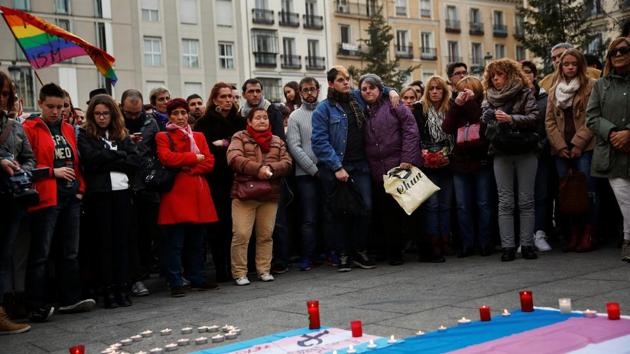
Gabriel hugs his mother Mariely as they both attend a tribute for a transgender boy who committed suicide, in Madrid on December 27, 2015. "I feel lucky I've had the support of my parents and my friends to endure all the pressure. We bottle up so many emotions for so long that sometimes we just give up," Diaz de Tudanca said. (Susana Vera / REUTERS)
5/12
 View Photos in a new improved layout
Published on Jan 23, 2019 12:19 PM
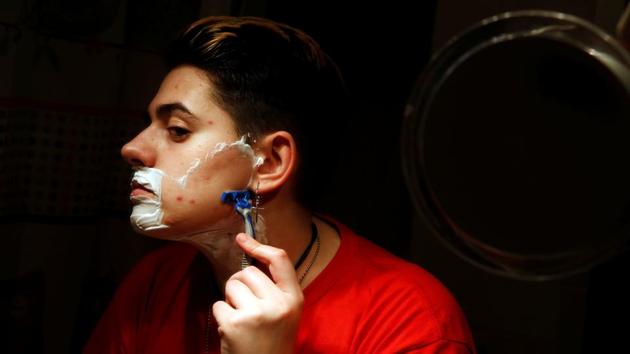
Gabriel Diaz de Tudanca shaves his face two months after he started taking testosterone on February 15, 2016. "I took hormone blockers for three months and was soon started on testosterone. My period stopped right away and that made me very happy, I really disliked it," Diaz de Tudanca said. (Susana Vera / REUTERS)
6/12
 View Photos in a new improved layout
Published on Jan 23, 2019 12:19 PM
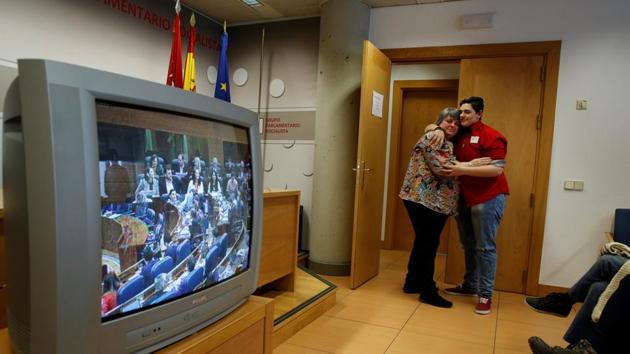
Gabriel hugs his mother Mariely as the Madrid regional Parliament approves a law to make the transition easier for trans minors on March 17, 2016. "My mother has had a hard time with my transition, but she's behind me a hundred percent. Things would have been so much harder if I didn't have my parents' support," Diaz de Tudanca said. (Susana Vera / REUTERS)
7/12
 View Photos in a new improved layout
Published on Jan 23, 2019 12:19 PM
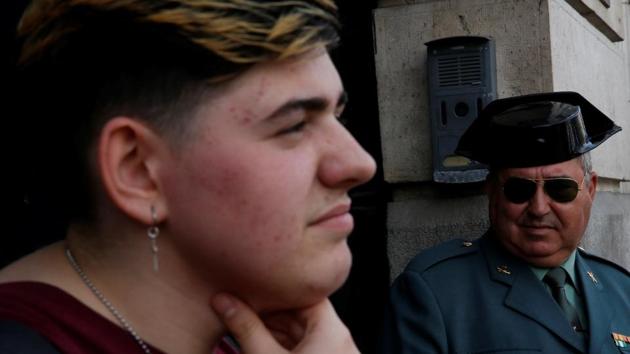
A Spanish Civil Guard looks at Gabriel Diaz de Tudanca after attending the official presentation of the public campaign to fight hate crimes in which he was featured, in Madrid on May 17, 2016. In terms of LGBT rights, Spain ranks relatively high in surveys. But authorities require a mental health diagnosis before allowing gender change on documents, as being transgender is classed a mental illness. (Susana Vera / REUTERS)
8/12
 View Photos in a new improved layout
Published on Jan 23, 2019 12:19 PM
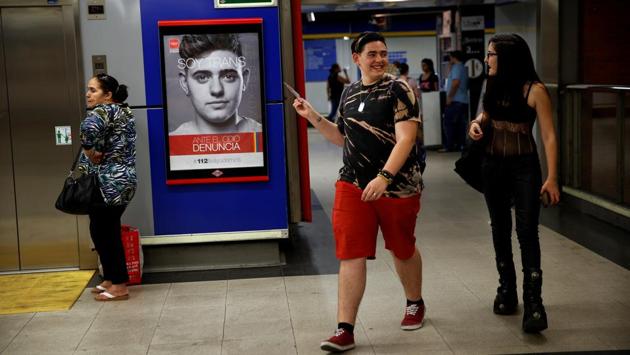
Gabriel shows a friend a picture of himself as part of a public campaign to fight hate crimes at a metro station on July 1, 2016. "After I did the LGBT phobia campaign some guys started writing hate comments on my Instagram account. Things like, after we finish with you, you won't need a sex change. I reported it and we are waiting for trial," Diaz de Tudanca said. (Susana Vera / REUTERS)
9/12
 View Photos in a new improved layout
Published on Jan 23, 2019 12:19 PM
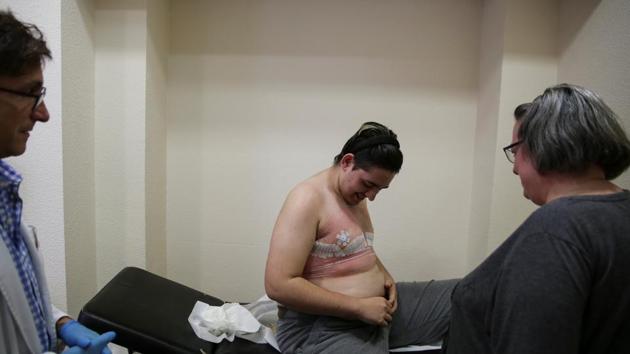
Gabriel Diaz de Tudanca, 18, reacts next to his mother Mariely and surgeon Jesus Lago upon seeing his chest for the first time after undergoing female to male chest reconstruction surgery on November 2, 2016. “My life changed completely after the chest removal operation. No more binders, no more neoprene suits, no more hiding. For the first time I felt free,” Diaz de Tudanca said. (Susana Vera / REUTERS)
10/12
 View Photos in a new improved layout
Published on Jan 23, 2019 12:19 PM
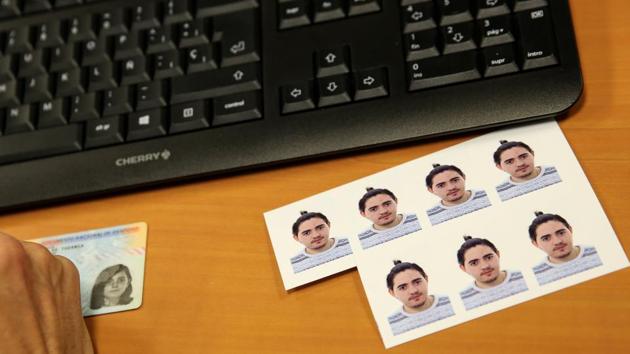
Current pictures of transgender teenager Gabriel Diaz de Tudanca, 18, lie next to his former identity card as he waits to be issued with a new identity card on January 26, 2017. “I didn’t take it that badly, being diagnosed as ‘mentally ill’,” he said. “But I feel angry that you have to get that diagnosis to be able to change documents, get hormone treatment or surgery.” (Susana Vera / REUTERS)
11/12
 View Photos in a new improved layout
Published on Jan 23, 2019 12:19 PM
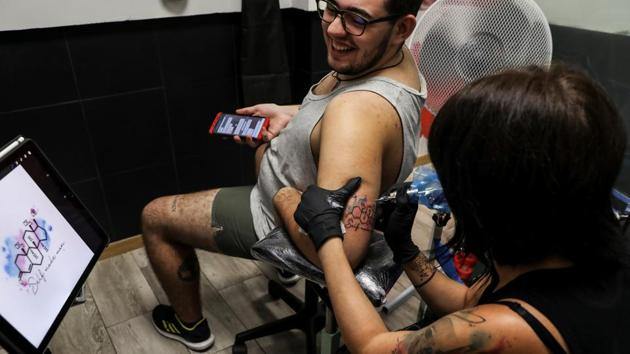
Gabriel, 20, gets a tattoo of a testosterone molecule and the words 'Self-Made Man' at a tattoo parlour on September 18, 2018. The World Health Organisation ruled in June that being transgender should no longer be classified as a mental disorder. It now considers it “gender incongruence” under sexual health conditions. (Susana Vera / REUTERS)
12/12
 View Photos in a new improved layout
Published on Jan 23, 2019 12:19 PM


