
 E-Paper



Photos: Hi-tech surveillance sheds new light into Amazon’s hidden wildlife
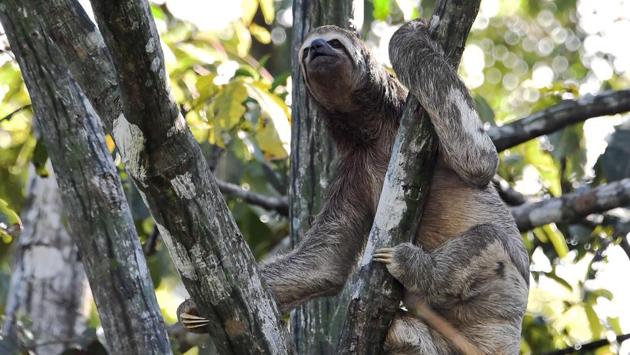
Providence Project, that was launched two years ago by French scientist Michel Andre, aims to monitor the biodiversity of the Amazon rainforest in real time in an effort to track preservation efforts. For this, ultra-sensitive sensors have been deployed in the forest to collect images and sounds of the rainforest's rich biodiversity. By 2025, the project aims to monitor the whole of the forest with one thousand nodes deployed in a 100 square kilometre grid.
Updated on: May 15, 2019 4:34 PM IST

Share via


Copy link

1/9
 View Photos in a new improved layout
Updated on May 15, 2019 4:34 PM
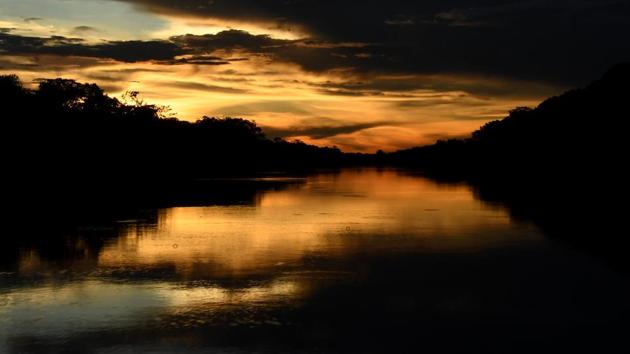
The Mamiraua River is seen at the Mamiraua Reserve.. In an attempt to collect the images and sounds of the Amazon rainforest’s biodiversity to track preservation efforts, scientists are deploying ultra-sensitive sensors. The initiative, called the Providence Project, was launched two years ago and aims to propel the conservation efforts in the forest. (Evaristo Sa / AFP)
2/9
 View Photos in a new improved layout
Updated on May 15, 2019 4:34 PM
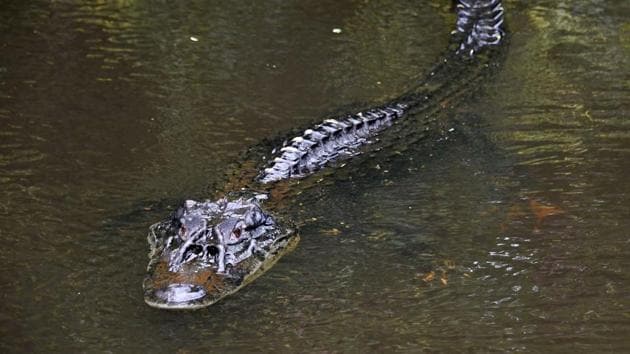
A black caiman (Melanosuchus niger) is pictured swimming on the Jaraua River at the Mamiraua Reserve. The project was launched by French scientist Michel Andre of the Polytechnic University of Catalonia and Mamiraua Sustainable Development Institute in northern Brazil. (Evaristo Sa / AFP)
3/9
 View Photos in a new improved layout
Updated on May 15, 2019 4:34 PM
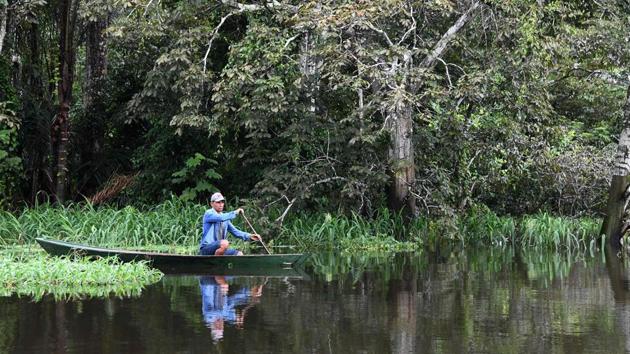
A fisherman looks for pirarucu (Arapaima gigas) fish in the Jaraua River at the Mamiraua Reserve. Pirarucus, known as 'Amazon cod', had almost disappeared from Amazonian rivers and lakes, but with a program carried out by scientists of the Mamiraua Institute, the fish has returned to abundance. (Evaristo Sa / AFP)
4/9
 View Photos in a new improved layout
Updated on May 15, 2019 4:34 PM
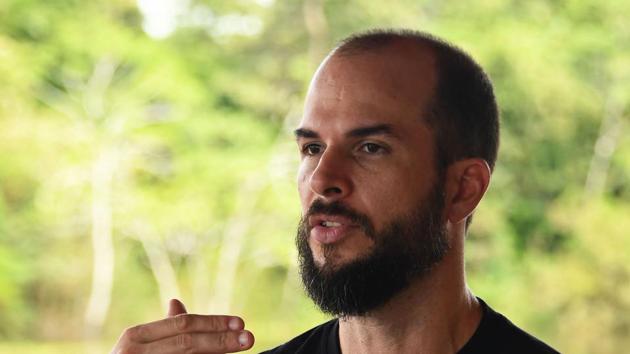
Brazilian ecologist Emiliano Ramalho is the technical and scientific director of the Mamiraua Institute of Sustainable Development. Ramalho coordinates the Providence Project to create a network of high-tech sound sensors to monitor in real time the preservation of biodiversity in the Amazon. (Evaristo Sa / AFP)
5/9
 View Photos in a new improved layout
Updated on May 15, 2019 4:34 PM
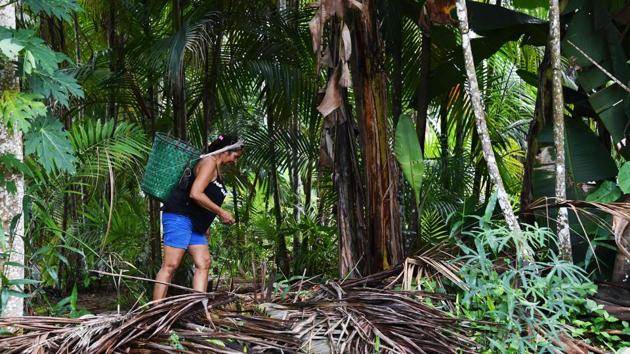
Brazilian Filomena Freitas reaps Cupuacu tree fruits at the Boa Esperanca community in the Amana Sustainable Development Reserve. The Mamiraua Sustainable Development Institute combines science and traditional knowledge to preserve biodiversity and ensures the livelihoods of communities that sustain their livelihood from the rainforest. (Evaristo Sa / AFP)
6/9
 View Photos in a new improved layout
Updated on May 15, 2019 4:34 PM
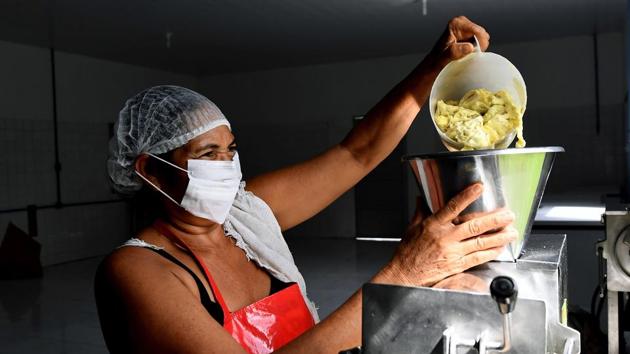
Filomena Freitas processes a cupuassu (white cacao) fruit to extract the pulp at the Boa Esperança community in the Amanã Reserve. The Mamiraua Sustainable Development Institute shows that it is possible to exploit natural resources without destroying the environment. (Evaristo Sa / AFP)
7/9
 View Photos in a new improved layout
Updated on May 15, 2019 4:34 PM
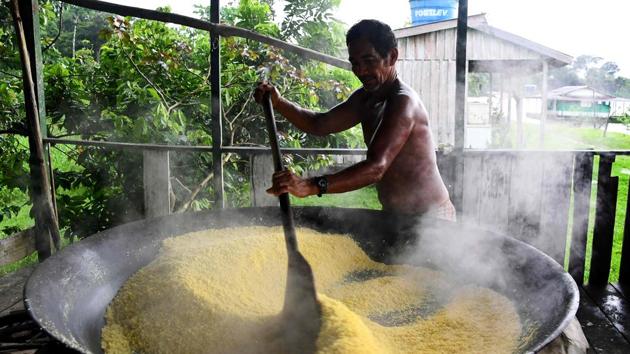
Edmar Santos produces cassava flour at the Repartimento Community in the banks of the Tambaqui River in the Amanã Reserve. One fundamental aspect of Providence is to work side by side with the indigenous communities as they are the true guardians of the Amazon. The ambitious project has been divided into three phases. In phase one, which occurred in Mamiraua, 10 nodes were distributed in different areas to check that the system was able to work in very harsh conditions. (Evaristo Sa / AFP)
8/9
 View Photos in a new improved layout
Updated on May 15, 2019 4:34 PM
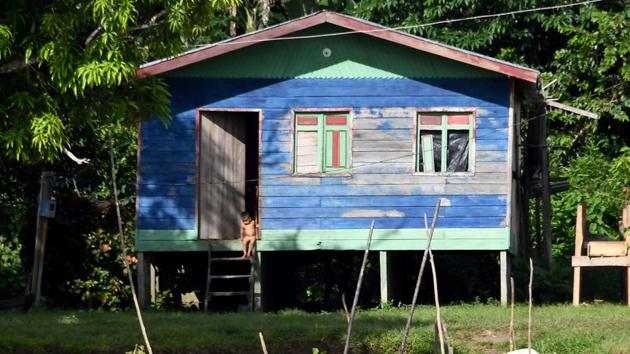
A child sits at the door of a house built on stilst on the bank the Solimoes River near Tefe. Since the start of the Providence project, 10 nodes have been deployed in the reserve and over 40 species (birds, monkeys, insects, bats, dolphins, fish) have been identified and monitored. Currently, they are in the intermediate phase between phase one and phase two, wherein they will deploy 10 of these nodes in the cloud forest in Bolivia called Madidi and another set of 10 nodes in Xingu in Brazil. (Evaristo Sa / AFP)
9/9
 View Photos in a new improved layout
Updated on May 15, 2019 4:34 PM


