
 E-Paper



Photos: Hydroponics, robots bring farming into the 21st century
Brandon Alexander would like to introduce you to Angus, the farmer of the future. He's heavyset, weighing in at nearly 1,000 pounds, not to mention a bit slow. But he's strong enough to hoist 800-pound pallets of maturing vegetables and can move them from place to place on his own. Alexander's startup, Iron Ox, aims to feed people with produce grown from the hands of robots at indoor nurseries near cities. The idea is to deliver vegetables and fruits to restaurants and supermarkets more quickly than is now possible.
Updated on: Oct 05, 2018 9:24 AM IST

Share via


Copy link

1/8

 View Photos in a new improved layout
Updated on Oct 05, 2018 9:24 AM
A robotic arm lifts plants being grown at Iron Ox in San Carlos, California. Angus and other robots are key to a new wave of local agriculture that aim to raise produce in metropolitan areas while conserving water and sidestepping the high costs of human labour. It’s a big challenge, and some earlier efforts have flopped. Even Google’s “moonshot” laboratory, known as X, couldn’t figure out how to make the economics work. (Eric Risberg / AP)
2/8
 View Photos in a new improved layout
Updated on Oct 05, 2018 9:24 AM
After raising $6 million and tinkering with autonomous robots for two years, Brandon Alexander’s startup Iron Ox said they are ready to start delivering crops of its robotically grown vegetables to people’s salad bowls. “And they are going to be the best salads you ever tasted,” said 33-year-old Alexander, a one-time Oklahoma farmboy turned Google engineer turned startup CEO. (Eric Risberg / AP)
3/8
 View Photos in a new improved layout
Updated on Oct 05, 2018 9:24 AM
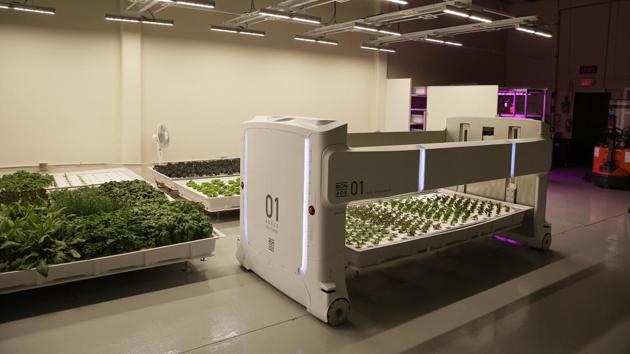
A mover robot called Angus transports plants being grown at Iron Ox. Although no deals have been struck yet, Alexander said Iron Ox has been talking to San Francisco Bay area restaurants interested in buying its leafy vegetables and expects to begin selling to supermarkets next year. Initially, though, the company will sell its produce at a loss in order to remain competitive. (Eric Risberg / AP)
4/8
 View Photos in a new improved layout
Updated on Oct 05, 2018 9:24 AM
The company plans to set up robot farms in greenhouses that will rely mostly on natural sunlight instead of high-powered indoor lighting. During the next few years, the company wants to open robot farms near metropolitan areas across the US. Most of the vegetables consumed in US are grown in California, Arizona, Mexico and other nations—which means people are eating vegetables that are nearly a week old. (Eric Risberg / AP)
5/8
 View Photos in a new improved layout
Updated on Oct 05, 2018 9:24 AM
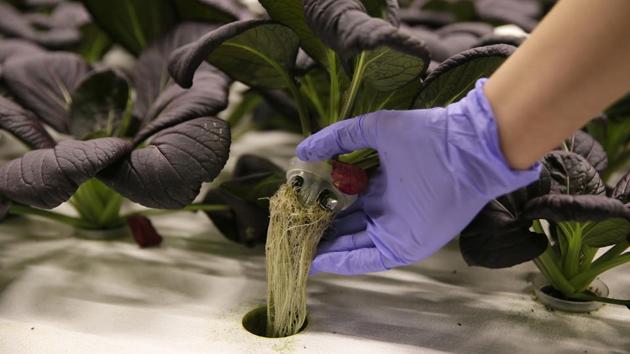
A bok choy plant is lifted up and displayed at Iron Ox. There are bigger stakes as well. The world’s population is expected to swell to 10 billion by 2050 making it important to find ways to feed more people without further environmental impact. Iron Ox, Alexander reasons, can be part of the solution if its system can make the leap from its small, laboratory like setting to much larger greenhouses. (Eric Risberg / AP)
6/8
 View Photos in a new improved layout
Updated on Oct 05, 2018 9:24 AM
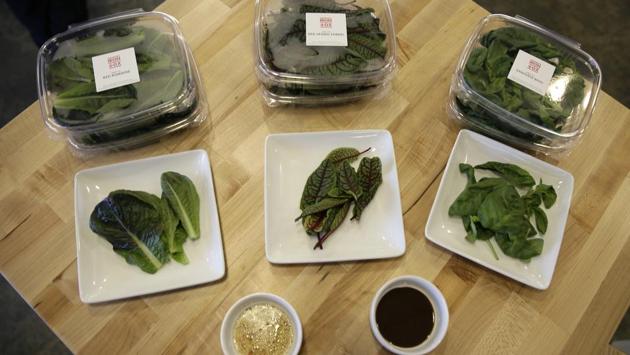
Packages of red romaine, red veined sorrel and basil are displayed at Iron Ox. It’s a tedious process to gently pick up each of the roughly 250 plants on each pallet and transfer them to their bigger pods, but the robot doesn’t seem to mind the work. Iron Ox still relies on people to clip its vegetables when they are ready for harvest, but Alexander says it is working on another robot that will eventually handle that. (Eric Risberg / AP)
7/8
 View Photos in a new improved layout
Updated on Oct 05, 2018 9:24 AM
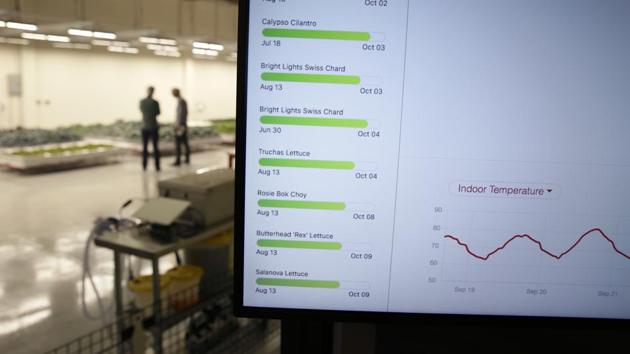
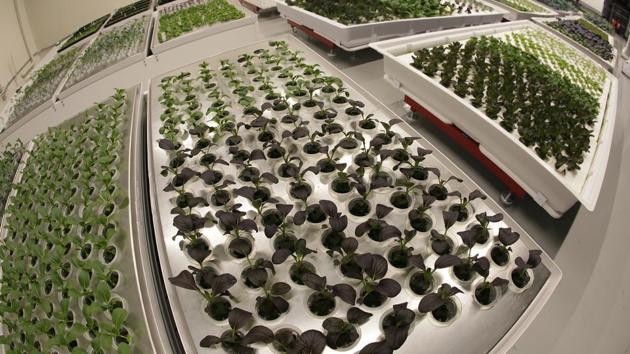
Temperatures of some two dozen plant varietals are monitored at the indoor farm. The startup relies on a hydroponic system that conserves water, and automation in place of humans less interested in farming jobs that pay an average of $13.32 per hour, according to the Department of Agriculture. Nearly half of US farmworkers planting and picking crops aren’t there legally, based on a survey by the US Department of Labour. (Eric Risberg / AP)
8/8
 View Photos in a new improved layout
Updated on Oct 05, 2018 9:24 AM


