
 E-Paper



Photos: In Athens culture lab, sculptors recreate ancient Greek masterpieces
In Greece, some 50 art graduates at a special lab in the Culture Ministry are sculpting the only officially certified replicas of ancient Greek masterpieces available to art aficionados and collectors.
Updated on: Feb 07, 2018 11:59 AM IST

Share via


Copy link

1/10
 View Photos in a new improved layout
Updated on Feb 07, 2018 11:59 AM
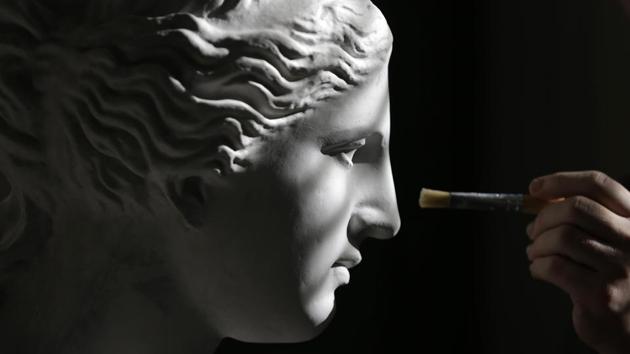
A sculptor paints a copy of the head of Hygeia, deity of health at the Athens’ Culture Ministry Lab. Painstakingly recreating the sculptures of Greece’s ancient masters might be the closest to time travel a sculptor can get. And a group of artists is doing just that at Athens’ Culture Ministry. (Thanassis Stavrakis / AP)
2/10
 View Photos in a new improved layout
Updated on Feb 07, 2018 11:59 AM
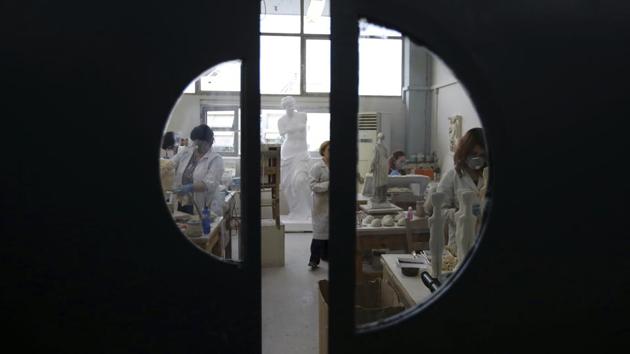
Employees of the Culture Ministry work in the lab. The nearly 50 artists at this workshop hold the exclusive right to craft the country’s only officially certified copies of ancient art pieces which are meant for sale in Greek museum shops and archaeological sites. (Thanassis Stavrakis / AP)
3/10
 View Photos in a new improved layout
Updated on Feb 07, 2018 11:59 AM
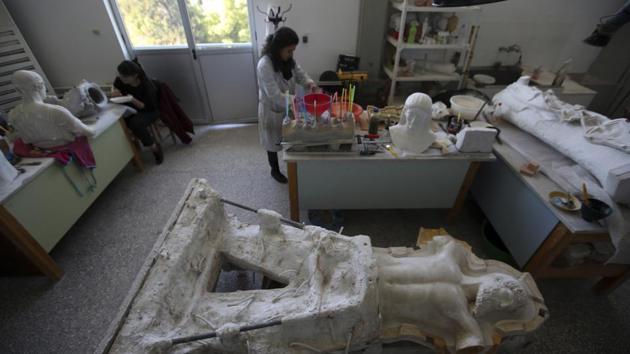
Chosen from fine arts graduates these trained sculptors work on a range of pieces, from a 3-inch hare from Roman-era Macedonia to a 7-foot statue of Zeus, or Poseidon, made in the mid-5th century B.C. and one of the star exhibits of the National Archaeological Museum in Athens. (Thanassis Stavrakis / AP)
4/10
 View Photos in a new improved layout
Updated on Feb 07, 2018 11:59 AM
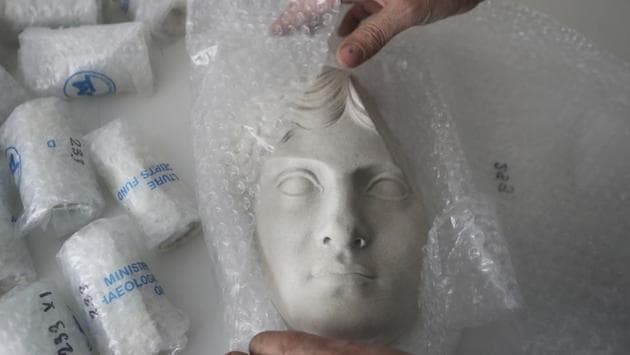
An employee wraps up an ancient sculpture’s replica in the lab. “The standard is very high. And every artist tries to emulate what was done by the artist in ancient times,” supervisor Stelios Gavalas, a sculptor by training, told The Associated Press. “For us, it is a very big honor to have daily contact with works of the great artists of antiquity.” (Thanassis Stavrakis / AP)
5/10
 View Photos in a new improved layout
Updated on Feb 07, 2018 11:59 AM
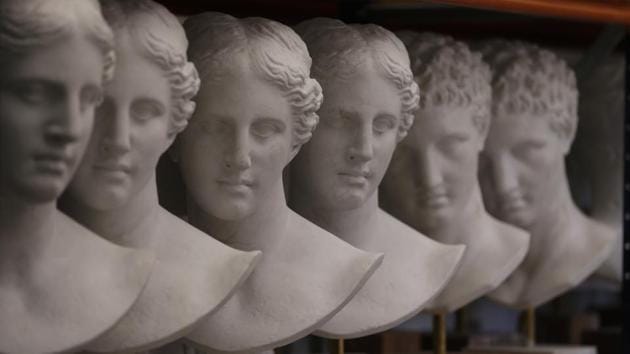
Plaster replicas of Hygeia are placed on a shelf in the lab. Casts are made in the museums where the originals are kept, and the ensuing moulds are stored in the workshop, together with more than a thousand prototype copies, some dating from the late 19th century. (Thanassis Stavrakis / AP)
6/10
 View Photos in a new improved layout
Updated on Feb 07, 2018 11:59 AM
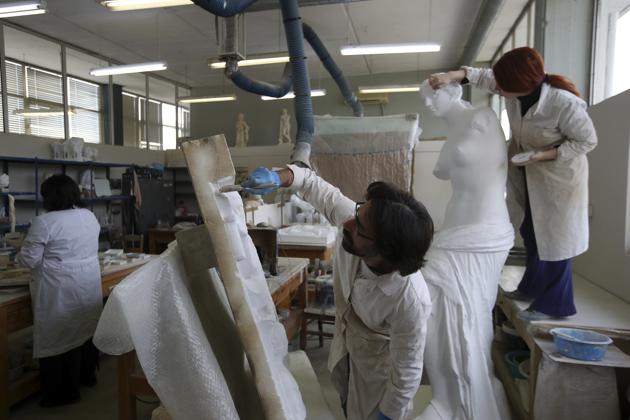
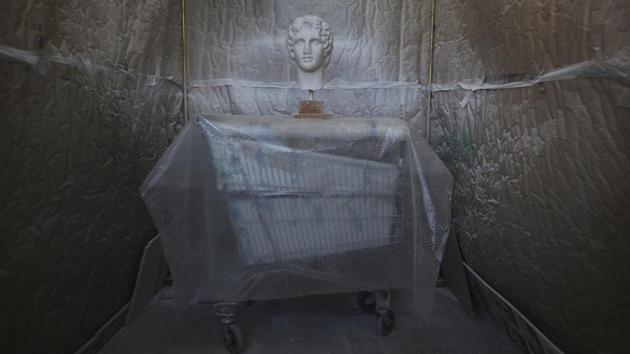
Each piece is made to scale, out of plaster in molds and painstakingly hand-painted to match the hues of the original, be it metal, marble, clay or ivory. Plaster is used because it doesn’t shrink while drying, unlike other materials such as resin, and allows reproductions that are completely accurate in size. (Thanassis Stavrakis / AP)
7/10
 View Photos in a new improved layout
Updated on Feb 07, 2018 11:59 AM
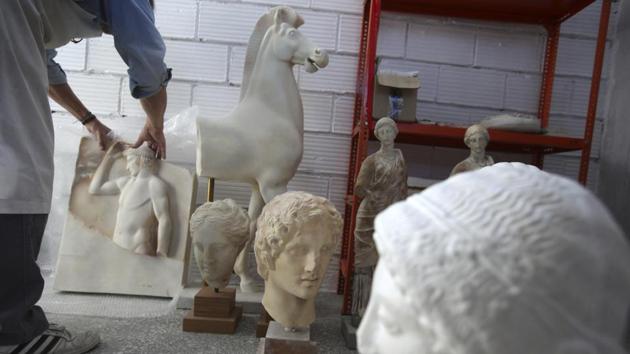
An employee of the Ministry places a copy among other pieces in the warehouse of the Lab in Athens. (Thanassis Stavrakis / AP)
8/10
 View Photos in a new improved layout
Updated on Feb 07, 2018 11:59 AM
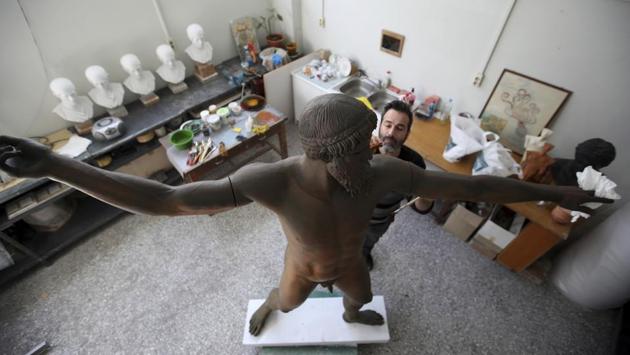
A certified reproduction can take days to complete, with this mid-5th century B.C. Zeus, or Poseidon, requiring nearly two months from beginning to end, including the time the plaster took to dry. Copies of this scale sit near the top of the price range, costing 3000 euros (approx. Rs 2,40,000). (Thanassis Stavrakis / AP)
9/10
 View Photos in a new improved layout
Updated on Feb 07, 2018 11:59 AM
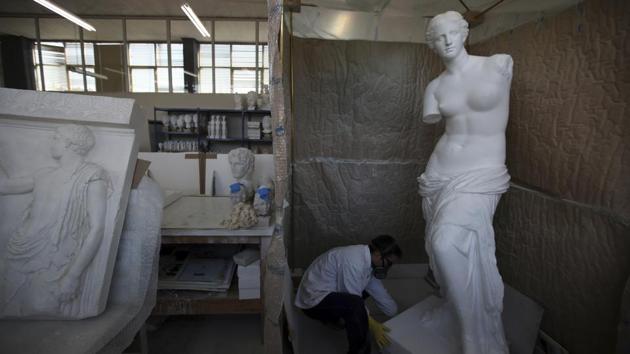
A copy of Venus de Milo, Aphrodite the ancient Greek goddess of love, beauty, pleasure and procreation, goes through colour processing in the Culture Ministry's Lab. The proceeds from the sculptures created here are meant to help fund Greek archaeology and conservation projects. (Thanassis Stavrakis / AP)
10/10
 View Photos in a new improved layout
Updated on Feb 07, 2018 11:59 AM


