
 E-Paper



Photos: Inside ‘Black Country,’ UK’s last black ironmongery manufacturer
The Black Country factory is the only manufacturer of traditional black ironmongery left in the UK, in which molten iron is poured from the furnace into moulds made by skilled pattern makers. The workforce has been handed down through generations since the company was founded by William Kirkpatrick in Walsall in 1855. It still exports its reknowned iron work across the world.
Updated on: Feb 23, 2018 11:56 AM IST

Share via


Copy link

1/9

 View Photos in a new improved layout
Updated on Feb 23, 2018 11:56 AM
Paul Taylor, a furnace man tends the iron furnace in the Black Country factory at Kirkpatrick Foundry, Walsall, England. The Black Country factory is the only manufacturer of traditional black ironmongery left in the UK, in which molten iron is poured from the furnace into moulds made by skilled pattern makers. (Christopher Furlong / Getty Images)
2/9
 View Photos in a new improved layout
Updated on Feb 23, 2018 11:56 AM
Shot-blaster Stuart Jackson stands near a machine inside the Black Country factory. The factory is located at Kirkpatrick Foundry and is famous for being the oldest established manufacturer of black iron door and window furniture in the UK. (Christopher Furlong / Getty Images)
3/9
 View Photos in a new improved layout
Updated on Feb 23, 2018 11:56 AM
A portrait of David Stringer, a worker, seen taking a break from mixing moulding sand at the factory. Black Country metal work is home to some of the highest quality door furniture and contains a wide range of exterior and interior accessories. (Christopher Furlong / Getty Images)
4/9
 View Photos in a new improved layout
Updated on Feb 23, 2018 11:56 AM
Stringer is seen steaming moulds in the factory. The collection features pieces created from solid polished brass and traditional cast iron, as well as contemporary bright chrome and ceramic designs. (Christopher Furlong / Getty Images)
5/9
 View Photos in a new improved layout
Updated on Feb 23, 2018 11:56 AM
Moulder Dave Morris prepares the casting moulds in the factory. The skills and craftsmanship of the workforce has been handed down through generations since the company was founded by William Kirkpatrick in Walsall in 1855. (Christopher Furlong / Getty Images)
6/9
 View Photos in a new improved layout
Updated on Feb 23, 2018 11:56 AM
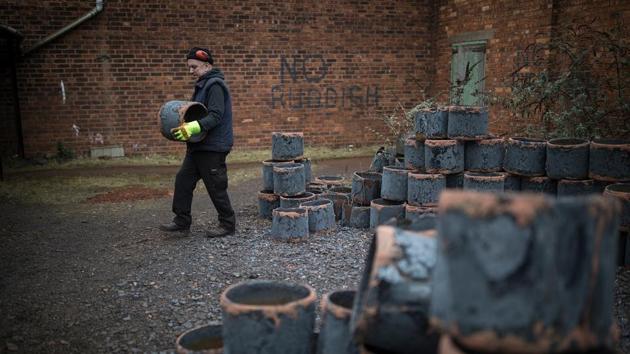
Technician Kevin Titley carries steel drums to the annealing ovens inside the factory. (Christopher Furlong / Getty Images)
7/9
 View Photos in a new improved layout
Updated on Feb 23, 2018 11:56 AM
A photo of the ironwork to be shotblasted in the factory. From the medieval times, the use of ironwork for decorative purposes became more common. Iron was used to protect doors and windows of valuable places from attack from raiders and was also used for decoration as can be seen at Canterbury Cathedral, Winchester Cathedral and the Notre Dame de Paris. (Christopher Furlong / Getty Images)
8/9
 View Photos in a new improved layout
Updated on Feb 23, 2018 11:56 AM
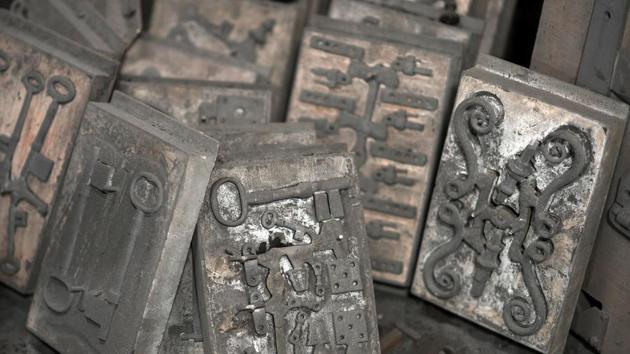
Ironwork, patterns and castings on shelves of the factory. It was from the 16th century onwards that ironwork became highly ornate, especially in the Baroque and Rococo periods. (Christopher Furlong / Getty Images)
9/9
 View Photos in a new improved layout
Updated on Feb 23, 2018 11:56 AM


