
 E-Paper



Photos: Japan’s kimono makers innovate in tradition to revive demand
Once a standard of the Japanese wardrobe, the kimono is now often a garment reserved for special occasions, such as weddings and coming-of-age ceremonies, and is mostly worn by women. They can be hugely expensive and women often hire experts to dress them because the outfit requires seemingly endless nipping, tucking and strapping. Demand for the elaborate, elegant centerpiece of the Japanese wardrobe is in decline but a handful of artisans and entrepreneurs, using traditional techniques to produce contemporary kimono patterns, are trying to revive it.
Updated on: May 09, 2018 10:37 AM IST

Share via


Copy link

1/10
 View Photos in a new improved layout
Updated on May 09, 2018 10:37 AM
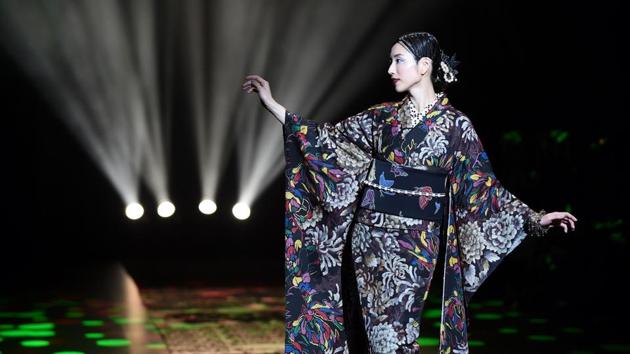
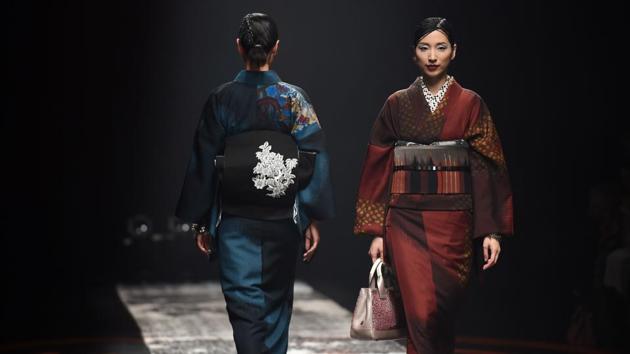
A model presents a creation by Japanese designer Jotaro Saito for his 2018 autumn/winter collection at Tokyo Fashion Week. A centerpiece of traditional Japanese wardrobes, the Kimono signifying ‘a thing to wear’ is a T-shaped full length robe. But the expense in buying one and the effort involved in wearing and maintaining the garment has reserved the kimono for special occasions, such as weddings and coming-of-age ceremonies. (Kazuhiro Nogi / AFP)
2/10
 View Photos in a new improved layout
Updated on May 09, 2018 10:37 AM
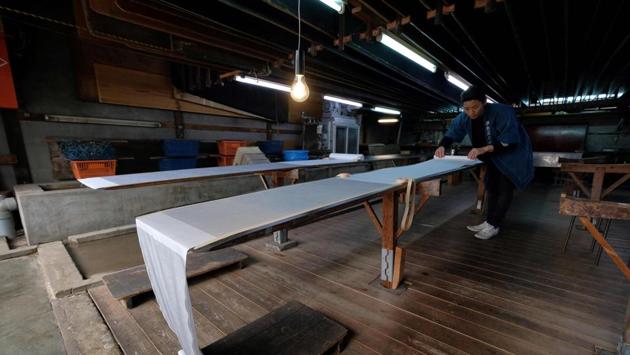
At a century-old workshop in a quiet Tokyo neighbourhood, craftsman Yuichi Hirose brushes dye across meticulously hand-cut stencils laid on fabric, using a traditional technique to produce contemporary kimono patterns. Demand for the elaborate Kimono is in decline, but a handful of artisans and entrepreneurs like Hirose, are trying to revive it. (Kazuhiro Nogi / AFP)
3/10
 View Photos in a new improved layout
Updated on May 09, 2018 10:37 AM
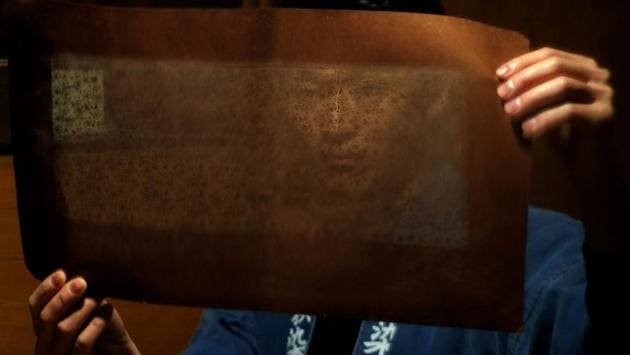
Hirose specialises in “Edo Komon” -- a kimono pattern hand-dyed with a Japanese washi paper stencil, dating back to the Edo period between the 17th and late 19th centuries. His innovations include developing new designs to adorn the kimono, including tiny sharks or even skull motifs. “The kimono has become something that is very far removed from our daily lives,” said Hirose, who joined his family business after university. (Kazuhiro Nogi / AFP)
4/10
 View Photos in a new improved layout
Updated on May 09, 2018 10:37 AM
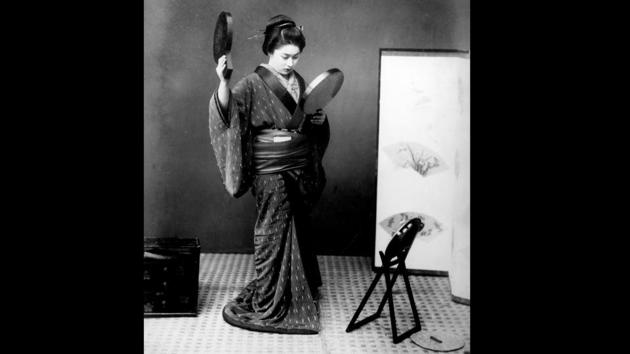
A Japanese woman seen in a kimono in 1940. According to the Ministry of Economy, Trade and Industry, the modern kimono industry peaked in 1975 with a market size of 1.8 trillion yen ($17 billion). But as per a survey conducted by Yano Research Institute by 2008 it had shrunk to 406.5 billion yen and further to just 278.5 billion yen in 2016. (Hulton Archive / Getty Images)
5/10
 View Photos in a new improved layout
Updated on May 09, 2018 10:37 AM
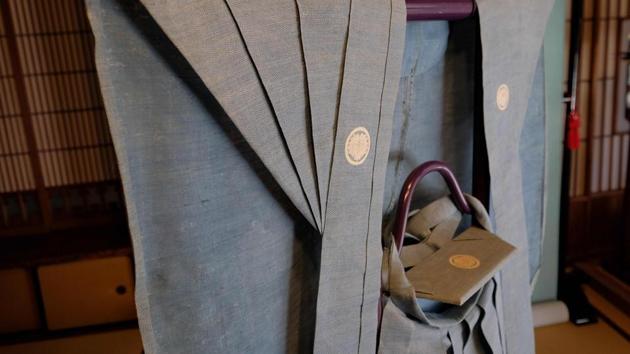
An old kimono worn during the Edo period by the Samurais is seen at the Hiroshe dye factory in Tokyo. “There are many hurdles” to buying a kimono, said Takatoshi Yajima, vice chairman of the Japan kimono promotion association, and a kimono manufacturer. “It’s expensive. It’s difficult to wear. It’s too delicate to wash at home,” he added. (Kazuhiro Nogi / AFP)
6/10
 View Photos in a new improved layout
Updated on May 09, 2018 10:37 AM
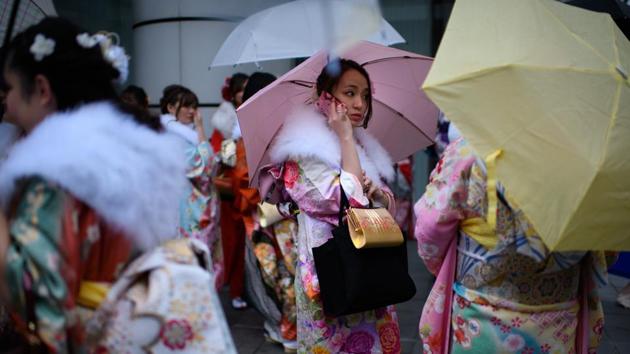
Women wearing kimonos gather after attending the ‘Coming of Age Day’ ceremony in Yokohama, Japan. Yajima (not pictured) has nearly doubled his number of customers in the past 15 years by selling more kimonos under the 100,000-yen ($930) price tag, well below the many thousands of dollars a high-end piece can cost. “The industry will grow if we can create a market in which as many people as possible will buy a kimono,” he said. (Getty Images)
7/10
 View Photos in a new improved layout
Updated on May 09, 2018 10:37 AM
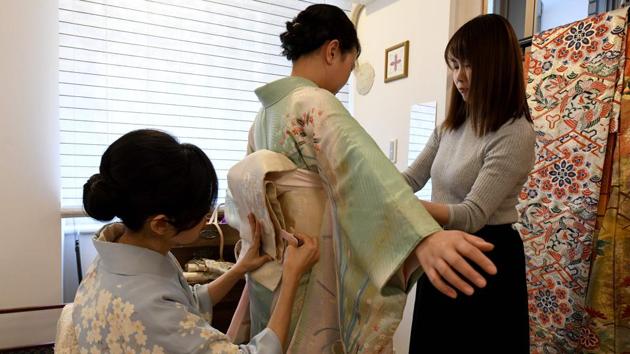
And while demand is falling among the Japanese, services renting kimonos to foreign visitors are booming. “Kimono is a piece of Japanese culture. I really wanted to experience that,” said Ruby Francisco (C), a Dutch tourist who rented a pale green kimono at Kahori Ochi’s (L) shop. A kimono outfit starts with an undergarment known as a nagajuban, over which the kimono is layered, held in place with a thick obi belt and string. (Kazuhiro Nogi / AFP)
8/10
 View Photos in a new improved layout
Updated on May 09, 2018 10:37 AM
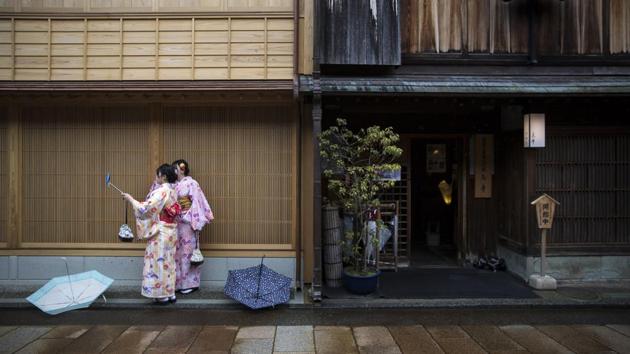
Tourists wearing rental kimonos take pictures in the Higashi Chaya district of Kanazawa, Japan.“My mother told me the kimono business is risky and volatile,” Ochi said, adding that her mother’s shop struggled after the bubble economy ended in the early 1990s. But now, she said, business was booming and she expects the Tokyo 2020 Olympic Games will drive new demand as tourists flock to Japan. (Tomohiro Ohsumi / Bloomberg)
9/10
 View Photos in a new improved layout
Updated on May 09, 2018 10:37 AM
But beyond the basic framework, designer Jotaro Saito feels there should be room for experimentation. At the fashion week, Saito, who calls himself “a risk taker,” showcased kimonos for men and women, mixing traditional and unconventional motifs and colours. “I want to present kimonos as a wardrobe in which people can truly feel joy,” Saito said. (Kazuhiro Nogi / AFP)
10/10
 View Photos in a new improved layout
Updated on May 09, 2018 10:37 AM


