
 E-Paper



Photos: Madrassas a place of prayer and peace for Rohingya kids
In her local madrassa - or Islamic seminary - in the Kutupalong Camp near Cox’s Bazaar, Saleema Khanam, 8, is the only girl student attending classes catering to Rohingya children driven from Buddhist-majority Myanmar by a wave of genocidal violence. Since formal schooling -- which suggests a permanent presence -- is not allowed in the refugee camps in Bangladesh, for many children the madrassas are the only places to learn and stay in touch with the culture and language that their elders were driven out of Myanmar for living and identifying by.
Updated on: Oct 10, 2018 11:49 AM IST

Share via


Copy link

1/8
 View Photos in a new improved layout
Updated on Oct 10, 2018 11:49 AM
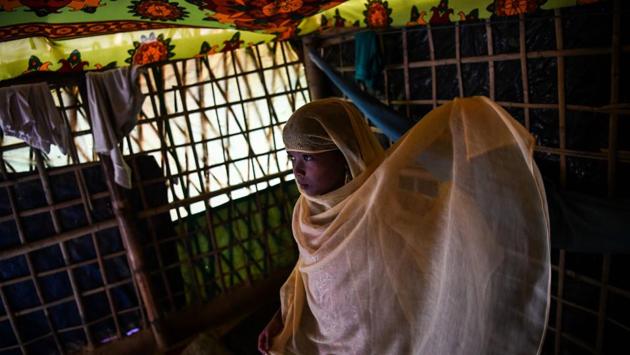
Inside a stifling bamboo shanty, eight-year-old Saleema Khanam throws a bright yellow shawl over her head and steps out into an enormous refugee camp in Bangladesh, clutching her treasured Quran. She is the only girl in her local madrassa or Islamic seminary, catering to Rohingya children driven from Buddhist-majority Myanmar by a wave of genocidal violence. (Chandan Khanna / AFP)
2/8
 View Photos in a new improved layout
Updated on Oct 10, 2018 11:49 AM
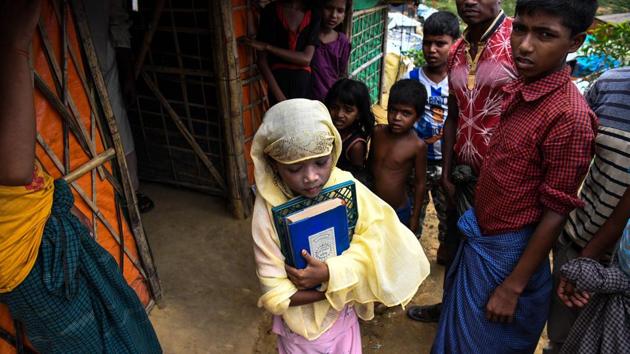
Saleema steps carefully through the crowded alleyways in Kutupalong with her blue-bound Quran held tight to her chest, removes her shoes and enters the dimly-lit classroom. Since formal schooling -- which suggests a permanent presence -- is not allowed in the camps, for many children the madrassas are the only places to learn. (Chandan Khanna / AFP)
3/8
 View Photos in a new improved layout
Updated on Oct 10, 2018 11:49 AM
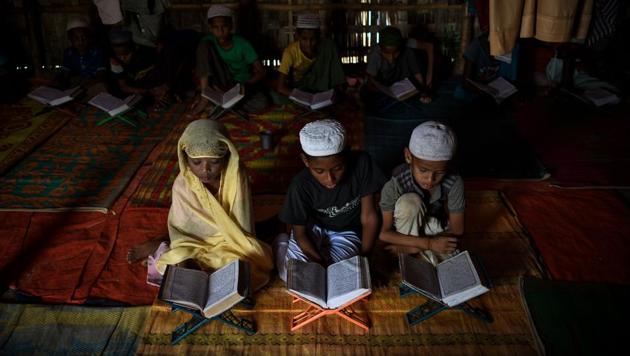
Saleema Khanam (L), studies inside a makeshift madrassa with other students in Kutupalong camp, near Cox's Bazar. She takes her position in the front, flanked by two brothers, and opens the book. “I come here to learn the Quran. My mother wants me and my brothers to learn, to become better people,” the young student told AFP. (Chandan Khanna / AFP)
4/8
 View Photos in a new improved layout
Updated on Oct 10, 2018 11:49 AM
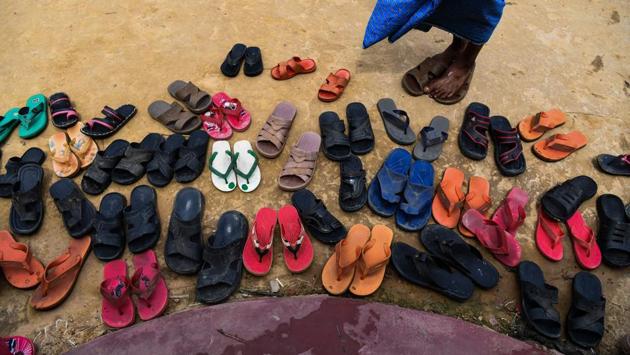
Rohingya refugees leave their footwear outside a mosque for prayers in Kutupalong camp. The Rohingya are a deeply conservative Muslim minority from western Myanmar, where decades of state-sanctioned oppression and violent persecution has forced them out. An army purge beginning in August 2017 has forced more than 700,000 Rohingya over the border into Bangladesh. (Chandan Khanna / AFP)
5/8
 View Photos in a new improved layout
Updated on Oct 10, 2018 11:49 AM
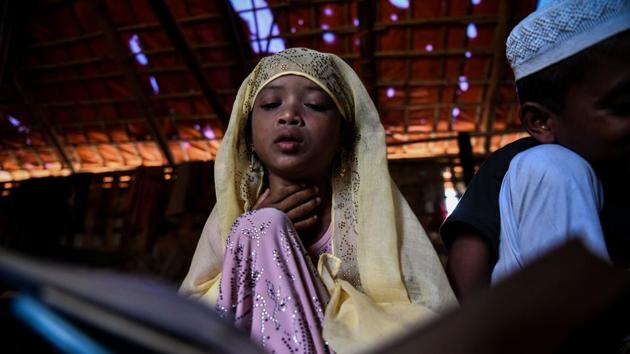
Saleema studies inside a makeshift madrassa in Kutupalong camp. The madrassa is just a short distance from her family’s shack to the school, one of thousands to spring up in the world’s largest refugee camp since the influx of Rohingya Muslims last year. (Chandan Khanna / AFP)
6/8
 View Photos in a new improved layout
Updated on Oct 10, 2018 11:49 AM
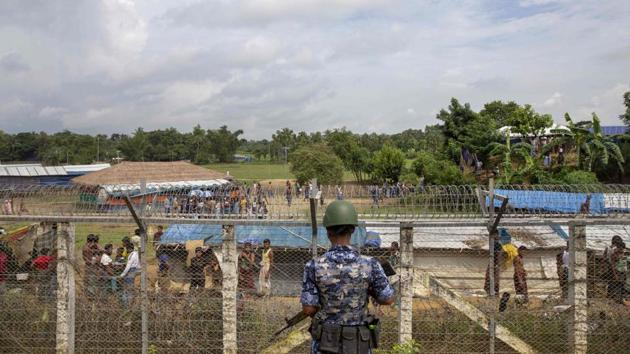
“By targeting our madrassas and mosques, they tried erase our culture and religion from Rakhine,” said Rohingya activist Rafique bin Habib, referring to Myanmar’s westernmost state where the minority dwelt. “But many of our top madrassa teachers survived and fled to Bangladesh, where they have set up schools in the camps so that our new generation can be deeply rooted in our culture and religion.” (Phyo Hein Kyaw / AFP File)
7/8
 View Photos in a new improved layout
Updated on Oct 10, 2018 11:49 AM
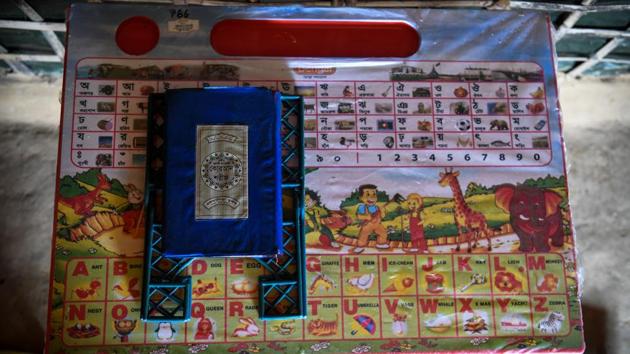
A Quran is kept on a table in Kutupalong camp. Madrassas also play an essential role in the survival of the Rohingya language. Some are attached to prominent mosques and large enough for 400 students. Others, like Saleema’s, cannot fit many more than a dozen. Classes are taught not just in the Rohingya language but also in Bengali, Arabic, Urdu and English. (Chandan Khanna / AFP)
8/8
 View Photos in a new improved layout
Updated on Oct 10, 2018 11:49 AM


