
 E-Paper



Photos: Myanmar’s black gold lures plucky oil drillers
In central Myanmar’s Minhla Township, informal oil entrepreneurs dart between informal crude oil extraction sites that the hilly landscape. As clouds of acrid, black smoke belch above the flames engulfing an artisanal oil field, prospectors from nearby hillsides arrive in droves, hoping for riches from a fresh line of black gold. Dismissing the risk factors involved in the oil extraction process, the only thing that drillers and prospectors are worried about is not losing their investments.
Updated on: Mar 16, 2019 10:24 AM IST

Share via


Copy link

1/8
 View Photos in a new improved layout
Published on Mar 16, 2019 10:24 AM
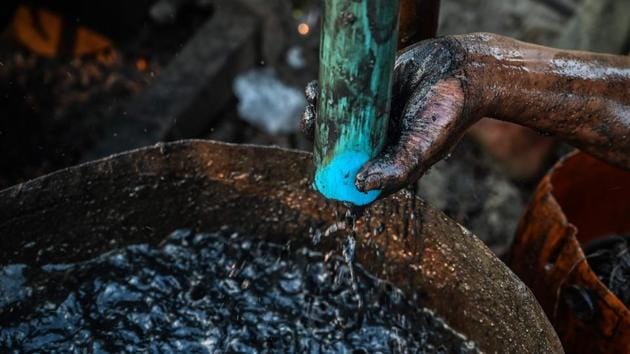
A worker seen operating a machine to extract crude oil from a well at an informal oil field in Minhla township, central Myanmar. The fields near Minhla, north of Yangon, are Myanmar’s equivalent of the American Wild West, where informal oil entrepreneurs scramble from site to site in the hope of striking lucky. (Ye Aung Thu / AFP)
2/8
 View Photos in a new improved layout
Published on Mar 16, 2019 10:24 AM
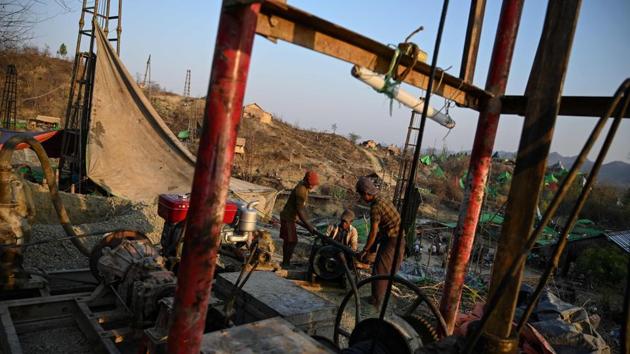
Workers seen building a new oil rig at an informal oil field. It is a hard way to make a living. A forest of temporary “derricks”, three legged pyramids made from metal or bamboo stretching 30 feet or more into the air, covers the hillsides. (Ye Aung Thu / AFP)
3/8
 View Photos in a new improved layout
Published on Mar 16, 2019 10:24 AM
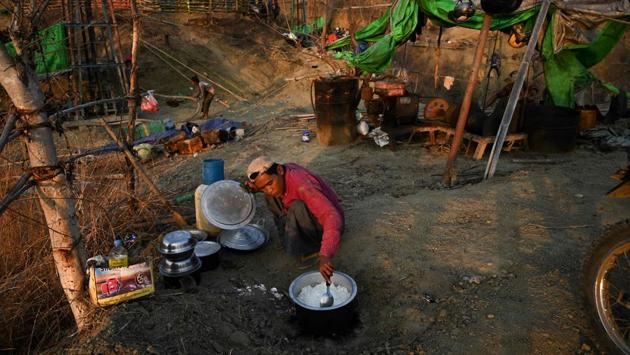
A worker seen cooking a meal beside an oil rig. “It’s like the lottery,” shouted Than Moe over the deafening noise of generators powering the field’s hundreds of drills. As he cooked up some rice for his crew of seven, he explained that setting up a drilling operation can set one back more than $60,000. “But if we strike oil, we can get that back in one day.” (Ye Aung Thu / AFP)
4/8
 View Photos in a new improved layout
Published on Mar 16, 2019 10:24 AM
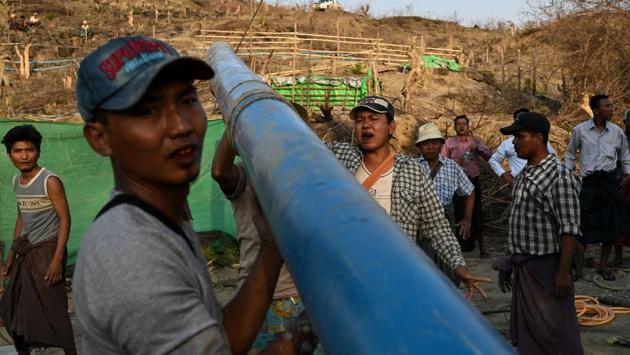
“The fire’s a really good sign -- it means there’s lots of oil here,” Khin Maung Htay told AFP as he scouted around the site just hours after a blaze was extinguished.The teams live right next to the wells in bamboo huts and tarpaulin tents offering some protection from the searing heat. (Ye Aung Thu / AFP)
5/8
 View Photos in a new improved layout
Published on Mar 16, 2019 10:24 AM
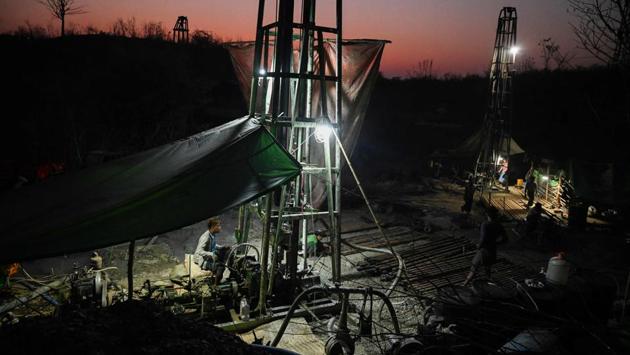
Workers operate machines to extract crude oil from a well. A pulley at the top of each well supports a drill that can plunge more than a kilometre into the ground. Each is manned by a team working round-the-clock, often caked in black, viscous grime as they wait for a potentially lucrative spurt of oil. (Ye Aung Thu / AFP)
6/8
 View Photos in a new improved layout
Published on Mar 16, 2019 10:24 AM
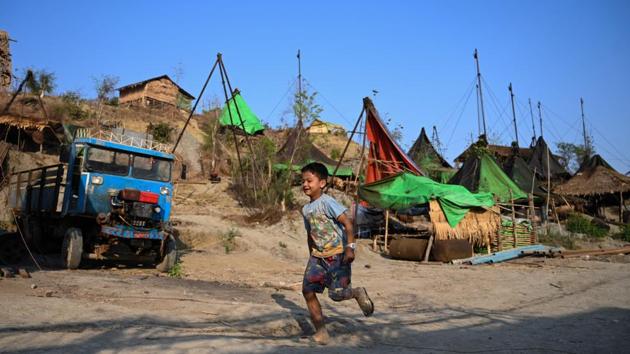
Many even bring their families along for their nomadic life. Children run around the hillsides dodging motorbikes and trucks transporting barrels of oil, while a handful of restaurants and tea shops serve the transient population of several thousand. (Ye Aung Thu / AFP)
7/8
 View Photos in a new improved layout
Published on Mar 16, 2019 10:24 AM
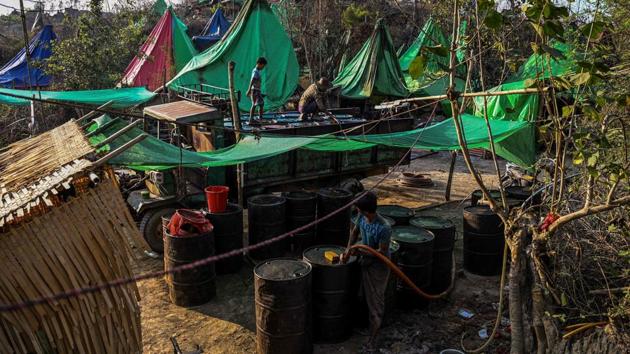
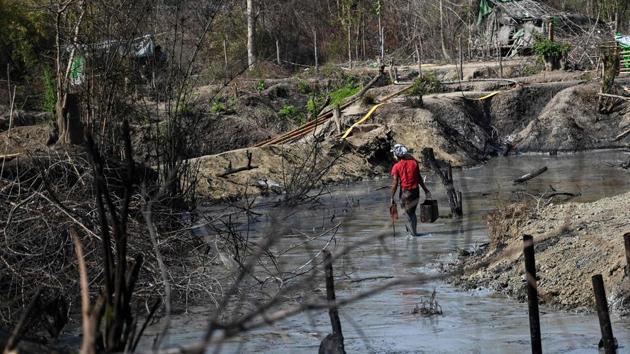
Workers filling barrels with crude oil. There are 600 barrels of oil coming out a day. The weekend’s blaze extinguished, some trudged knee-deep through a river of oozing filth, overspill from the wells mixing with water left behind by fire trucks, scraping up any oil they could salvage. (Ye Aung Thu / AFP)
8/8
 View Photos in a new improved layout
Published on Mar 16, 2019 10:24 AM


