
 E-Paper



Photos: On World Bamboo Day, a look at India’s reserves
First organized in Bangkok in September 2009 by the Thai Royal Forest Department, World Bamboo Day has been held each year since to mark the awareness of bamboo, globally. Where bamboo grows in natural abundance, it is used as an everyday element, but the sustenance has been a problem due to forest exploitation.
Updated on: Sep 19, 2017 4:35 PM IST

Share via


Copy link

1/6

 View Photos in a new improved layout
Updated on Sep 19, 2017 4:35 PM
A girl looks outside her house made of bamboo which is a popular building material in Assam. In India, bamboo is intimately connected to the lives of the people, especially in the villages. Bamboo bridges are a common sight in Assam, and the plant is also an important part of the cuisine in India, especially in the North Eastern states. (Burhaan Kinu / HT Photo)
2/6
 View Photos in a new improved layout
Updated on Sep 19, 2017 4:35 PM
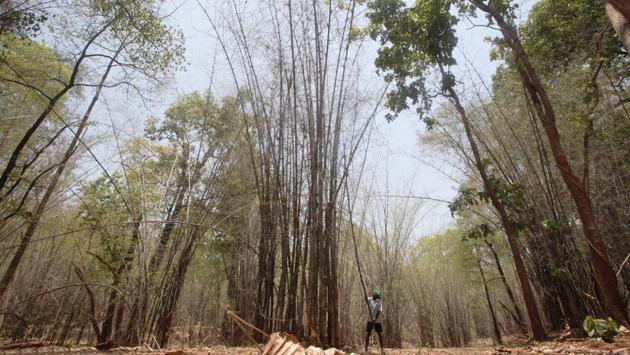
In Gadhchiroli, Maharashtra, bamboo forests are in abundance. In 2014, the Maharashtra cabinet approved the formation of the Tribal Cooperative Bamboo Processing Society. Gadhchiroli was the first district to get community rights for selling bamboo. (Puneet Chandhok / HT Photo)
3/6
 View Photos in a new improved layout
Updated on Sep 19, 2017 4:35 PM
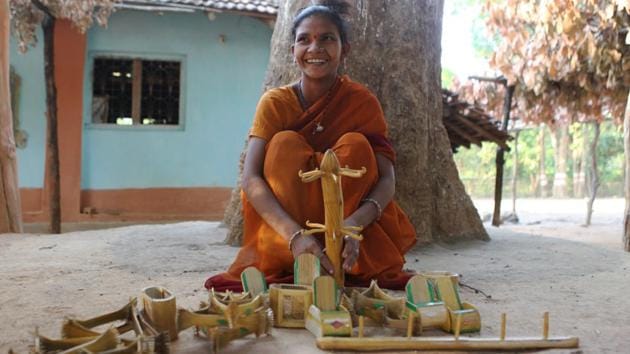
A tribal woman shows off finished bamboo products such as home furnishings and toys at the Mendha Lekha village, Gadhchiroli, Maharashtra (Puneet Chandhok / HT Photo)
4/6
 View Photos in a new improved layout
Updated on Sep 19, 2017 4:35 PM
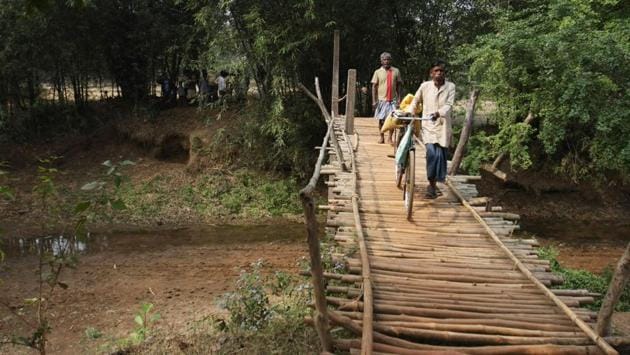
Here is a bamboo bridge made by the villagers which connects the Nakeagunj to Bhargora block to West Bengal’s Balia (West Midnapur). The bridge saves an otherwise 20kms of travel between the villages. (Parwaz Khan / HT Photo)
5/6
 View Photos in a new improved layout
Updated on Sep 19, 2017 4:35 PM
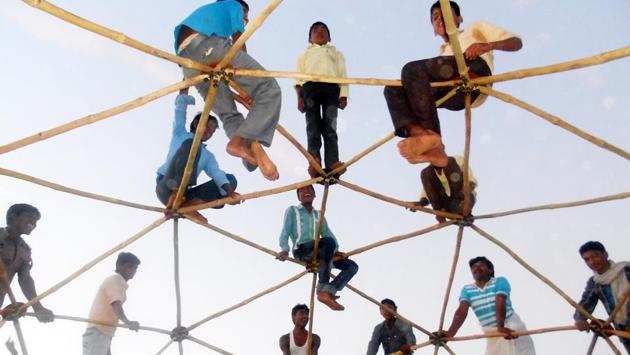
Tribals stand atop the roof of a bamboo dome to test its strength in Dharampuri village, Jhabua, Madhya Pradesh. This dome is used as an anganwadi building and is cost effective for the tribal economy. (HT Photo)
6/6
 View Photos in a new improved layout
Updated on Sep 19, 2017 4:35 PM


