
 E-Paper



Photos: The peculiar carnival traditions of rural Spain
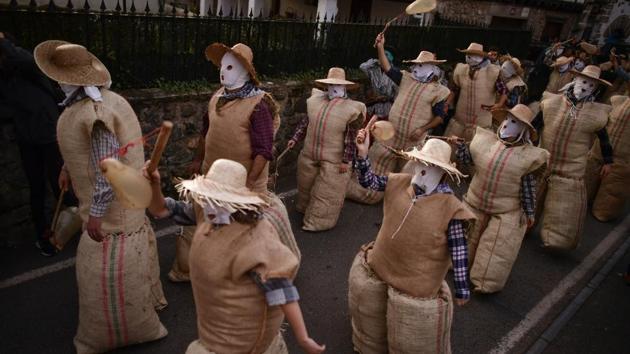
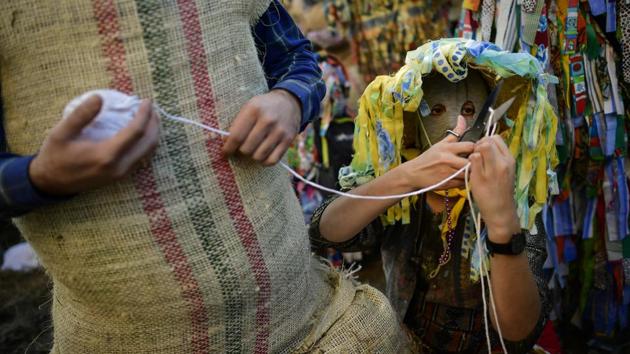
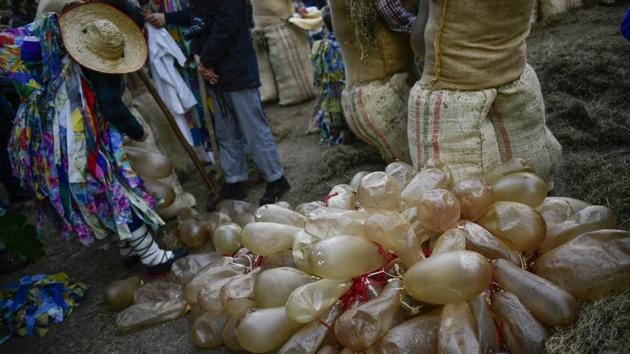
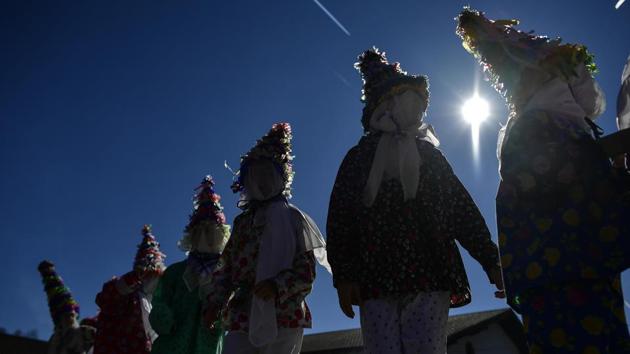
Carnival festivities in some parts of rural Spain can be sinister, and at times, scary. After sunset, covering their faces with white handkerchiefs, stuffed into sacks full of straw, and holding a stick with an inflated animal bladder used to hit people, participants dressed as the "Zaku Zaharrak" characters parade for hours through the village, dancing and singing while a band plays music. The carnival is a long-standing rural tradition in which the forces of good and evil confront each other in a symbolic battle.
Updated on: Mar 11, 2020 3:07 PM IST


Share via


Copy link

1/8
 View Photos in a new improved layout
Updated on Mar 11, 2020 3:07 PM
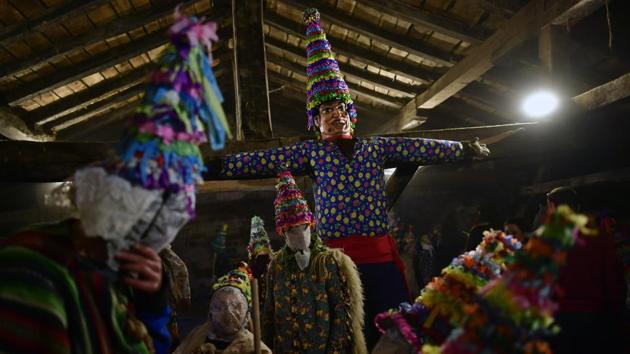
People prepare with the symbol of Carnival, the giant Miel Otxin, to participate in an ancient rural carnival in the small Pyrenees village of Lantz, northern Spain. The carnival is a long-standing rural tradition in which the forces of good and evil confront each other in a symbolic battle. (Alvaro Barrientos / AP)
2/8
 View Photos in a new improved layout
Updated on Mar 11, 2020 3:07 PM
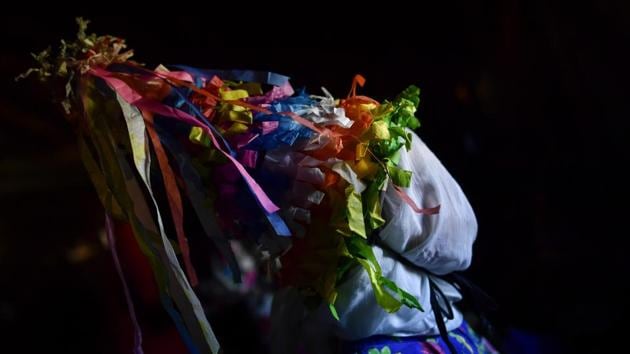
A participant prepares to take part in an ancient rural carnival in Lantz. The seasonal traditions in the Pyrenean villages of Lantz and Lesaka are not for the faint-hearted. (Alvaro Barrientos / AP)
3/8
 View Photos in a new improved layout
Updated on Mar 11, 2020 3:07 PM
Participants dressed as the traditional carnival characters "Zaku Zaharrak," or old sack, in Basque language, participate in a carnival parade in the small Pyrenean village of Lesaka, northern Spain. After sunset, covering their faces with white handkerchiefs, stuffed into sacks full of straw, and holding a stick with an inflated animal bladder used to hit people, the "Zaku Zaharrak" characters parade for hours through the village dancing and singing while a band plays music. (Alvaro Barrientos / AP)
4/8
 View Photos in a new improved layout
Updated on Mar 11, 2020 3:07 PM
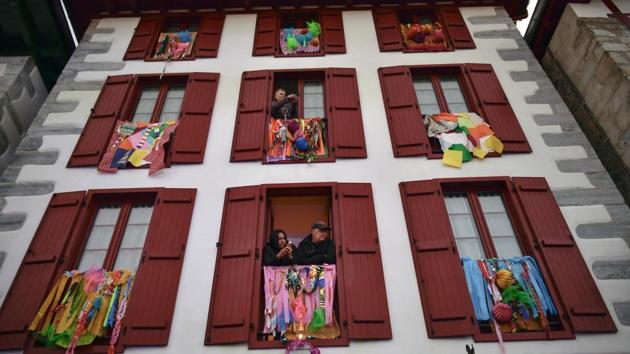
Residents look out from windows of a building as participants dressed as the traditional carnival characters "Zaku Zaharrak" participate in a carnival parade in Lesaka village. Locals parade through the village streets with a giant figure of ‘Miel Otxin,’ which is attached to a wooden structure and represents a legendary bandit. (Alvaro Barrientos / AP)
5/8
 View Photos in a new improved layout
Updated on Mar 11, 2020 3:07 PM
Iker de La Torre, 16 years old, prepares to participates as a ‘Ziripot’in an ancient rural carnival in Lantz village. To the musical accompaniment of bagpipes and flutes, the festivities include making the bandit dance before executing him. (Alvaro Barrientos / AP)
6/8
 View Photos in a new improved layout
Updated on Mar 11, 2020 3:07 PM
Participants dressed as the traditional carnival characters "Zaku Zaharrak," prepare to participate in a carnival parade in Lesaka village. Covering their faces with white handkerchiefs after sunset, they parade for hours through the village, dancing and singing to the music of a band. (Alvaro Barrientos / AP)
7/8
 View Photos in a new improved layout
Updated on Mar 11, 2020 3:07 PM
Inflated animal bladder used to hit people in the traditional carnival characters "Zaku Zaharrak." These traditions were banned during the 1939-1975 dictatorship of Gen. Francisco Franco, but since being revived in the early 1990s they have thrived and attract many visitors. (Alvaro Barrientos / AP)
8/8
 View Photos in a new improved layout
Updated on Mar 11, 2020 3:07 PM


