E-Paper



A Russian military officer turned against his own country to help Ukraine kill 300 soldiers before escaping to Kyiv: Report
Lt. Stupnikov fed Ukraine troop locations, radio frequencies and military plans, helping Kyiv track Russian movements and target troops and command posts.

 Prefer HTon Google


A Russian army officer who secretly passed sensitive military intelligence to Ukraine, helping Kyiv kill more than 300 Russian soldiers, has defected to the Ukrainian side after months of covertly sabotaging his own military, according to a report by The Wall Street Journal.
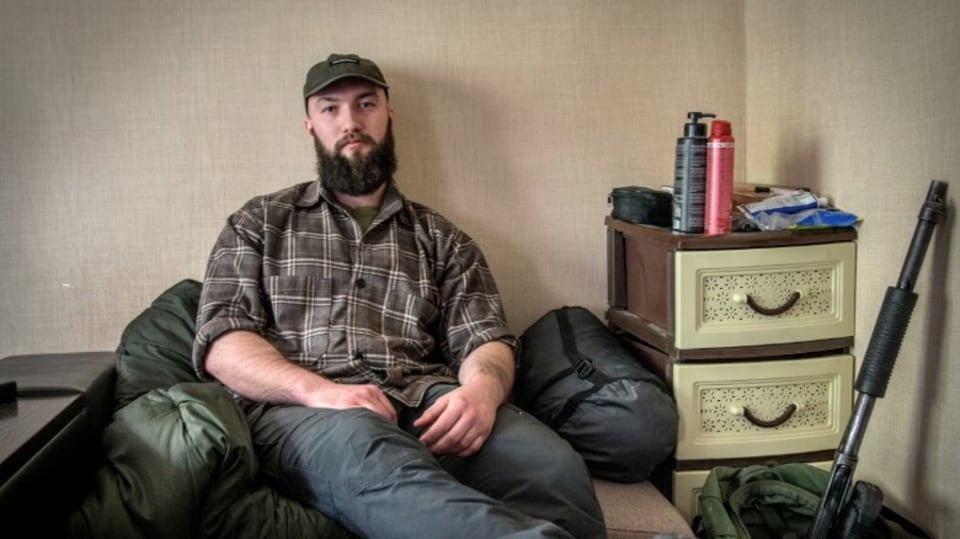
Lieutenant Lev Stupnikov, a communications officer whose information included troop positions, radio frequencies and operational plans, helped Ukrainian forces anticipate Russian movements and target military personnel and command posts, the newspaper reported.
Also Read | 'US helping Russia': Ukraine levels accusations amid reported Starlink curbs, missile strikes on Kyiv
Stupnikov also allegedly disrupted surveillance and communications equipment. He disabled cameras monitoring Ukrainian territory and tampered with a battery pack connected to a drone controller, causing it to overheat and malfunction during a mission.
Why Stupnikov turned against Russia
According to the WSJ report, Stupnikov's opposition to the war began when Russia launched its full-scale invasion of Ukraine in February 2022. He recalled watching videos of Russian helicopters flying over Ukrainian cities and bombs exploding, saying he was appalled by the violence against civilians.
“They were dropping bombs on innocent civilians,” he said. “It was evil.”
Also Read | 'We're done': Ukraine's Zelensky says won't follow Trump's demand of no strike on Russian refineries
A graduate of a prestigious military academy in St Petersburg, Stupnikov eventually served as the chief signals officer for a battalion involved in Russia's campaign to capture Vuhledar, a strategically important Ukrainian stronghold in the Donbas region. His responsibilities included maintaining communications between commanders and frontline units, as well as ensuring access to surveillance-camera and reconnaissance-drone feeds.

His position gave him access to information that could be used to help Ukrainian forces identify Russian troop movements and plan attacks.
How his intelligence helped Ukraine
Stupnikov's information reportedly enabled Ukrainian forces to identify where Russian personnel were being deployed and when armoured units were expected to advance.
In March, Ukrainian forces killed several Russian officers during a large brigade gathering after receiving information about the meeting, according to the WSJ. In May, a strike on the basement of a former hotel where two assault units were staying killed 20 soldiers, including a captain. Other intelligence led to an attack on a brigade command post during a high-level meeting.
Also Read | Ukraine out of stock, allies in a queue, and the US Patriot missiles now shaping wars and alliances
His activities were part of a broader Ukrainian intelligence effort to recruit Russian informants through encrypted communication platforms. According to the newspaper, the network included people living near military facilities as well as Russian soldiers serving on the front line.
When Stupnikov's tip helped kill 68 Russian soldiers
One of Stupnikov's most consequential intelligence inputs came during a Russian military training exercise near Vuhledar in eastern Ukraine, where a large group of infantrymen, medics and senior officers had assembled on a frozen field ahead of an offensive.
According to WSJ, Stupnikov, who had secretly begun sharing information with Ukrainian intelligence earlier that month, photographed the gathering and informed his Ukrainian contact that between 120 and 150 Russian personnel were present. He had already supplied the precise coordinates of the location.
His contact urged him to leave the area immediately as Ukrainian forces prepared to strike. Stupnikov moved away from the gathering and took cover among nearby trees, pretending to relieve himself when missiles struck the field.
The attack left dozens of Russian soldiers dead or wounded. When his Ukrainian contact asked him to confirm the damage, Stupnikov replied, “There's just meat,” according to the WSJ report.
Later that day, he provided a casualty count of 68 killed and 60 wounded. Among those killed were 10 officers, including Colonel Gusein Musayev, commander of Russia's 36th Motorized Rifle Brigade.
How he escaped to Ukraine
In February 2024, after Stupnikov had spent three months serving on the front line, his mother, Tatiana, contacted Dmytro Karpenko, a computer programmer working closely with Ukrainian military intelligence, to seek help in getting her son out of the Russian army. Her mother was anti-Putin and did not want her son to be serving in Russian army.
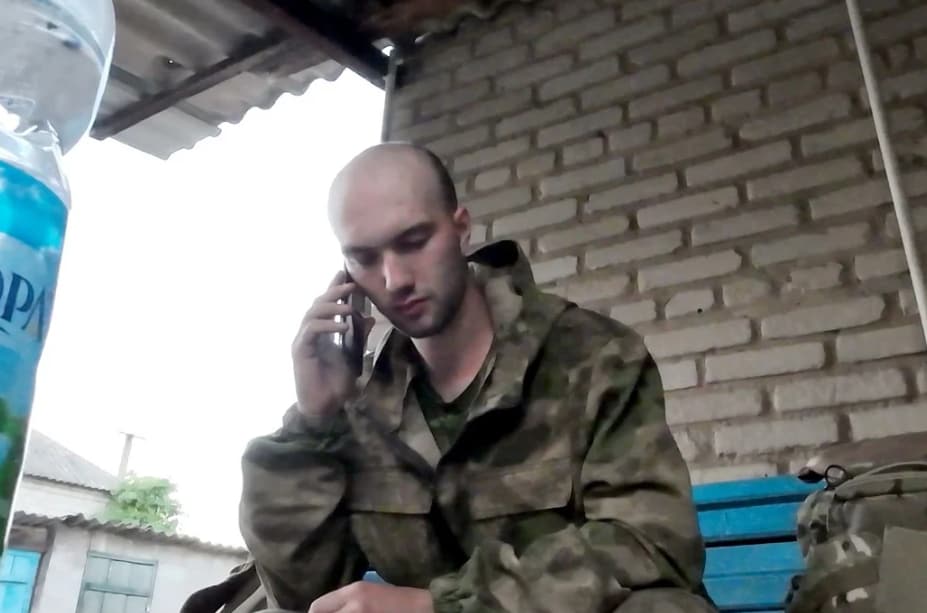
Karpenko put Stupnikov in touch with Ukrainian military intelligence, setting off a series of attacks on Russian forces based on the officer’s inside information, according to WSJ.
Subsequently Karpenko arranged Stupnikov's defect to Ukraine.
In early July 2026, Karpenko instructed him to reach an agreed location near the village of Mykilske and leave his weapons behind. Stupnikov was still at a brigade command post when he received the message.
As he approached the designated area, Russian military personnel stopped him. He told them he was inspecting surveillance cameras and checking radio connections, allowing him to continue.
He then reached a line of trees, where a Ukrainian drone guided him towards Ukrainian positions.
According to the WSJ's account, Ukrainian soldiers spotted a lone figure approaching through their drone footage. Three troops emerged from a dugout and aimed their weapons at him. When challenged, Stupnikov responded with the words “Peanut shop”, a phrase agreed upon in advance to establish his identity.
He was searched for weapons, blindfolded and taken to a pickup truck, completing his passage from the Russian military to the Ukrainian side.
His defection marked the culmination of a covert operation in which an officer entrusted with maintaining his unit's communications had, according to the WSJ, repeatedly used his access to undermine Russian military operations.