
 E-Paper



Photos: Trump to recognise Jerusalem as Israeli capital, relocate embassy
Recognition of Israel’s control over Jerusalem and the relocation of the US embassy from Tel Aviv to Jerusalem will be popular with pro-Israel evangelical Christian voters who make up a key part of Trump’s base, but could trigger violence in the region and derail a developing US-Mideast peace plan
Updated on: Dec 06, 2017 1:33 PM IST

Share via


Copy link

1/8
 View Photos in a new improved layout
Updated on Dec 06, 2017 1:33 PM
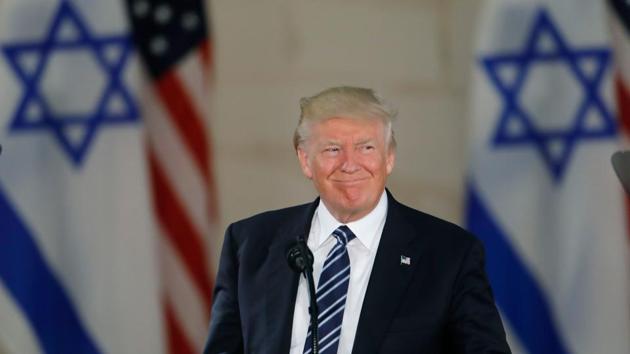
US President Donald Trump speaks during a visit to the Israel Museum in Jerusalem on May 23, 2017. Trump will recognize Jerusalem as Israel’s capital in a landmark announcement at 1800 GMT from the White House on December 6, 2017, upending decades of careful US policy and ignoring dire warnings from allies across the Middle East and the world. (Menahem Kahana / AFP)
2/8
 View Photos in a new improved layout
Updated on Dec 06, 2017 1:33 PM
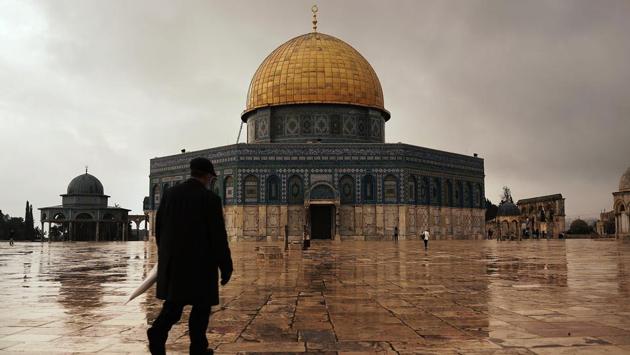
A view of the Dome of the Rock at Al-Aqsa compound in the Old City on November 27, 2014 in Jerusalem, Israel. Any recognition of Israeli control over the city will be welcomed by Israel, a close American ally, and pro-Israel Christian voters who make up a key part of Trump’s base. But it could also trigger violence, derail a developing US Mideast peace plan before it even gets off the ground. (Spencer Platt / Getty Images)
3/8
 View Photos in a new improved layout
Updated on Dec 06, 2017 1:33 PM
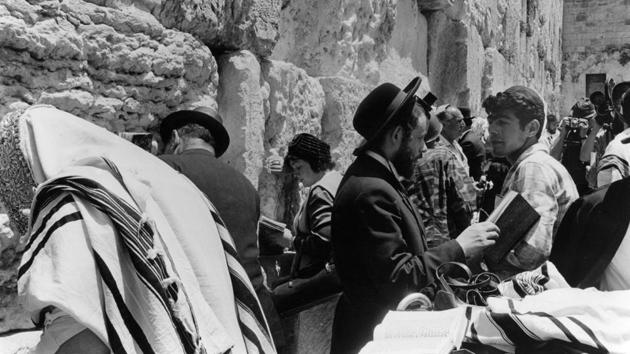
Jewish people at the Wailing Wall for the first time after its capture during the Six Day War in 1967. Israel claims all of Jerusalem as its capital, while the Palestinians claim the eastern sector, captured by Israel in 1967, as the capital of a future independent state. These rival claims lie at the heart of the decades-long conflict. While Israel controls the city and its government is based there, its annexation of east Jerusalem is not internationally recognized. (Terry Fincher / Getty Images)
4/8
 View Photos in a new improved layout
Updated on Dec 06, 2017 1:33 PM
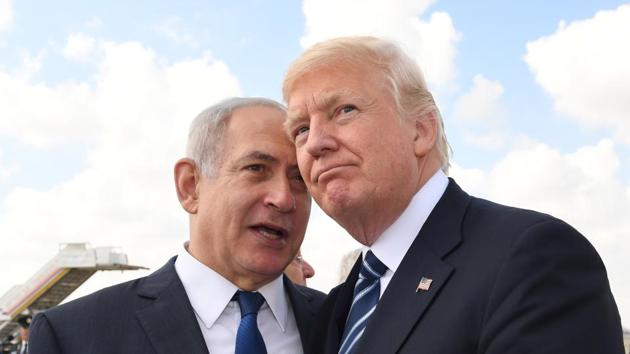
Israeli PM Benjamin Netanyahu and US President Trump prior to the latter’s departure from Tel Aviv on May 23, 2017. On the campaign trail, Trump took a strongly pro-Israel stance, promising to relocate the US Embassy from Tel Aviv to Jerusalem. Under American law, the president must sign a waiver every six months that leaves the embassy in Tel Aviv. In June, Trump renewed the waiver. This week, another six-month deadline passed without Trump renewing it. (Kobi Gideon / GPO via Getty Images)
5/8
 View Photos in a new improved layout
Updated on Dec 06, 2017 1:33 PM
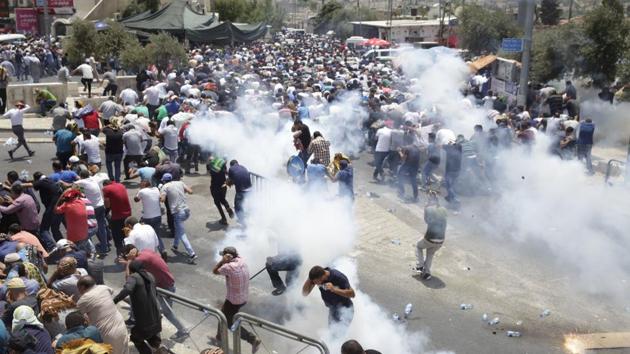
Palestinians evade tear gas thrown by Israeli police outside the Old City on July 21, 2017. Israeli security officials say they are monitoring the situation for all scenarios. Much of the violence between Israel and the Palestinians over the past 20 years has been connected to the holy city. More recently, a wave of Palestinian stabbings erupted in late 2015 in part due to growing numbers of Jewish nationalists heading to the Temple Mount. (Mahmoud Illean / AP)
6/8
 View Photos in a new improved layout
Updated on Dec 06, 2017 1:33 PM
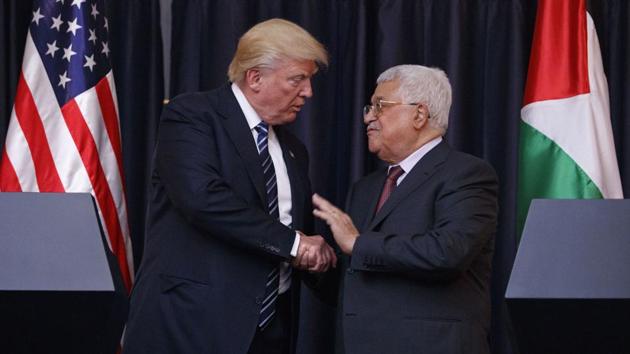
Palestinian President Mahmoud Abbas (R) conveyed his opposition directly to Trump during a phone conversation. Meanwhile, King Abdullah of Jordan stressed that this resolution will have serious implications for security and stability in the Middle East. Saudi King Salman also told the US president, “Such a dangerous step is likely to inflame the passions of Muslims around the world due to the great status of Jerusalem and the Al-Aqsa Mosque,” (Evan Vucci / AP)
7/8
 View Photos in a new improved layout
Updated on Dec 06, 2017 1:33 PM
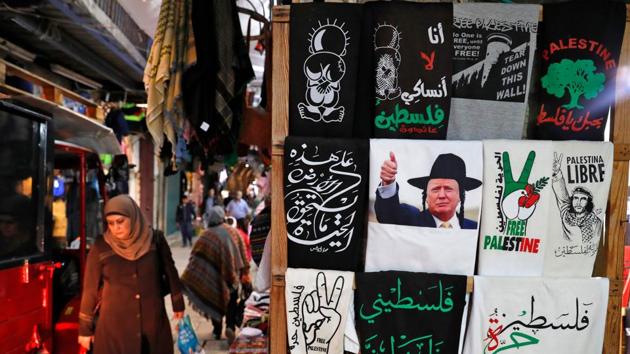
A T-shirt bearing an image of US President Donald Trump dressed as a Hasidic Jew is displayed in a souvenir shop in Jerusalem’s Old City on December 4, 2017. American officials who previewed the announcement claimed they didn’t expect the peace process to be impacted and that considerable progress had been achieved by the team working on it — led by Trump’s son-in-law Jared Kushner. (Ahmad Gharabli / AFP)
8/8
 View Photos in a new improved layout
Updated on Dec 06, 2017 1:33 PM


