
 E-Paper



Photos: Why New York is battered by the Covid-19 pandemic
The United States is hit hard by the coronavirus pandemic. About 5,45,000 people were diagnosed with COVID-19 in the US as of Sunday, and roughly 21,600 have died of the highly contagious illness. New York has one of the world’s highest death tolls; the city has seen 6,898 virus-related deaths so far. A look at some of the reasons why the Big Apple was so badly hit.
Updated on: Apr 13, 2020 5:56 PM IST


Share via


Copy link

1/10
 View Photos in a new improved layout
Updated on Apr 13, 2020 5:56 PM
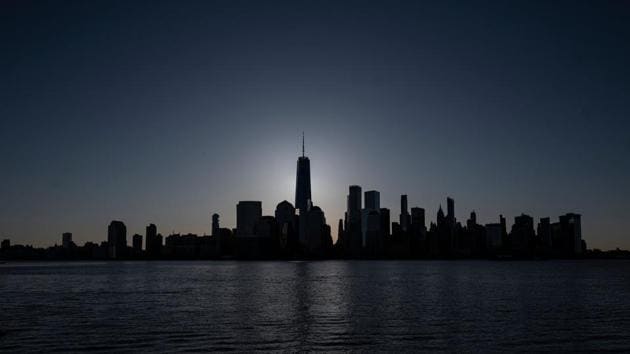
A view of the Manhattan skyline, in New York City. The American city has more coronavirus cases than Spain and Italy and accounts for around half of all deaths in the United States. The total number of coronavirus cases in NYC stands at over 104,410 as of April 12 with 6,898 virus related deaths. (Johannes Eisele / AFP)
2/10
 View Photos in a new improved layout
Updated on Apr 13, 2020 5:56 PM
A major reason behind why New York has been the worst affected by the pandemic appears its population density. America’s financial capital has 8.6 million inhabitants. There are 10,000 people per square kilometre, making it the densest city in the US. (Spencer Platt / AFP)
3/10
 View Photos in a new improved layout
Updated on Apr 13, 2020 5:56 PM
A woman stands outside an empty subway entrance on 42nd Street at Times Square. Millions of commuters brush up against each other on its packed subway system every day, and keeping distance on its sometimes narrow sidewalks can be difficult. (Wong Maye-E / AP)
4/10
 View Photos in a new improved layout
Updated on Apr 13, 2020 5:56 PM
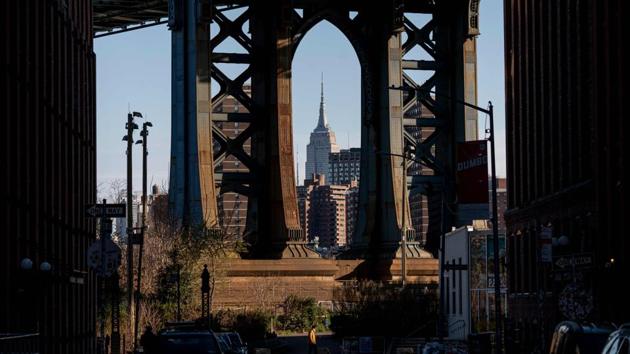
NYC also gets more than 60 million tourists a year and is the entry point to America for many travellers, meaning anyone carrying the virus is likely to start infecting others here first, elevating the risk of contagion. (Johannes Eisele / AFP)
5/10
 View Photos in a new improved layout
Updated on Apr 13, 2020 5:56 PM
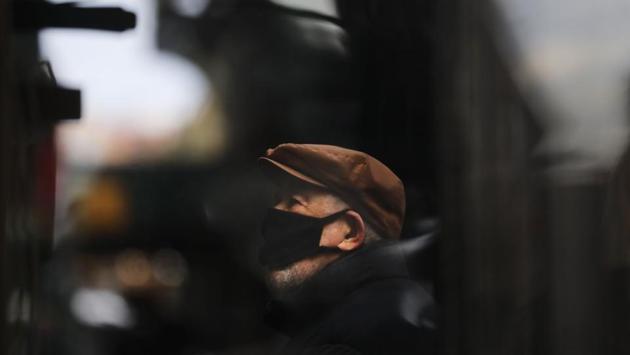
A man wearing a face mask as a precautionary measure, in the Borough Park neighbourhood of the Brooklyn borough. American geneticists estimate that COVID-19 started spreading here from Europe in February, before New York’s first confirmed case on March 1. (Spencer Platt / AFP)
6/10
 View Photos in a new improved layout
Updated on Apr 13, 2020 5:56 PM
A man stands next to a freeway exit as a cyclist rides past in the Bronx borough of New York. Overcrowded areas, and those with pronounced socio-economic inequality --particularly in the Bronx and Queens where many people already suffer health problems and lack medical care --have experienced the highest rate of infections, news agency AFP reported. (Wong Maye-E / AP)
7/10
 View Photos in a new improved layout
Updated on Apr 13, 2020 5:56 PM
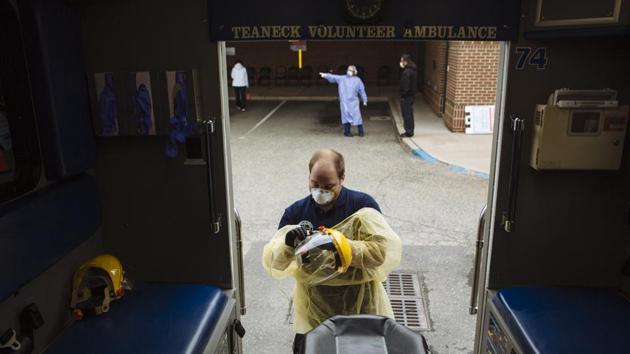
An emergency medical technician (EMT) removes and disinfects personal protective equipment (PPE) after transporting a patient in Teaneck, New Jersey. “New York City had all the preconditions that would support the idea that it was going to be hit very hard,” Irwin Redlener, public health professor and expert in disaster preparedness at Columbia University told AFP. (Angus Mordant / Bloomberg)
8/10
 View Photos in a new improved layout
Updated on Apr 13, 2020 5:56 PM
After much hesitation, New York City Mayor Bill de Blasio announced the closure of public schools, bars and restaurants from March 16. The governor ordered all non-essential businesses to close and residents to stay at home a week later on March 22. (Wong Maye-E / AP)
9/10
 View Photos in a new improved layout
Updated on Apr 13, 2020 5:56 PM
Headstones are seen in the Mount Zion Cemetery in the Queens borough. The United States has been recording nearly 2,000 deaths a day from the coronavirus. (Andrew Kelly / REUTERS)
10/10
 View Photos in a new improved layout
Updated on Apr 13, 2020 5:56 PM


