
 E-Paper



2020, Pune’s year in Covid: Specialised tertiary care hosp must in every district, says Mhaisekar
Mhaisekar has been at the forefront of the Covid-19 battle ever since the first case was detected in Pune


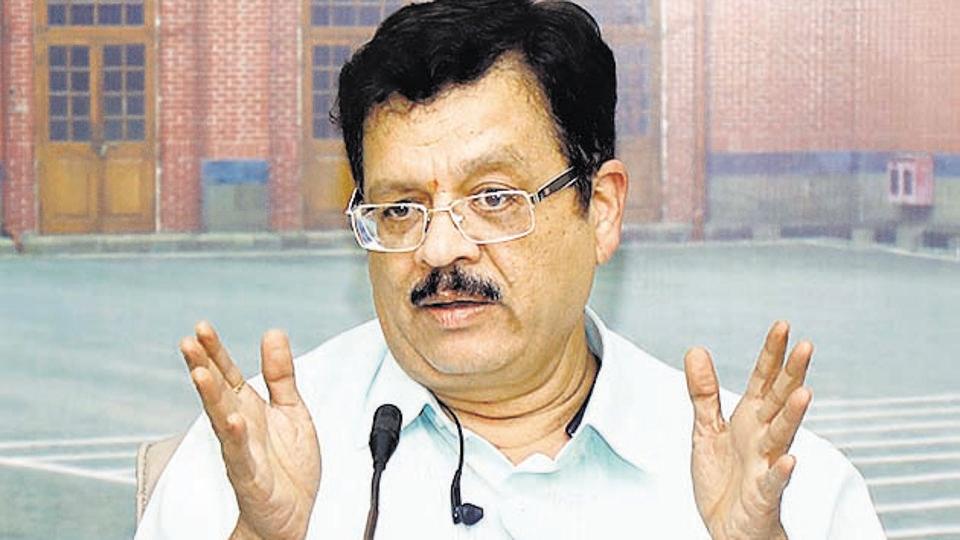
Deepak Mhaisekar is currently appointed as chief minister Uddhav Thackeray’s advisor on the Covid-19 pandemic. He retired as Pune divisional commissioner on July 31. Mhaisekar has been at the forefront of the Covid-19 battle ever since the first case was detected in Pune. In conversation with Steffy Thevar Mhaisekar draws on lessons learnt from the pandemic and how Pune fought to bring it under relative control
Being one of the first officials to handle the Covid-19 pandemic head on, during the initial months, how did you tackle the situation?
I had the experience of more than 30 years in various administrative fields. In Chandrapur or Nanded, I had handled natural disasters and even in Pune, when I was divisional commissioner, we had floods in Sangli. However, Covid-19 is something unique and unknown. The clinical expression and the treatment protocol was not known to the world at the time. In fact, the WHO was also not clear about the treatment protocol. The only thing that we knew is that in the initial phases it was more about giving IEC (Information, Education and Communication); training or letting people know how it spreads and the precautions we need to take. In the initial months, even WHO was not keen on using masks and there was no insistence in using masks, but at the same time the proper etiquettes, like sneezing in public, maintaining social distance and washing of hands was very clear. Initially we had very few cases.
Pune, in September, had the highest number of active cases in the country. What went wrong?
I do not think that there is anything wrong in controlling the situation in Pune. This was because Pune did maximum testing and maximum tracing, as this was the only way to control the spread. Identifying the positives and isolating them was the only way out. We had only five hotspots initially in Pune, which were the crowded places where social distancing was not possible; like Bhavani peth, Kasba peth, Dhole Patil road or likewise. Initially, people feared this disease and so they did not report themselves in. This could probably be one of the reasons for the spread of the infection to such an extent.
One must also understand that places like Pune, Mumbai or even Delhi are metropolitan areas where the movement of people cannot be stopped. Ultimately everything depends on how much people follow social distancing norms, washing of hands or wearing masks; if not, then there could be a rise in number of cases.
Are you satisfied with the way the administration performed, especially in Pune?
The administration tried their best. One has to understand the type of disease that we were facing. Right now, at this juncture, one of the best facilities is in the USA and UK and you can see the situation over there. So it is not a question of administrative failure, USA is reporting more than two lakh cases a day and in UK, 40,000 cases a day.
So even the most developed countries are now battling their second or third wave and they are even worse than what we faced in our first wave. I do not want to blame people, as well as it was totally new virus and a totally new way of the virus spreading.
Pune’s overall public health infrastructure needs a revamp as the pandemic exposed it. What needs to be done?
In one of our recommendations we have mentioned that not only Pune, but public health facilities in nearby cities like Solapur, Satara or Ahmednagar, also need to be ramped up. We have recommended that every district headquarters must have a specialised tertiary care hospital.


