
 E-Paper



All gain and no pain: Athletes from Pune talk about advantages of long-distance running with pacers
While the field is split on whether or not pacers are a beneficial addition to marathons – running events for individuals – the general consensus is that their presence is essential to educate, communicate and motivate the runners which help them achieve their desired target


Pacers have now become a part and parcel of major running events in the country and throughout the world. These specifically designated racers help an athlete or a group of athletes to finish a race in a specific time. The onus is on them to set and maintain a specific pace throughout the race which helps the athlete channelise their energy at particular intervals of the course.
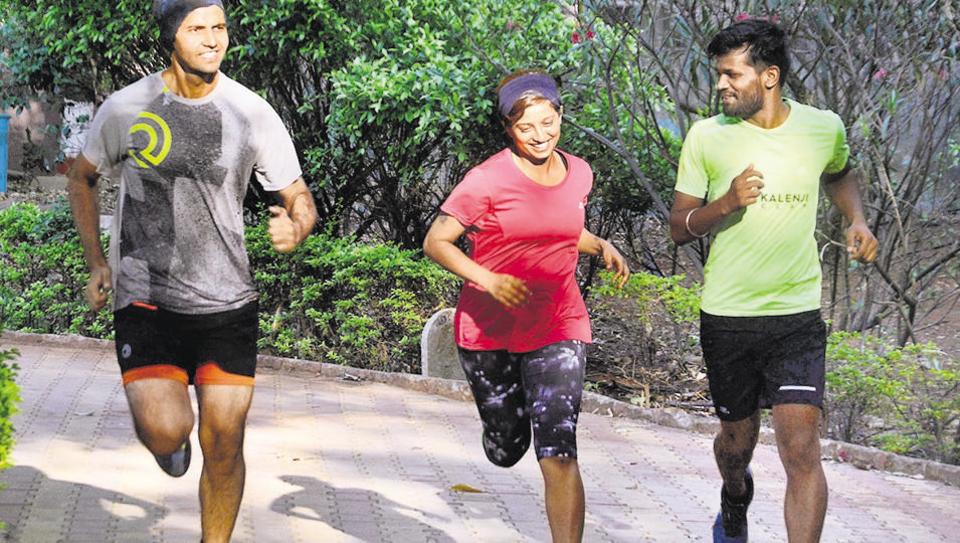
While the field is split on whether or not pacers are a beneficial addition to marathons – running events for individuals – the general consensus is that their presence is essential to educate, communicate and motivate the runners which help them achieve their desired target.
With the success of the Puneri Half Marathon last Sunday at Wagholi, Hindustan Times took the opportunity to spend an evening in the shoes of a pacer to see just how pivotal a role they play in making long-distance running an entertaining experience for the participants.
Manuj Sharma, an avid long-distance runner and an ultra-marathon champion in Bangalore, also serves as a pacer for a number of events throughout the country.
He said, “The concept of pacers was more prominent in Mumbai where my friends, apart from being very good runners were also invited to different events as ambassadors and pacers. Runners like me brought the idea of pacers to similar events in Pune.”
It wasn’t easy to convince every marathon organiser about the concept as the presence of pacers is not a compulsion and the race could go on seamlessly without the presence.
Thus, according to Sharma, pitching the idea to them was a challenge but slowly everyone managed to get on board with the idea of pacing.
“We had to pitch the idea to them [organisers] that pacers are more effective because they will support and encourage the runners during the race. There are also the concepts of positive and negative splits (box on this) and we had to explain all of this before we finally managed to acclimatise everyone with the idea of pacers,” said the 31-year-old.
Anita Dharane, a functional trainer, made her running debut as a pacer at Sunday’s half marathon and she completely fell for the idea that all the athletes who are looking to push their limits must run with pacers as they’ll achieve their targets perfectly.
Explaining in the detail what the role of a pacer exactly is, Dharane said, “The pacer gives everyone an opportunity and helps achieve someone’s personal best. In the Puneri Half Marathon event, my pacing time was 35 minutes for 5 kilometres. So, if someone is running a 5k event for the first time or if someone’s been running regularly and wants to improve their practice time, they can run with me and achieve the desired time. We also have to keep motivating them to complete the course and keep up with us.”
While the training routines of a pacer and a regular athlete may not vary considerably, the approach to their training certainly does. A pacer follows more of a monotonous training routine in comparison to athletes constantly looking to better their individual timings.
When quizzed about the training, Dharane stated that she catered to a similar school of thought. “Racing events are on-ground learning experiences for the pacers. When you’re a pacer you can’t think like a runner so the mindset definitely changes. Thus the kind of training also varies if you are to become a good pacer and that is something I see myself doing in the near future.”
Ram Yadav, a professional triathlete and an Ironman finisher, has been a pacer on seven different occasions and believes that having a companion in the form of a pacer is the moral support many new athletes need in order to finish a race.
“Having a pacer beside you is like having a bus or train that you have to catch. You can see that the pacer is a certain distance ahead of you and you know how much more you have to put in to come back on par. It is also very important because you’re not running alone. Often during these long races, people feel the lack of motivation, but with a pacer, they’re entertained as well as focused on their targets,” explained the 26-year-old.
Who is a pacer?
A pacer helps you to finish a race in a specific time. Half-marathons and marathons often provide pacing teams for a variety of finish times. One must pick a pacer who coincides with their fitness and skill levels, multiply their pace per mile by the number of miles in the race to help them choose the best pacing team. Pacing teams are led by experienced racers who are trained to help you maintain a steady pace.
Positive and negative splits
A split is the idea of splitting a race or training run into two or more equal-distance segments. It refers to the time required to complete one of those segments.
A positive split typically means taking more time to run the second half than the first half. It is a strategy defined by setting a higher initial pace before slowing it down towards the end of the race. Two of the last three marathon records were set by positive splits.
A negative split is a racing strategy that involves completing the second half of a race faster than the first half. It is defined by the intentional setting of a slower initial pace, followed by a gradual or sudden increase of speed towards the end of the race.


