
 E-Paper



Extended monsoon caused 1,162 dengue cases in last four months, says Pune civic body
Lack of awareness is another reason for rise in dengue cases, points out health expert


As many as 1,162 dengue cases have been reported in Pune Municipal Corporation (PMC) in four months (August to November) this year. In 2018, the cases stood at 478 during the same period, while the 2017 figure was 1,459, according to the data released by the health department of civic body.
In 2019, a total of 1,333 dengue cases were confirmed, up against 382 in 2018 and 1,691 reported in 2017, according to the health department.
Officials said that the rise in dengue cases was reported due to extended monsoon which is suitable for the breeding of dengue larvae. The monsoon this year lasted for over six months from June to November.
Sanjay Wavare, head of the insecticide department PMC, said, “If we compare this year’s figure to 2017 a similar trend was reported. These four months are the most suitable period for the breeding of dengue larvae. The prolonged monsoon is the primary reason for the rise in cases.”
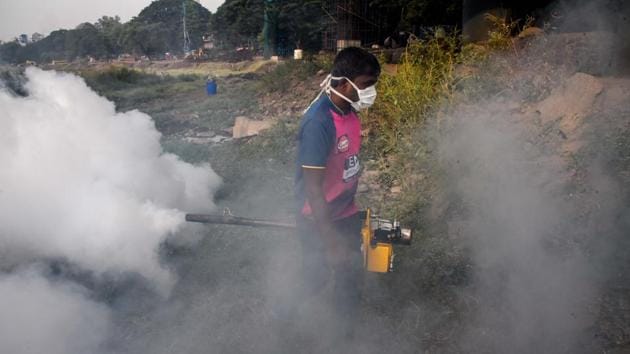
“We carried out mass fogging, house to house survey and awareness programmes in schools and practical demonstrations for children,” said Wavare.
As of December 8, 2019, PMC has issued notices to 3,240 offenders at places where dengue larvae were found to be breeding and collected a fine Rs 4,15,351 in fines from repeat offenders.
While there were around 15 suspected deaths in the city due to dengue, the PMC in its records claimed only 1 death occurred this year due to confirmed death. The official figure for confirmed dengue deaths was two in 2018 and eight in 2017.
The number of suspected cases too rose this year comparatively as there were 5,827 suspected cases in 2019 against 2,943 in 2018 and 6,390 in 2017.
Dr Abhijit More, public health expert, Jan Swasthya Abhiyan, said, “The breeding of dengue larvae takes place at small water tanks near housing societies and construction sites. Lack of awareness is another reason for rise in dengue cases. Not just the administration, the elected representatives should be equally responsible in spreading awareness.”


