
 E-Paper



First frog species from Maharashtra gets genetic identity after one century
A team led by Dr Samadhan Phuge from SPPU and Dr KP Dinesh from Zoological Survey of India Pune studied most of the cricket frogs found in northern Maharashtra and concluded that Minervarya syhadrensis is morphologically cryptic in nature


City-based researchers have identified and re-described Minervarya syhadrensis, the first cricket frog described from Maharashtra in 1919 by Scottish zoologist Thomas Nelson Annandale in the pre-independent India. Over a period of one century, researchers were facing problem in the identification of this frog due to variations in its colour pattern and morphology matching with other frogs making its identification very difficult. The frog was confused with the other species Fejervarya limnocharis found in Indonesia.
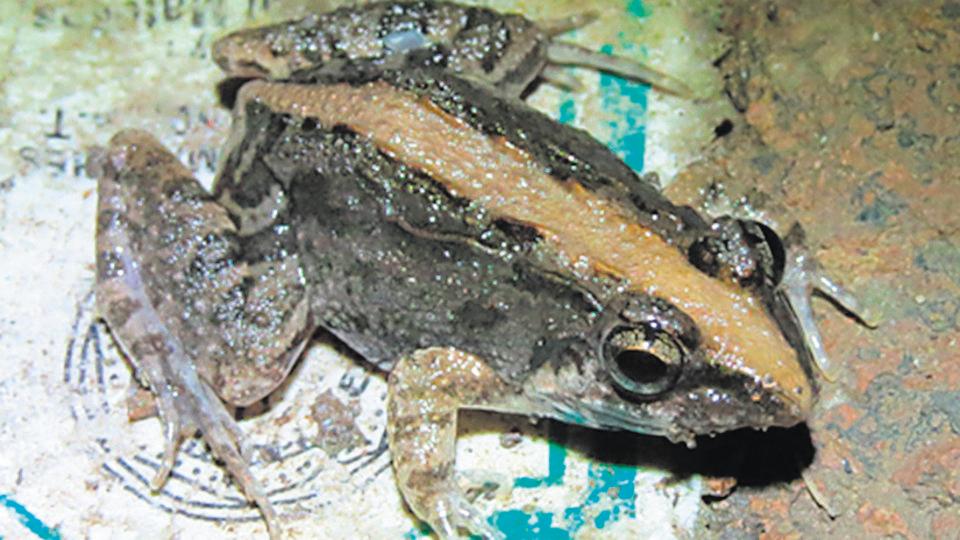
A team led by Dr Samadhan Phuge from Savitribai Phule Pune University (SPPU) and Dr KP Dinesh from Zoological Survey of India (ZSI) Pune studied most of the cricket frogs found in northern Maharashtra and concluded that Minervarya syhadrensis is morphologically cryptic in nature. They studied morphology, gene sequences and acoustic characters to fix the identity of the cricket frog species Minervarya syhadrensis described from Pune one century ago and provided genetic proof for its wide distribution in India with different colour morphs.
The authors have published the study in Zootaxa, an international premier journal for zoological systematics and taxonomy published from New Zealand.
“In this study, the authors have considered wide range of samples across the Western Ghats and India to understand the phylogenetic relationships. The frog exhibits with different colour patterns and variable morphology in different parts of the Western Ghats and Indian peninsular. Earlier, since there was no genetic data for the species from its type locality Khandala, Pune, there were confusion with the identity and phylogenetic relationship of the species itself. The study highlights the importance of DNA barcode data for the historical species described from the country.” said Dr Dinesh, scientist at ZSI, Pune.
Due to unavailability of genetic data, the same species was described with new name in 2005 from the central Western Ghats as the morphological characters were variable and inconsistent while comparing with the new species. But genetic studies suggested the species described in 2005 from the central Western Ghats is nothing but Minervarya syhadrensis described in 1919 from Pune. Researchers predict that this frog could be distributed throughout India and possibly have their range of distribution in the neighbouring countries too.
“The other interesting finding of the study is that due to morphological similarities the males of Minervarya syhadrensis attempt to breed with the females of the other species (Minervarya agricola) available in the field during breeding season ending up in unviable inter-species hybrids,” said Dr Samadhan Phuge, researcher at Pune University.
“The males of Minervarya syhadrensis generally amplect with the females of the other species (Minervarya agricola). Both the species of frogs call in chorus in the field during breeding season (with enormous noise), which creates difficulties in mate selection for both the species.” he said.
This is one of the classical studies where researchers have addressed a century-old problem with DNA barcode data and have made a first report of possible inter-species hybrids between two genetically and distantly related species using acoustic data. The authors believe that the study will stimulate the researchers to investigate the identity and distribution of other classical species of the genus described from India, which lost their identity over the time.


