
 E-Paper



Pune’s worst-hit Bhavani peth manages to flatten the curve
Basic measures, strict implementation of lockdown by ward administration lead to a decline in cases


The Bhavani peth ward, that emerged as Pune’s Covid-19 hotpot in April and May has reported a drop in the number of fresh cases on a daily basis, according to statistics shared by the Pune Municipal Corporation (PMC).
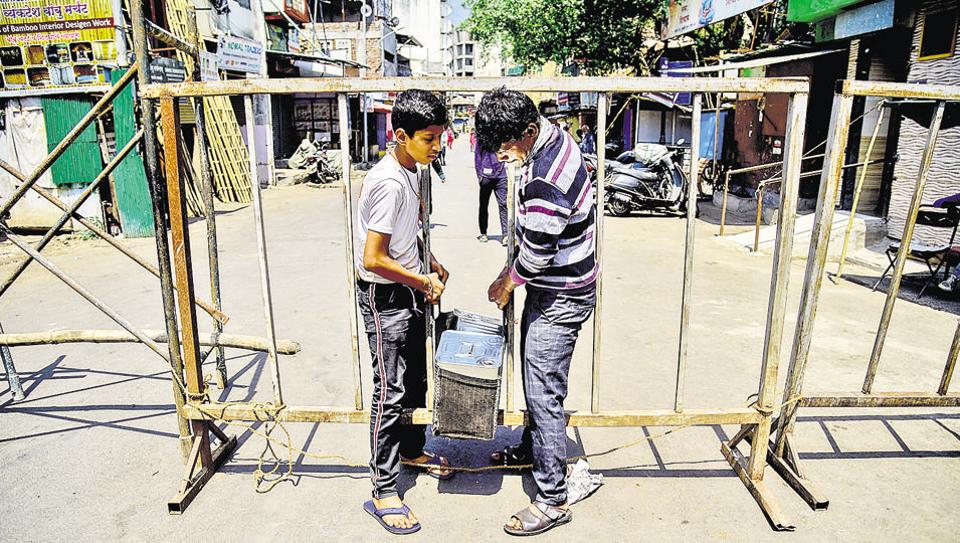
According to the PMC data, the Bhavani peth ward reported 865 progressive cases, of which 121 are active cases until June 4.
This has led the area to the 10th spot in ward-wise ranking of active Covid-19 positive cases.
In Bhavani peth, Mahatma Phule peth reported 383 cases, out of which 38 are active; this is followed by Lohiyanagar which had 257 positive cases of which 46 are active; and Rasta peth had 227 positive cases, of which 37 are active.
The number of active cases in the ward is now lower than the Dhole Patil road (509), Yerawada-Kalas-Dhanori (289), Bibwewadi (213) and Sinhgad road (204) wards.
The Bhavani peth ward has also a reported 3,078 co-morbid patients and 378 pregnant women, both categories of whom are vulnerable to the infection and are being kept a close watch on.
The ward administration which keeps a check on the ground took basic measures and ensured strict implementation which has resulted in the ward slowing down the rate of infection.
Assistant municipal commissioner Bankar Somnath Haribhau said, “We have ensured maximum contact tracing as per the ICMR guidelines. We have also sealed the entire building of the slum lane when we found positive cases and also took swabs of all the residents, symptomatic and asymptomatic, which ensured that we could contain the spread of the virus. The restricted movement of PMC staff, most of who lived in this area was providing essential services, helped.”
According to Haribhau, the PMC appointed dedicated officers to each of the micro-containment zones and also a police officer to ensure that social distancing and safety measures are followed, including wearing masks at all times when one steps out of the house.
“Even today we have our officers to ensure that social distancing is followed at all shops which have opened again,” he said.
A PMC health official working on the ground in Bhavani peth, requesting anonymity, said, “When Bhavani peth was at its peak, we were reporting about 30 cases per day which have now come down to five to seven positive cases daily. We could achieve all this because of the house-to-house survey to look for anyone who showed any possible symptoms of virus. We also cleaned the public toilets at least three times a day with sodium hypochlorite and started early contact tracing, which meant whenever we got the list of positives in our ward we started contacting at least six close contacts and collected their swabs within two-three hours, which were sent for tracing. Till the time the results were out they were either quarantined at home or in an institution, depending on if there were an attached toilet and a separate room in the house.”
The official further added that while there was resistance initially from the locals as the awareness grew, they become supportive and came forward if they found any symptoms similar to flu.
He further added, “We also started distributing homeopathic medicines which we delivered to each house. We also distributed masks to everyone. We conducted door-to-door surveys looking for vulnerable senior citizens who had any reported comorbidity and asked the home members to keep a close watch on them and report to the PMC in case of any symptoms of flu.”
The ward has one swab collection centre at the Savitribai Phule municipal school and also has a mobile swab collection centre, run on a bus.
The civic body has also supplied ration kits in the ward to restrict the movement of people within the ward.
As of June 4, about 16,131rations kits have been distributed in the ward, of which 15,731 have been distributed by the PMC and remaining by NGOs.
The ration kits provided to the citizens include essential items like sugar, flour, sweet oil, pulses, rice, flattened rice, salt, soap, chili powder, tea powder, and milk powder.
Similar measures were taken at the Patil Estate slum which was the most affected in the Shivajinagar-Ghole road ward. The slum is no more a containment zone in the newly declared list by the civic body. On June 2, the slum area was removed from the list of 66 micro-containment zones after several measures were taken to contain the spread of the virus.
Bhavani peth’s road to taming Covid-19
According to Bankar Somnath Haribhau, assistant municipal commissioner
-Maximum contact tracing as per ICMR Model
-Swabs of symptomatic and asymptomatic residents taken
-Dedicated PMC officers in each micro-containment zone
-Police officer assigned to ensure social distancing
-House-to-house survey across Bhavani peth
-Public toilets cleaned 3 times a day
The Bhavani peth ward numbers
Mahatma Phule peth – 383 positive cases / 38 active
Lohiyanagar – 257 positive cases / 46 active
Rasta peth – 227 positive cases / 37 active
** Data released by PMC
Wards/areas with highest active Covid-19 positive cases
Dhole Patil road – 509
Yerawada-Kalas-Dhanori - 289
Bibwewadi - 213
Sinhgad road - 204
** Data released by PMC


