
 E-Paper



Monday Musings on coronavirus: Taking Swachh Bharat 10 steps forward
Four years ago, Dr Arvind Chopra, a renowned city-based rheumatologist had said that India needs a national strategy on health and sanitation that will deal effectively, not just with vector-borne diseases caused by mosquitoes and flies, but also of other diseases.


Every time a major epidemic breaks out, our focus invariably shifts to issues of hygiene and cleanliness. This time the novel coronavirus has triggered a global pandemic, leading to the kind of precautionary measures, the kind of which at least I have not seen in my lifetime.
Visas have been cancelled, schools, colleges, theatres, gyms and public gardens have been shut down, public engagements and gatherings cancelled; heavy restrictions placed on malls and people have been allowed to work from home and advised to step out only if necessary.
There is constant messaging about all the precautions that we need to take in terms of personal hygiene to arrest the spread of the virus which leads to coughing and fever. Covering our face to prevent cough droplets from infecting others, isolation at home, washing our hands with soap frequently and using a sanitiser when required are things that we ought to do routinely. At least, now, because of the coronavirus pandemic, we have realised that we can’t afford to be careless anymore and we are even advising our domestic helps and their families to follow these hygiene standards strictly. This should hopefully stick on as a habit.
In August 2009, when India’s first Swine flu (H1N1) death happened in the city, followed by another 143 deaths in that pandemic, the Pune Municipal Corporation (PMC) played an important role in bringing the situation under control. As recalled by retired IAS officer Mahesh Zagade, who was then the Pune municipal commissioner, numerous measures were taken, one of which was to keep the city clean through aggressive solid waste management by the conservancy staff.
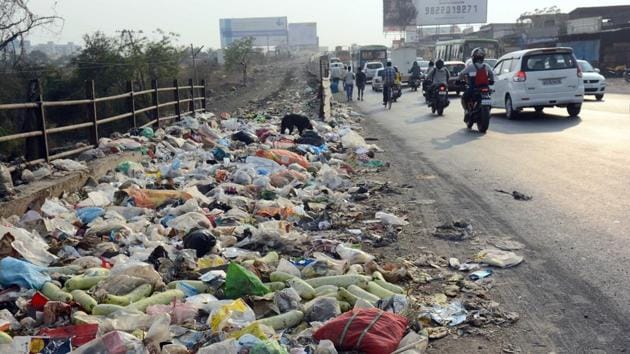
Recall the massive cleanliness drive that was undertaken in Surat- the epicentre of the deadly 1994 plague in the country. The city was then extremely filthy with open sewers and cesspools and stinking garbage heaps all around. However, a determined effort was made to clean-up Surat with visible results that brought accolades to the municipal corporation. Today, Surat is one of the cleanest Indian cities, ranking among the top 5 in the national Swachh Survekshan cleanliness index, far ahead of Pune.
Pune’s rankings have slipped horribly in recent years, slipping to the 37th position in the survey of 425 cities in 2019. As pointed out in these columns before, merely painting colourful ‘Clean Pune, Green Pune’ messages on the city walls won’t help. An all-round aggressive effort is needed to regularly clean the rivers of the water hyacinth and improve garbage collection and disposal as a starting point. Clearly, the efforts need to be stepped on both these fronts, by the Pune and Pimpri-Chinchwad municipal corporations which account for a collective population of over half a million people.
In October 2016, Dr Arvind Chopra, the Pune-based internationally renowned rheumatologist and expert on the Chikungunya virus, had said in an interview to BioSpectrum that “waiting for a vaccine is not the answer” to the repeated outbreaks of dengue and chikungunya in the country.
The answer does not lie in the wait for a vaccine against dengue and chikungunya, but a national strategy on health and sanitation that will deal effectively, not just with vector-borne diseases but also of other diseases, Dr. Chopra had said to the magazine. He had then said that Prime Minister Narendra Modi’s Swachh Bharat programme holds considerable promise on this front and should become part of India’s National Health Policy.


