
 E-Paper



Monday Musings: Pulwama attack by radicalised Indian is its most chilling aspect
The Pulwama attack points to extreme alienation of sections of the population in Kashmir. This needs to be dealt with


There is deep pain, anguish and anger across the country over the death of more than 40 of our soldiers in the recent suicide attack by a terrorist in Pulwama district of Jammu and Kashmir.
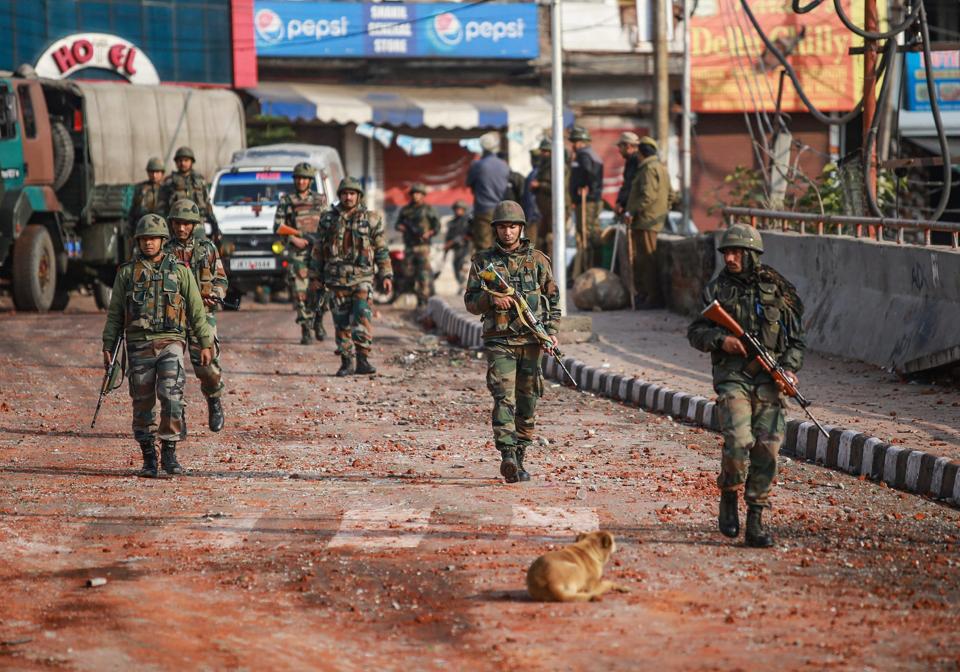
The single, most-chilling aspect of this attack is that it was carried out by a radicalised Indian from Kashmir. A single, radicalised youth has taken the lives of 40 of our well-armed soldiers. What is new in the latest attack is its scale and ferocity and the fact that it was carried out by a radicalised Indian.
It, very dangerously and very clearly points to the extreme alienation of the Indian population in parts of Kashmir. Are we, or are we not going to take note of this with all the seriousness that it deserves?
Undoubtedly, the Kashmiri youth who rammed his RDX-loaded car into a CRPF bus on Thursday was radicalised and trained by terrorists based in Pakistan. The fact that a large quantity of the high energy explosive was used also clearly points to the complicity of Pakistan’s ISI in this attack.
While the Government’s response and diplomatic attack on Pakistan is fully justified, almost all of it has been heard before: That the armed forces will be given a ‘free hand’ to respond to the attack; that a “fitting reply” will be given at a time and location of our choosing; and that steps will be taken to isolate Pakistan in the international community.
On May 27, 2017, this newspaper reported that there had been a 72 per cent increase in the number of security personnel killed in Jammu and Kashmir during the first three years of the BJP regime, as compared to the last three years of the UPA-II government. Our defence experts and analysts need to tell us whether the Government’s strategy on Kashmir is working or backfiring. They must tell us what steps are required to address the extreme alienation of sections of the Indian population in Kashmir.
In October, 1947, when Pakistani raiders attacked the Kashmir valley and Indian troops landed at Srinagar airport to repulse the attack, it was “bearded men, unmistakably Muslim,” who provided the fullest assistance to the Indian Army, wrote Ajit Bhattacharjea, the then Hindustan Times correspondent in J&K.
“…When we hopped a jeep ride into the city, we found volunteer groups organised by the National Conference, patrolling the roads and guarding the bridges,” he wrote in his book, Kashmir: The wounded valley.
Bhattacharjea found the Muslims of Kashmir to be “obviously friendly” and noted that diplomatic missions in New Delhi were unanimous that the Muslims of Kashmir would favour India over Pakistan in the event of a plebiscite.
When he visited Srinagar in May, 1993, he found an altogether different situation. “It was like entering hostile territory,” he wrote. Soldiers were to be seen everywhere; they were under strain, and were “no longer seen as protectors” by the local population and the houseboats on the Dal were empty…
What is it that had changed between 1947 and 1993, the journalist asked himself and sought to study and understand the causes of the contrasting situation. That contrast has only sharpened and worsened over then and now.
Indian politicians, generals and defence experts need to take a hard look at what is happening and re-examine their approach to the continuing tragedy in Kashmir
abhay.vaidya@htlive.com
****


