
 E-Paper



Monday Musings: Why is the youth angry today? What do they want?
Unless and until we have a modernised, professional and impartial police force, we will have many occasions to hang our heads in shame over the repeated breakdown of law and order in the country


Leaving aside the highly polarised politics of the January 5 mob violence at Jawaharlal Nehru University (JNU), New Delhi, why do you think were college and university campuses aflame with protests across India over the last week?
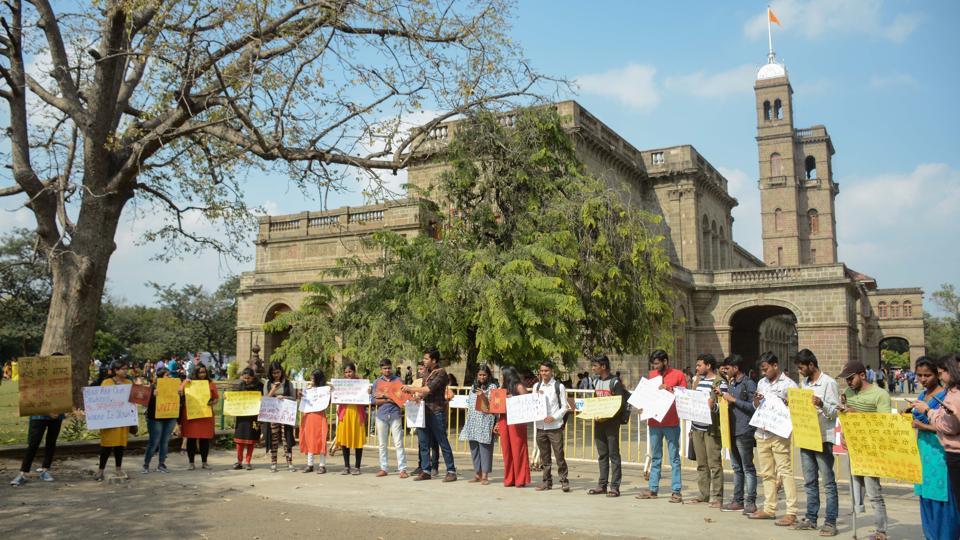
In Pune alone, one of the prominent education hubs in the country, almost a dozen protests have taken place at the Savitribai Phule Pune University (SPPU), Film and Television Institute of India (FTII), Fergusson College, Gokhale Institute of Politics and Economics, and out on the streets at various places.
These were not politically-driven protests, but a spontaneous outpouring of anger at what had happened in Delhi. If one were to draw the essence of these protests, it was about the failure of Delhi Police to control the mob violence inside the JNU campus. The very same police that had stormed inside the Jamia Millia Islamia University campus on December 15 and thrashed students inside the library and hostels among other places, was unable to stop the rampaging mob inside JNU. What was worse was that it failed to arrest the mobsters in spite of Delhi police presence in and around JNU. The masked mobsters virtually vanished into thin air and till today, the police have not made any arrests.
If there is one reason why the youth across the country is angry today, it is the failure of the police machinery to maintain law and order inside JNU.
That brings us to the issue of much-needed police reforms in the country.
A former Director General of Police (DGP), Maharashtra, Jayant Umranikar, a Pune resident, has virtually cried hoarse in stating that little will change in the country without wide-ranging police reforms.
His well-researched book, Police Reforms in India: A Sisyphean Saga, has highlighted how the existing law and order machinery in the country is a continuation from the British Raj when foreign rulers created it to subjugate the masses and not offer protection from criminals and unlawful activities.
He is of the view that India should have modernised the policing system soon after Independence, bringing it nearer to democratic values, welfare state and made it more service-oriented.
In his view, the political rulers found it convenient to maintain direct control over the police, rather than let it function in a professional and independent manner to maintain law and order. However, the police today has been over-stretched and is expected to do anything and everything- from maintaining peace on university campuses, to going in search of stolen cows; providing bandobast during election rallies, managing traffic, and what not.
His book is very aptly titled ‘Police Reforms: A Sisyphean Saga’ after the cruel Greek king Sisyphus, who was punished to eternally push a large rock up on a steep hill which would keep rolling back every time it almost reached the top.
The anger in the Indian youth today also brings to mind a thought-provoking discussion organised in Pune by the Pune International Centre (PIC) on September 24, 2015. Attended by some of the finest minds of the country, the foundation day lecture, ‘In Search of a Liberal State’, was delivered by the eminent jurist, retired Bombay High Court judge, Justice Narendra Chapalgaonker.
Speaker after speaker expressed distress and alarm over the abysmal failure of the law and order machinery in case after case across the country.
Finally, the concluding remarks were made by the former finance commission chairman and architect of GST (Goods and Services Tax), Vijay Kelkar.
He expressed faith in the wisdom of the young people of India and said that they are aspirational, that they have dreams to pursue and that they will not tolerate an assault on the secular fabric of the nation. His precise words were: “[The young people of India] will demand liberal systems to find their own place in the sun.”
It is these words that drove away the dark clouds of despair that had enveloped the gathering on that day. It is these words that continue to inspire hope of a better future for our country.


