
 E-Paper



Mulyavardhan: Creating a structure to impart constitutional values to children
Over a span of nearly 35 years, Muttha, who hails from the backward Beed district of Maharashtra, undertook massive social campaigns against extortion in the name of dowry; promotion of mass marriages to eliminate the financial burden on poor families and relief work during the devastating Latur (1993) and Bhuj (2001) earthquakes and the 2004 tsunami which hit the Andamans


Seeking guidance from the constitutional vision of India as a secular, egalitarian and pluralistic society, founded on the values of social justice and equality, certain broad aims of education have been identified in this document,” says the National Curriculum Framework, 2005, of the National Council of Educational Research and Training (NCERT).
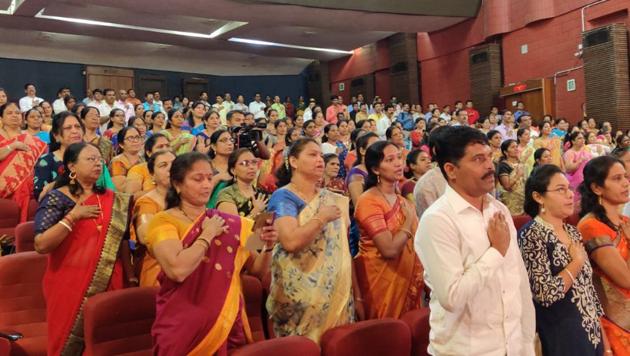
It then identifies these values as independence of thought and action, sensitivity to others’ well-being and feelings, and “predisposition towards participation in democratic processes”, among others.
But where is the structure to impart the constitutional values to children, asks 65-year-old Shantilal Muttha, Pune-based businessman, philanthropist and social worker.
Over a span of nearly 35 years, Muttha, who hails from the backward Beed district of Maharashtra, undertook massive social campaigns against extortion in the name of dowry; promotion of mass marriages to eliminate the financial burden on poor families and relief work during the devastating Latur (1993) and Bhuj (2001) earthquakes and the 2004 tsunami which hit the Andamans.
The turning point came one evening in Latur when he and the then chief minister Sharad Pawar were reviewing the earthquake relief work.
“The death and devastation was shocking. All around us were bodies, ambulances going to and fro, mass cremation and dogs taking bites off corpses. The children who had survived, many of them having become orphans overnight, were watching all this with a blank expression. We said, one generation is dead, will we lose the next generation too, to mental trauma?”
Muttha then offered to remove these children from this depressing environment. The consent of the surviving parents and relatives was taken and with the approval of the state government they were shifted to Pune. The Bharatiya Jain Sanghatana’s Wagholi Education and Rehabilitation Centre was established for these children, to help them complete their education. Now grown up, they are employed and well-settled.
Muttha said in an interview that fundamentally, education is the key to development and good citizenship. There is a need for strong values to anchor our children today at a time when children face numerous distractions over the internet and mobile telephony, and there are horrific crimes against women; suicides by children and other social issues.
“But education can be effective only when you have scale and this scale exists in government schools,” he said.
Therefore, the Shantilal Muttha Foundation (SMF) was established to create the Mulyavardhan programme. Numerous pilots were run, tweaked, assessed and validated. And finally, the programme was adopted by the education department of the Maharashtra government, and implemented with support from the Tata Trusts and the SMF.


