
 E-Paper



Poverty-stricken leprosy colony suffers from stigma, neglect
A recent visit by a Hindustan Times reporter to Antulenagar revealed that almost every family had 10 to 20 cans and drums to store water. There was an absence of proper homes and tar roads


PUNE An unauthorised, poverty-stricken colony of nearly 450 leprosy-afflicted families has been suffering from gross neglect from the district authorities, including those from the health department.
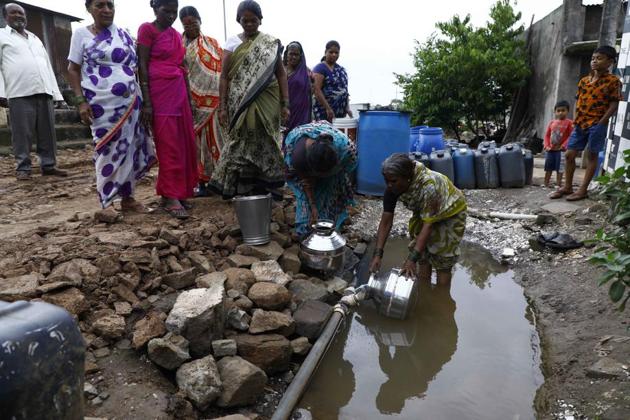
Almost half of the people in this colony located in Antulenagar, near Yeolewadi behind Bandorwala Leprosy Hospital, Kondhwa, have lost their limbs to leprosy. They are not only suffering from infections of various kinds, but also do not have basic amenities such as drinking water. Their problems worsened in recent weeks due to the heavy rains that lashed Pune.
A recent visit by a Hindustan Times reporter to Antulenagar revealed that almost every family had 10 to 20 cans and drums to store water. There was an absence of proper homes and tar roads.
Residents said they had been living in the colony for nearly four decades now,well into the third generation with grandchildren.
Satish Sawant (30), who holds an MBA degree from Unique Academy affiliated to Savitribai Phule Pune University (SPPU) said, “We never ever had any basic amenities but given the havoc caused by the recent rains, our condition has worsened. The roads have become slushy and no one can walk properly. Many of us have lost our limbs to leprosy and we often tend to slip. Most of us have lost fingers especially on our feet. This makes it difficult for us to walk on the kaccha roads (dirt tracks). Many of us have slipped and had serious injuries.”
Sawant said there is no direct road to the colony and the residents are forced to take the entrance of the Bandorwala hospital and then enter the colony. “We have complained to the Pisoli Gram panchayat several times to give us a proper road, but in vain,” he said.
Women in this colony were seen filling water by entering into a ditch to collect water from a small pipe. Since all of them suffered from leprosy, stepping into the ditch led to more infections, many residents said.
Savitri Jadhav, who had wounds on her feet, said, “We women have to enter this small ditch which is always full of dirty water. There is no tap; it’s just a pipe with an opening due to which often the dirty water gets mixed with the clean water. Also due to the rains, the ditch is inaccessible and we are unable to fill water.”
The residents complained about lack of sanitation and said it felt like they were living in a garbage dump. “The water we drink is muddy. We are still untouchables and the administration does not pay attention to our woes,” said Jadhav.
Another resident, Shantabai Kamble, said, “I came here with my husband and had a son. It’s been almost 37 years now. No government authority has ever come to see how we live. Rains have always destroyed the makeshift roads but this time it is worse. “
Kamble said that during the recent floods in the city they had no option but to stay indoors.
She was disheartened that the wooden artificial limbs that many of the residents had were ruined in the heavy rains. “There are more than 400 of us but all are living in poor conditions. We are only asking for proper basic facilities—clean surrounding, proper roads and safe drinking water,” she said.
Guddu Jineta, one of the oldest residents of the colony who uses crutches to walk, said, “The flood waters spoilt my crutches. The roads have made it very difficult for me to walk and make it to the rehab every day. I even fell a couple of times.”
Vinayak Unawane, another leprosy patient who rides a bicycle with an artificial limb said that although the rehabilitation centre was close-by, he found it difficult to either walk or ride to the centre. “We want clean and safe roads but the local administration has not been paying attention to our woes,” he said.
We have received funds to construct roads, says Pisoli Gram Panchayat
When asked about the gross neglect of the Lepers Colony, Snehal Dagade a senior members of of the Pisoli Gram Panchayat said, “The complaints of the residents of the leprosy colony have been heard and we have even proposed to construct a proper road for them. We have received a grant of Rs 1 crore to construct the road for which the work will start soon.”
Leprosy colony is illegal; but needs amenities, admits state health dept official
Dr Padmaja Jogewar, head of the leprosy and tuberculosis department at the State health department said the residents of the leprosy colony had been provided treatment by the Kondhwa hospital and it was not right for them to pass through the hospital premises to go to their colony as new patients could get infected.
She said the people at the colony had encroached upon land belonging to the leprosy hospital. “The local administration has been asked to tend to the issues of the residents but that has not been done,” Dr Jogewar said.
Dr Jogewar noted that there were many schemes for leprosy-affected people and their children but the poor patients faced a lot of stigma from society making it difficult for them to avail the schemes. “The residents of the colony need help but they stay out of reach. It is important for all of us to accept them in our society so that they can also have all the rights to live normally, said Dr. Jogewar.
She said the hospital staff was attending to the health needs of the patients. “Now we plan to hold regular screening and counselling sessions as a part of our awareness programmes for the colony residents so that the fear of any infection and depression caused due to deformities can be treated,” she said.


