
 E-Paper



Startup Saturday: Serving a treat for the corporate palate
Efforts to satisfy hunger needs of customers’ spread across an unattended area-corporate canteens


Being the first is a very important marketing strategy. However, what if you cannot be the first? What do you do? How do you still find ways and means to carve out a slice of the customer pie? According to Al Ries and Jack Trout (22 Immutable Laws of Marketing), you then create a new product in the category. In the food tech industry, there are enough apps to order food, choose wisely, stay fit and so on. Enough to confuse you. Result? There are just a few who survive to rule the food app roost.
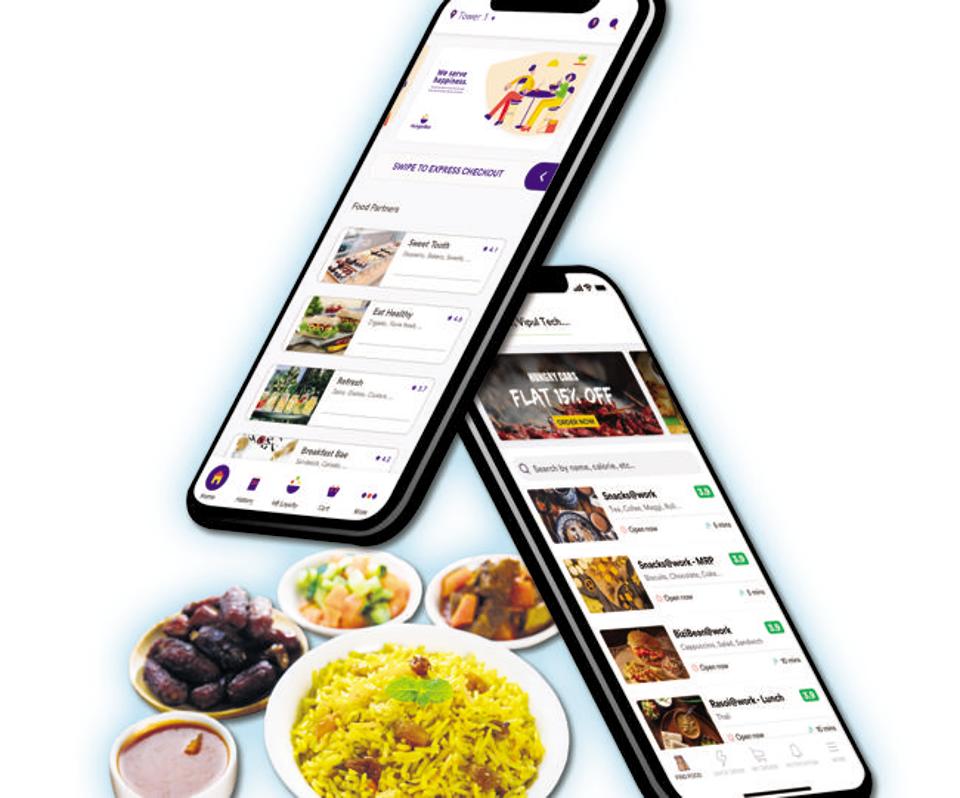
If you can’t be a Swiggy or Zomato, what do you do? Entrepreneurs must always be able to sniff out the gaps even in an overcrowded, competitive market. Which is what these two startups have done.
Hunger Box and food@work (a new entity from Zomato) saw that while there are several food aggregators who can satisfy customers’ hunger needs, there is an unattended area-corporate canteens. Read on to know what it takes to be successful in a highly populated market place.
Food, the second most important issue for employees
Sandipan Mitra, founder, Hunger Box
Sandipan had some experience in the food tech industry – he had built India’s first food ordering app justeat that was bought over by foodpanda. However, he still had food on his mind. “There are enough apps for food in the business to consumer (B-C) space, but business to business (B-B) has been ignored. We realised that here lay the opportunity. Technology was helping people book tickets, buy food, but nothing that could ensure that the food being served in offices was safe to eat. The responsibility of a caterer ended with a Food Safety and Standards Authority of India (FSSAI) licence.
“How does a corporate body ensure that the food is prepared hygienically, is stored and served properly so it doesn’t go bad? Yes, there is the FSSAI, however, we felt that we could use technology to give institutions much more from their cafeterias,” Sandipan said.

The start
In 2016, Sandipan began by doing a small survey. “We asked a few admin managers of large companies what was it that they wanted from their catering service. In addition, we also asked the employees what they needed. It was indeed a surprise to know that food was the second most important issue for employees after transport. In fact, companies looked at it as a tool to keep their people engaged. Employees wanted more choice, safe food, ease of payment and so on.”
With these parameters they set out to design an app that would serve not just the company, but also the employees and vendors.
“Our app helps employees place an order, pay online and cuts off the wait-in-queue for your food tray. Additionally, it also enables them to rate the food. For the vendors there are several checks, kitchen audits, to ensure the food is cooked hygienically, is stored properly and served well. In addition to that, it can also predict how much say plates of biryani will be needed on a Friday? For the corporate body, they get to know what it is that employees want? How much is being wasted? and so on.”
Hunger Box went live on September 24, 2016 with one client. “By December that year, we knew what corrections needed to be done. For example one very important issue was when the internet was down. We could not afford to crash because of that. We knew that if we worked perfectly at one site then we would succeed everywhere,” he said.
Today Hunger Box has 126 clients and manages over 550 cafeterias across 18 cities. Serving 5,50,000 orders a day.
Future
“By the end of this year we plan to serve 1.5 million orders a day that is roughly three times the current volume. We also want to grow globally since we don’t see any product of our kind being used by any of the MNCs we serve,”said Sandipan
Employees can choose from a standard buffet option for meals
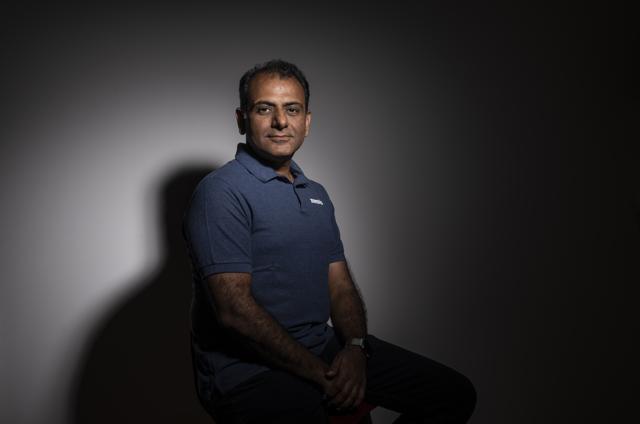
Mohit Gupta, CEO, food@work
The start
Innovation must be a continuous process even for a company that enjoys a leadership position in the business. With its service spanning 40 million orders a month, Zomato found that food at work has largely been a space that has been overlooked.
Says Mohit, “For us, it’s always been everything about food and food also encompasses what we eat in an office. Given the amount of time our users spend at work on average, meals at work comprise one of their largest food consumption occasions. This is also an underserved market segment. In line with our vision of ‘better food for more people’, we wanted to create a healthier, tech enabled and a much more vibrant food ecosystem for our users busy at work.” That was when they came across the ToungeStun team that were in this business and the two came together to launch food@work.
What it does
The app is built to benefit all stakeholders. “It helps multiple vendors, that is restaurants from the Zomato network looking to engage with users in another format. For users, they now have the convenience of ordering food right from their desks with digitised cafeterias that ensure no haggling for change or long queues. We are constantly in the process of reducing the distance between our users (whether they are at home or in office) and their favourite food.
The food@work user app is quite similar to the Zomato app, where employees can choose from a standard buffet option for meals starting from breakfast to dinner and including snacks, or order from the office cafeteria or even a Happy Canopy. The addition of Happy Canopies where a variety of restaurants from the Zomato network regularly set-up stalls at benefitted corporates, ensure employees have plenty of options to choose from. Feedback is regularly sought, and quality checks are mandated to push further customisation.
On the other hand, to significantly ease the process for corporates, we have a one-stop smart monitoring system where they can track F&B compliance, operations, user feedback, menu trends and analysis. Additionally, there are personalised apps for each touch-point, be it the Cafe app for F&B managers to manage all processes real time and even trace food safety compliance issues; or the Chef app for the kitchen to track orders and their status.
Money
Zomato used its pool of resources to launch food@work. Numbers are not available.
The marketing story
Given that Zomato already had a huge client base, it was word of mouth that helped food@work. “We have clients who have been with us for more than four years and have helped us grow our business by word of mouth. Since the integration with the main Zomato app, users who do not have food@work at their office can also refer their workplace for the upgrade,” says Gupta.
The future
Currently they serve 3.5 million orders a month across seven cities. “We aim to serve users in large corporates as well as small and medium-sized enterprises (SMEs) and small offices via food@work virtual cafeterias. Like we said, staying true to ‘better food for more people’, Zomato will continue to simplify and solve for all user cases, enabling the entire ecosystem of food, be it at work, dining-out or delivery,” says Gupta.


