
 E-Paper



Startup Saturday: Smart kattas are Gen Next coworking mandals
Millions of square feet under management and billions of dollars since WeWork gave this sector its big boom push, in Pune the smaller players - from 40 seating capacity to 200 sitters - believe the industry is deep enough to allow several players to thrive

 Prefer HTon Google


Fifteen million sq ft spread; 720 centres across India; 14% of total leased office spaces taken up (2018); expected to jump to 18% by 2020 (Colliers International).

Welcome to the “WeWork phenomena” fast catching on in India - or, as the lady across you busy on her laptop likes to call it - co-working spaces.
It’s not the mayhem of Mumbai rents or the fast-catching up Pune costs. According to report by Inc42, co-working spaces are in Tier2 (Kolhapur) cities as well.
JLL’s “Coworking reshaping Indian workplaces” report states that the cumulative coworking space leased between 2017 and 2019 reached 6.9 million sqft.
Until a 2017, the coworking concept was glued to the startup domain world - 10 to 30 seater offices, that kept costs at a minium for startups in the proof of concept, and/or just-did-a-friends-and-family-round of funding phase.
It’s hard to ignore Adam Neumann and WeWork’s impact - their public listing catastrophe, Softbank buyout, and subsequent job cuts notwithstanding - but, suddenly “office space” was evolving into this decentralised business model that seemed to make sense to, and for, all stakeholders. WeWork currently has three million sqft under its belt.
Bengaluru’s IndiQube allocated $15 million (Rs 100 crore) equity funding to fund growth in the sector and co-working space provider Smartworks, announced that it has raised $35-40 million to double its portfolio to five million sqft. The game just got bigger.
In Pune, the ripple effect is more than felt. The question is, in this bastardised version of monopoly, is not having deep pockets the key?
The Daftar, co-founder, Sunanda Verma
Started in... 2015
As a... 30-seater coworking space
Today is... 200-seat co-working capacity
Occupancy rate: Not revealed
The early days
We learnt the ropes as we went along. We experimented with several models - the café model where we used the idle capacity of cafes; the franchisee model; and got a clear understanding of what we needed to do to sustain ourselves and grow. Now we partner with the landlord, as against leasing the space.
Who is my customer
On the customer front we have come to understand very clearly what they need. There are different spaces available to them. They can choose a serviced office space that provides top-of-the-line amenities, security, infrastructure, then they can choose a business centre as well. What we offer is very niche. We offer not just office space that they can lease - either a table or a room - but it is the community that is built around it. The environment of collaboration that springs out of such spaces is what attracts startup founders to Daftar.

Tackling competition
The landscape has changed a great deal. Earlier it was only the startups that chose coworking spaces. Now, even large enterprises are leasing out such spaces. We have WeWork, Oyo (Innov8), and builders and developers wwith empty buildings, that want to convert to coworking spaces.
For us I think it is our brand and what it offers that will keep us afloat. We are not just a table and chair. If a digital marketing startup works here s/he may meet a graphic designer with whom s/he can collaborate, or a data scientist who can share perspectives. Everything is about sharing and collaborating, even if you are from different industries.
We make it a point to organise events that help such founders connect, share, collaborate and grow. This is something that requires skill and commitment. I am very clear who our target audience is, and, they are very sure of what they can get from Daftar.
Meraki Spaces, Shubham Agarwal, founder
Started in December 2018
As a... 100-seater coworking space at Shivajinagar
Today is...
Occupancy rate: 100 per cent
The early days
I wanted to seize the opportunity, so converted my real estate office into the 100 seater Meraki coworking space. Because of my location, within two months, I had 100% occupancy, something that continues even today.
Who is my customer
My clients are a mix, some large enterprises, a few startups and individuals as well.
Tackling competition
Frankly I am not worried about any big player. I think the demand for coworking spaces is very large and can accommodate everyone. I think by and large everyone offers the same thing. What will separate you, is price and scale. If a multinational wants to set up shop in a coworking office, which by the way is very much happening, they will want 200, or maybe 300 seats. This is something I cannot provide. they will go to the large coworking spaces.
I am not worried that the big guys will eat into my business. There are simply too many people out there who now choose a coworking office.
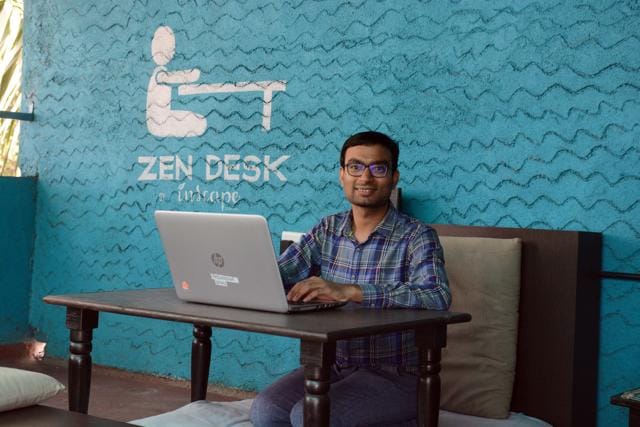
InScape Co-Working, Nishant Somani, founder
Started in April 2018
As a... 35-seater in Koregaon Park
Occupancy: Not revealed
Who is my customer
My clientele is largely made up of international touring entrepreneurs who come to Pune for a month or two.
Tackling competition
My office is very close to the lush, green environs of Koregaon Park. Also we focus a lot on wellness of the customers. We offer them ayurvedic foot massages, our tables and chairs are Yogi desks where a person can sit in a yoga pose and work. In addition to this, we do several meditation sessions. We even play Indian classical ragas - morning, noon and evening. No large player can offer my kind of service.
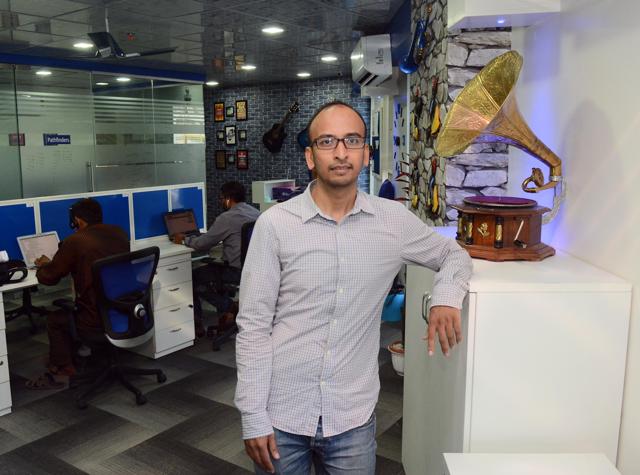
Co-Work Studio, Manoj Bora, founder
Started in 2016
As a... 40-seater rental of extra office space
Today is... 300 seats, over three locations
Occupancy: Not revealed
The early days
In 2016, I had my own IT company and had an office space in Vimannagar that was too big for my needs. We could accommodate 40 people and my staff was just four. So I rented out the space to other companies. At the end of 2018 I understood that this was a good business and our development team moved out of the country to our principal’s office in UK. I met with my co-founder Raghvendra Pratap Singh, and we decided that this business could grow. We set up a second centre in Kharadi and then added three more. Today, we have a total of 300 seats that we rent out. Our business model is fairly simple. We do not make any capital investment, in the sense we partner with the landlord, sharing our profits.
Who is my customer
The big players have the wherewithal for spend on advertising. Since most people are unaware of coworking spaces, this will increase awareness levels and will, therefore, increase the market size overall. We will service those that they are unable to (co)work with. Also, size in this industry fortunately cannot lead to monopoly. This is not a tech product that only one search engine or one taxi app will rule. This is a brick and mortar business and technology can only make it more efficient. Monopoly is not possible.
Tackling competition
The way I look at it, the big guys have the money power and the capability to bring down the rental market. Let’s say we offer a table at 5,000 per month, they can take an entire building and offer it at Rs 3,000. This means, I too, will have to offer it at that rate and even the landlords will have to offer it at the going rate in the market. Since it’s not our own property, it won’t matter. We will contribute to compete at the lower prices that they may be able to offer.
StartHub Co-Work Space, Nikhil Mote, founder
Started in 2017
As a... 50-seater in Koregaon Park
Today is... three-centre operation with 200 seats
Occupancy rate: 85-88 per cent
The early days
Initially we invested our own money (doesn’t want to reveal how much), but now we are getting into the profit-share model with owners and builders.
Who is my customer
We have had very good relations with our clients. On an average we have a client stay at our premises for 1.5 years, which is very good in this business. Large companies with big team numbers can’t be looked after by us.

Tackling competition
We intend to keep our prices very competitive which is a very important factor. Price and location are two important aspects in this business and we intend to work well with both. We aim to target smaller companies that have a team size of three to five members.


