
 E-Paper



Taste of life: Why a city’s foodscape defines its very soul
Despite being absent from today’s urban planning, historically food systems played a crucial role in shaping pre-industrial cities like Pune, defining foodscapes.


31 May, 1881. A small advertisement appeared on the last page of ‘Kesari’, one of the most prominent newspapers of the time. It announced the opening of the first ‘Bhojangruha’, or eating house, in Pune.
The Bhojangruha would cater to Brahmin students and travelers, and the rates would not be exorbitant, it added.
The proprietor of this venture was one Mr. Narayan Ramchandra. The opening of ‘Pune Bhojangruha’ was part of a larger set of events which led to a renaissance in the city.
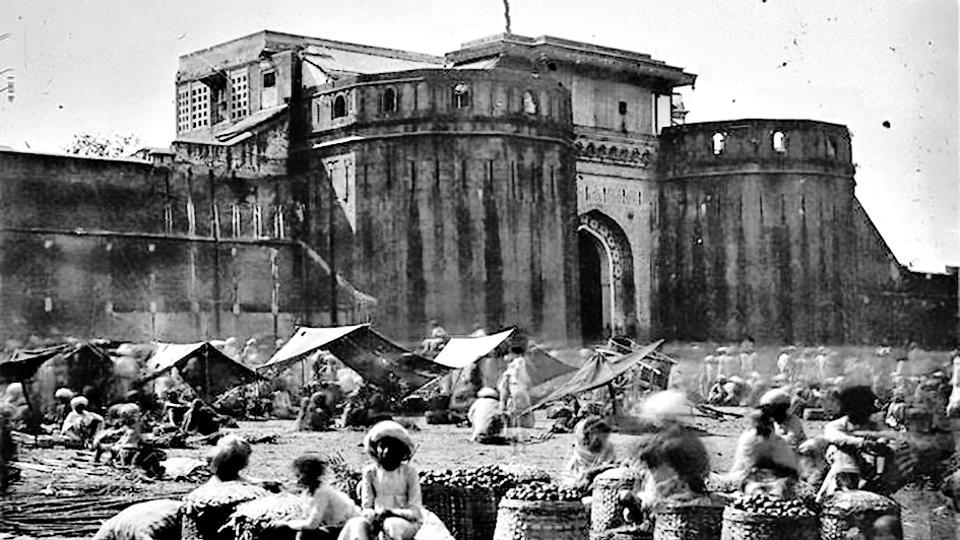
Pune had been in a state of decline after Bajirao II left for Bithur. The British then ruled the city.
The British then ruled the city. The moneylenders, admirals, soldiers and clerks had been left moneyless and jobless.
There were ruins of old mansions and houses, and the inhabitants left the city to earn a living. The population of Pune in 1818 was 0.15 million. It was reduced to 70,000 in 1841, and in 1851 it was a mere 40,000.
Amidst this huzun, a ray of hope was the inauguration of the railway line between Bombay and Pune. The British had started a couple of schools a few years earlier. The municipality had started functioning in 1858. With the collective effort of some brilliant and selfless social and political leaders like Lokhitawadi Gopal Hari Deshmukh, Mahatma Jyotiba Phule, Savitribai Phule, Vishnushastri Chiplunkar, Mahadeo Govind Ranade, Bal Gangadhar Tilak, Gopal Ganesh Agarkar, Gopal Krishna Gokhale, and Mahadeo Ballal Namjoshi, Pune soon changed its fortune.
Students from all over Maharashtra started coming to the city to study and later, earn their living.
It quickly became the epicenter of the nationalist movement in Maharashtra, and perhaps, India.
The leaders, apart from establishing educational and academic institutions, newspapers, libraries, were also debating and discussing issues like caste, widow remarriage, women’s education and of course, independence with heated passion.
But this was also accompanied by events which resulted in ostracisation of many. A teacher was made to apologise because he ate a candy offered by a British officer. A tea party held in a church in Guruwar Peth created a storm which refused to die down for a decade at least.
Visiting a restaurant was frowned upon and considered a taboo, akin to visiting a brothel.
Caste and religion played a dominant role in deciding who would eat with whom.
The renaissance changed the fortune of the city, but also brought to the forefront several issues which made one see how deeply interconnected food, religion, caste, gender and history were.
Food sheds light on people’s way of life, their cultural values and their perspectives on life. While food is one way to get to know a place, it also brings to the fore many lesser-known stories. We always tend to associate history with monuments and buildings. But, food also plays a dominant role in helping one understand the past. Food is a magical lens that allows you to see the landscape and certain events in a different way. One can take cities as palimpsests where environmental, economic and social contexts combine into buildings, streets, public spaces. There is, however, another shaping force: food. Despite being absent from today’s urban planning, historically food systems played a crucial role in shaping pre-industrial cities like Pune, defining foodscapes. Food has also played a major role in defining and directing socio-political events in almost every city and country in the world. Pune is no exception.
Eating habits are considered a cultural element; therefore, they differ according to the culture of a society. Cultures are in constant interaction with each other. Although a country’s or a city’s food culture is a result of accumulation of years of knowledge transferred from generation to generation, some old habits, in complete or partial, have been exterminated through the recent years’ advances in technology.
It is important to know what we have lost or forgotten to make sense of the present and the future.
In the next few weeks, let us try and take a look at the foodscapes of Pune in the past and the present. Let us revive the memories of eateries and restaurants, of recipes, people, events, traditions, kitchens that made us what we are today.
After all, we are what we eat – and so is a city.
Chinmay Damle is a research scientist and food historian. He writes here on Pune’s food culture. He can be contacted on chinmay.damle@gmail.com.


