
 E-Paper



World Vedic Sciences Conference: Scholars talk on need to strengthen Vedic knowledge system in India
Most of the intellectuals and scholars who spoke on the second day of the conference were of the view that the Indian knowledge system had plenty of wisdom stored in the rich ancient Vedas text and the same can be applied for the betterment of humanity.


The third World Vedic Sciences Conference at Deccan College-cum-University, on Thursday, saw scholars stressing on the need for strengthening the Vedic knowledge system in the country and expanding its scope in contemporary times. Most of the intellectuals and scholars who spoke on the second day of the conference were of the view that the Indian knowledge system had plenty of wisdom stored in the rich ancient Vedas text and the same can be applied for the betterment of humanity.
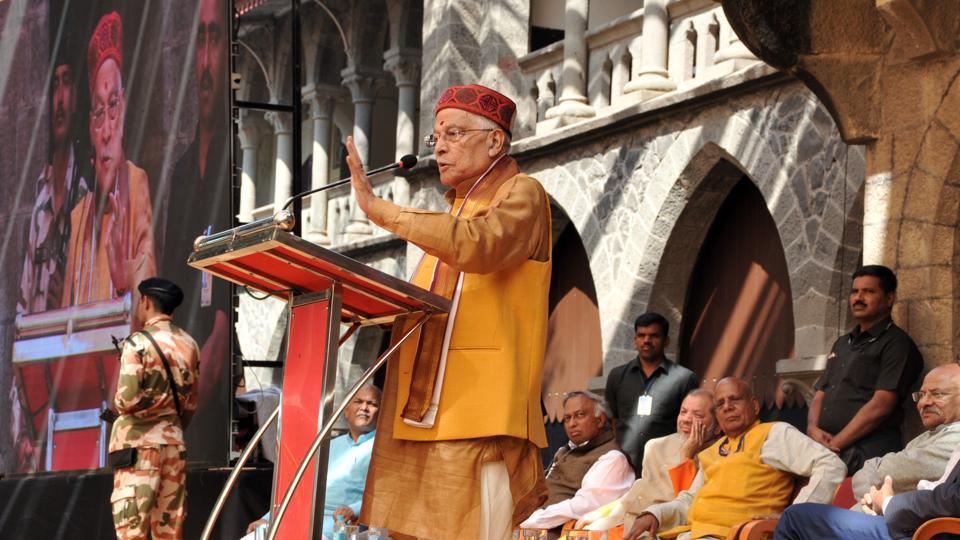
The theme of the four-day event, which began on January 10, is ‘Vedic and Modern Sciences: Insights, Interfaces and Integration’ and is being attended by international scholars, academicians, university vice-chancellors, educationists, students, professors, policy makers and professionals from diverse fields.
The inaugural event was held on Thursday where the welcome address was given by Deccan College vice-chancellor Vasant Shinde who said that the international Vedic Conference was a part of the bicentenary celebration of the internationally acclaimed institution.
World-renowned scientist Dr Vijay Bhatkar, who is the national president of Vijnana Bharati, stressed the need for strengthening and expanding the scope of the Vedic knowledge system in the modern times. “If we look back, we have an illustrious ancient past and luminaries who guided us in acquiring knowledge and taught us to make our society better. Both computers and digital facilities have their roots in the ancient ‘Shastras’ and we are proud of our rich heritage ,” he said.
RSS ideologue Suresh Soni quoted a number of international thinkers including Arnold Toynbee, Stephen Hawking, J Robert Oppenheimer, Robert Boyle, in his address. He further added that Toynbee had said that Christian semiotic values sought for materialistic pleasures while the India system sees human beings as an integral part of the universe. He further added that there was a need to adopt a universal-cum-world view to understand human thought in the light of Vedic knowledge. “It is time that the countrymen come forward and claim the rich heritage of their ancestors . A paradigm shift is taking place in all fields of sciences,” he said.
Swami Tejomayananda, former chief, Chinmoy Mission Worldwide, said that the Vedas were a handbook of instruction in the form of light and knowledge for the humanity and described the evolution of cosmos and creation in detail. “Dharma leads to all-round development and liberation of a human being. Vedic Dharma is often critcised as other-worldly and is a wrong interpretation by those who don’t know about it ,” he said.
Former Union HRD ninister Murali Manohar Joshi in his keynote address, said that the Vedas were an integral edifice of the Indian tradition and culture and offer holistic solutions to all problems of mankind across all ages. “Vijnana Bharati has transformed a spark into an illuminating flame of knowledge and enlightenment, spreading knowledge far and wide. Religion means coming together .There is a need to bring yoga and science together and I am of the view that yoga and science must be brought together,” he said quoting the works of Western scholars and past examples.
A book entitled ‘Modern Interpretation of Gita Rahasya’ was also released by Joshi on the occasion. AP Jamkhedkar, chancellor, Deccan College, in his address, pointed out that the contradiction between religion and philosophy came to the fore at the time of renaissance in Europe. “ The laws of nature and God cannot be different and the example of excommunication of Spinoza is present before us,” he said.
The conference will witness deliberations by scientists, practitioners of Vedic sciences and modern sciences. It will also include keynote addresses, panel discussions, plenary lectures, conference papers and poster presentations along with exhibits, prototypes, working models, spin-offs technologies and displays.
The scholars will deliberate on themes like vision and aspiration, foundations, understanding reality, brain, mind and consciousness, yoga, psychology, spiritual sciences, Sanskrit and linguistics, axiomatic ontology, vision and aspiration of the Vedic and modern sciences, cosmology: the Vedic and modern view, instruments of valid knowledge in Vedic and modern sciences, Kautilya’s Arthashastra, Nitisastra, Yuddhasastra and other diverse themes.


