
 E-Paper



Your space: Controlling population a must as resources limited
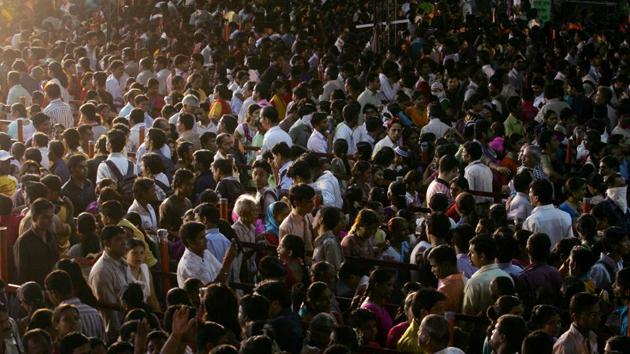
A United Nations (UN) report says that India’s population has grown at more than double the pace of China’s, over the past ten years. Our readers tell us how they view this population growth and give suggestions on what is the ideal way forward


Overpopulation is a controversial subject and usually brings up tough conversations about the ethics of government control on family size. But what if we could limit population growth and create sustainable prosperity without laws that limit freedom? Controlling population is a must for India as we have limited land and limited resources. The following steps should be taken to control population growth.
1. The legal age for marriage should be increased from 21 to 24. This is because women can be educated and the government should spread awareness among them about family planning.
2. Only two children per couple should be allowed. There should be a law in place where any family who has a third child does not get any benefits from the government.
3. Couples who opt for adoption rather than having their own child should be rewarded.
Haresh Shah
Overpopulation is a liability for the country
Population is the means as well as an end of economic development. They are an asset if in adequate strength and prove to be a liability if excess in strength. Population has crossed the optimum limit in India and has become a liability. As the United Nations (UN) report says India’s population has grown at more than double the pace of China’s over the past decade and soon India is likely to hold the top rank in case of population. The population explosion in India has proved to be a big hindrance in the success of economic planning and development. But a major concern for me is that the rate of development is not at par as compared to the rate of population. The challenge for the government is to provide basic services and infrastructure, specially to the urban migratory population. The basic facilities such as electricity, healthcare, sanitation, affordable education are very important.
Anjali Chaudhari
Address population-related issues
The UN report states that India’s population could surpass that of China by 2024. This is a serious issue and we all must take note of it. There should be a senior government official who should be responsible for addressing population-related issues. The government should promote responsible parenthood and conduct awareness campaigns regarding family planning. The government subsidies should be limited to the first two children unless the family is living in poverty. Studies show that women with access to reproductive health services find it easier to break out of poverty, while those who work, are more likely to use birth control. The government should aim to tackle both issues at once, by running micro-credit projects to turn young women into advocates for reproductive health
Anoop Panjwani
Highest youth population in the world
In fact it is good that we are growing as a country, and soon we will have the maximum number of youngsters in the world. The government should plan proper facilities and job opportunities for this increasing population. The only problem that we might face is space crunch.
Suvijya Jaybhay
Promote family planning
Simply educating men and women about contraception can have a big impact. When I introduced a national family planning programme in 1989, its fertility rate fell from 5.6 births per woman to 2.6 in a decade. Women in our country who want to avoid pregnancy are not using modern contraception. There are a variety of reasons for this, including lack of access to contraceptives, concerns about the side effects of contraception and social pressure to not use it. The government should support family planning, however, it has not reached the ground level. People are not ready to accept the concept of limited family. They are attached to the traditional concept of having a big family. The government should take an initiative to change this situation. They should carry out awareness campaigns regarding family planning, not just in the rural area, but also in big cities.
Pravinsingh Pardeshi
Improve infrastructure, employment
Large size of population results in a large labour force, but due to shortage of capital resources, it becomes difficult to provide gainful employment to the entire working population. Apart from that, creating enough jobs for the growing working age is also the biggest challenge. Therefore, the government should emphasise not only on family planning, but on improving the infrastructural development, healthcare facilities, public health and status of women and girls and unemployment. There should also be high rates of economic growth to meet the increasing needs of the growing population.
Kshitij Deshpande
Population growth is an opportunity
It is a good sign that the population is increasing, but at the same time the government should concentrate on the quality of the population and work towards giving them a better education and a good future. When a youth gets proper education, he or she contributes to the development of the country and helps the country prosper. So, I look at population growth as an opportunity rather than an issue in India.
Kiran Pisal
Alleviate poverty, reduce child mortality
Population explosion is an alarming situation for the country. The UN projects that population growth over the next century will be driven by the world’s very poorest countries.The reason behind it is unemployment and not having adequate facilities for people. Decreasing child mortality, improving education and providing people with economic opportunities all help to reduce population growth. International aid, fair trade and global justice are all tools to help bring population back to sustainable levels.
Santosh Desai
Provide sex education in schools
The report of the United Nations is an eye opener for India and the politicians of the country. The government should work on getting the population under control. I think the way forward is to provide compulsory sex education at the school level. Students should be educated on issues related to family planning. This increase in population has today put a tremendous burden on the limited resources we have in the country, right from water and agricultural products.
Priyanka Soni
Take up population growth as a challenge
I look forward to this growth of India’s population because looking at the pace of China’s population growth and their economical growth, India should be thinking of the competition that will be arising in the future. Also, it is necessary to understand the economical aspect in this, if we have more population, it means more manpower in the industries, information technology (IT) sector and in every other professional field in the country. So, the way forward is bright and we should take up this challenge.
Hari Reddy
Two-child legislation
The ever increasing population is a drawback in the overall progress of the nation. In this age, mostly in rural parts of India, a few people still yearn for a son and keep having more children until a son is born. We cannot compare India’s growing population to that of China. During China’s highly controversial one-child policy, fertility fell from six births per woman in the 1960s to 1.5 in 2014. This policy reduced the population growth. However, it also created gender imbalance. But India cannot impose such a law as it is a democratic nation and various differences in population also makes it difficult to propagate family planning. Some feel that a child is a gift of God, and they should not be stopped from having more children. While having a one-child policy is not possible, the government should initiate the two-child legislation. There should be a law in place where any family which has a third child does not get any benefits. Couples who opt for adoption, rather than having their own child, must be rewarded. The government needs to run a family planning campaign on a war footing and enlighten the common people about the need for it.
Maya Bhatkar


