
 E-Paper



Punjab farmers’ suicide : Missing families, sudden relief as Kejriwal comes calling
Pyar Kaur says she does not like to lie, “par sach vi main bol nahi je sakdi”. She cannot afford to speak the whole truth either, she adds. This octogenarian, whose three sons committed suicide over 15 years due to farm distress and debt, was to be the centrepiece of Aam Aadmi Party (AAP) convener and Delhi chief minister Arvind Kejriwal’s visit here. But she and her lone teenaged grandson, with whom she lives, were reportedly asked by local Akali cadres to leave the house for that while.


Pyar Kaur says she does not like to lie, “par sach vi main bol nahi je sakdi”. She cannot afford to speak the whole truth either, she adds. This octogenarian, whose three sons committed suicide over 15 years due to farm distress and debt, was to be the centrepiece of Aam Aadmi Party (AAP) convener and Delhi chief minister Arvind Kejriwal’s visit here. But she and her lone teenaged grandson, with whom she lives, were reportedly asked by local Akali cadres to leave the house for that while.
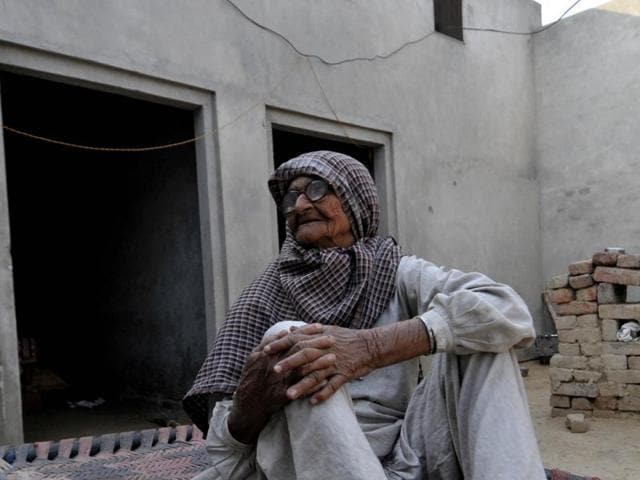
“Oh-o, ‘Kedriwale’ de munde aaye si (Kejriwal’s boys had come). But I had not said yes to playing host; I don’t have money for tea for so many people… I have to live in this village too, and can’t do anything that makes my life hellish,” she says, all the while saying that she had just gone to a town nearby for medicines. “I’ve been written about many times anyway, and nothing good has come of it.”
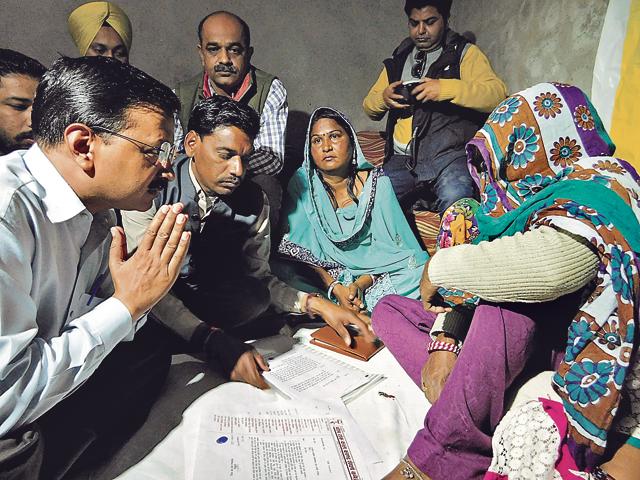
She was not the only such case wherein rival parties appeared to count on their grief as a larger political tool in Punjab’s heartland of Malwa. The mother, wife and eight-year-old son of Nirvair Singh, another farm-suicide victim, practically went missing from their house during the period of Kejriwal’s visit.
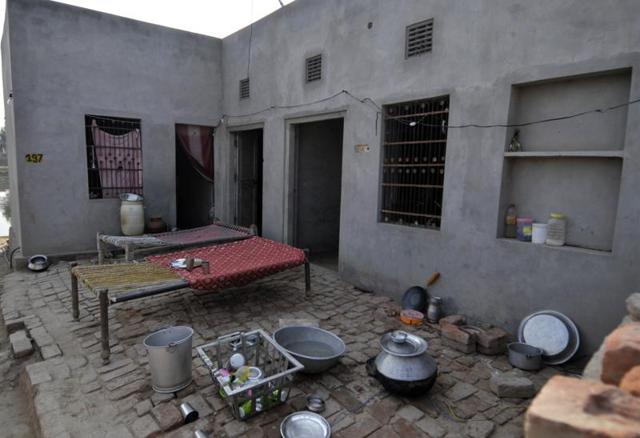
They, too, were on his meeting list. As he leaves two hours later and HT goes for a recheck, the family reappears, with a posse of local leaders of the Shiromani Akali Dal (SAD) carrying cheques for Rs 3 lakh as the state government’s compensation for farm suicides. Signed by the deputy commissioner, the cheques are being disbursed by these men.
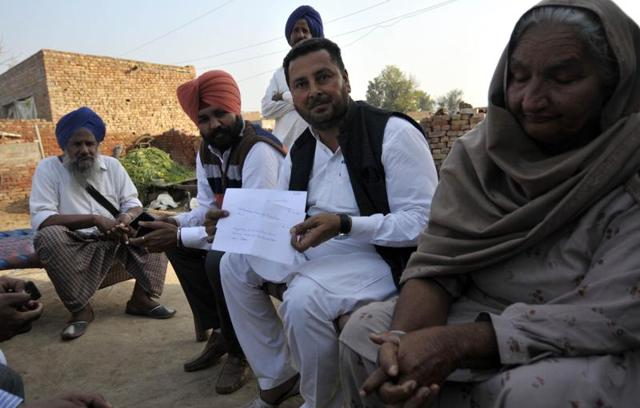
“We did not deter the family from meeting anyone. We had taken them to Arniwala to help encash the cheques; but the bank doesn’t have a branch there,” says Lakhwinder Singh, head of the Fazilka district Youth Akali Dal. That the cheques are made on the same day, February 26, as Kejriwal’s visit “is a mere coincidence,” he smiles, adding, “AAP is not even a challenge to us, so why would we bother?” Nirvair’s mother does not smile; nor does she agree to talk to us or pose with the cheques, Rs 1 lakh each for the three aggrieved members.
Kejriwal manages to meet a third family, though. Baljinder Kaur says her husband Gurmel Singh and father-in-law Mahinder Singh committed suicide around a decade ago. “It’s good that Kejriwal ji visited us. My son admires him a lot,” she says.
Even at Abohar, the day’s first stop, Dalit murder victim Bhim Sain’s house became the centre of some political wrangling. BJP state secretary Sandeep Rinwa was already present when the AAP team, also including Sangrur MP Bhagwant Mann, state convener Sucha Singh Chhotepur and party leaders Sanjay Singh and Ashish Khetan, reached there. Sitting beside Bhim’s father Kapoor Chand, Rinwa aggressively argued how the BJP-led NDA government had “paid Rs 12 lakh” to the family, while “the state government has done nothing”. He was critical of the Badal government, in which his party happens to be a partner, underlining that prime accused Shiv Lal Doda was the SAD’s constituency in-charge. But he refused to “take responsibility” for some local BJP leaders’ earlier proximity with Doda. Sanjay Singh and Mann refused to engage in an argument, while Kejriwal met the mother inside and later announced a job in the Delhi government for the family.
Youth Cong, AAP workers clash
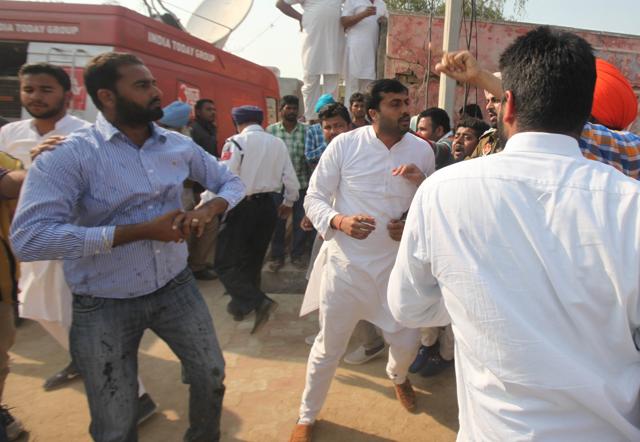
As soon as Kejriwal’s caravan reached Paakan village in Fazilka district, Youth Akali Dal (YAD) workers blocked his path. They had to be moved aside by police. At a speech venue minutes later, Youth Congress workers started raising slogans against Kejriwal and a clash ensued as they were pushed away. They were also allegedly hit with bricks by AAP workers, and the bleeding Congressmen said they would file a case.


