
 E-Paper



Widening and narrowing roads at will in Punjab raises questions over civic bodies’ ‘interests’
Take the example of Singhpura road in Zirakpur. It was originally approved to be 150-ft wide road to facilitate a group housing project. It later shrunk to 66 ft and again widened to 80 ft.


Civic bodies in Punjab are widening and narrowing roads under their jurisdiction at will.
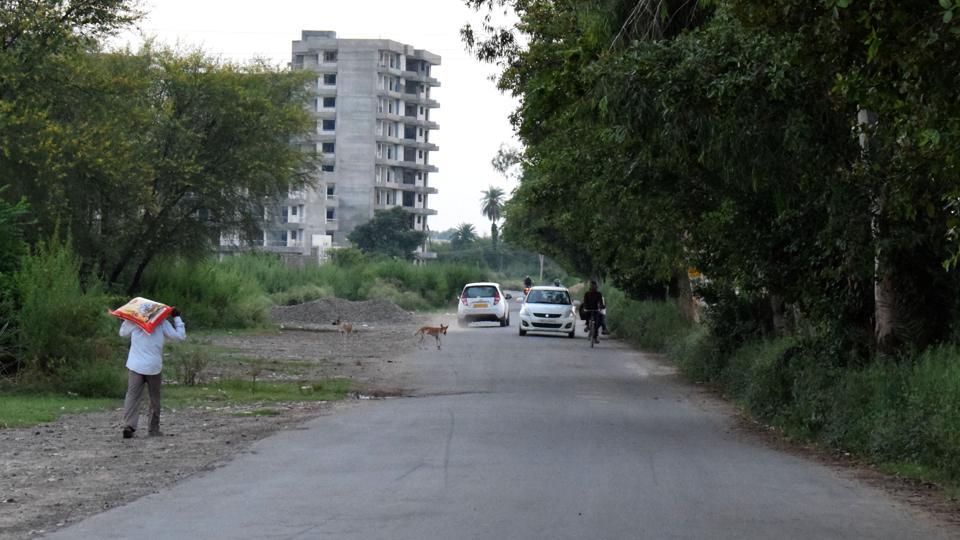
If they wish to help the “beneficiaries”, they expand the roads to facilitate hotels, private hospitals, housing societies and other commercial buildings. And if they chose to scuttle such projects, they cut down the width of roads. Take the example of Singhpura road in Zirakpur. It was originally approved to be 150-ft wide road to facilitate a group housing project. It later shrunk to 66 ft and again widened to 80 ft.
Around three months ago, this road was narrowed to 66-ft width, after which a number of commercial projects were denied permission on the ground that the sanctioned road width cannot withhold pressure of the projects which involve heavy vehicular traffic and public movement.
Sources say the subsequent widening of the road was to facilitate a marriage palace and two group housing projects. Officials in local bodies department say the trend is common across the state.
As per the Punjab Municipal Act 1976, a civic body by way of resolution in the general House can pass with majority widening of a road or cutting down its width.
“Such cases are very common across the state,” said an officer in local bodies department. “But we are helpless. Our laws are such and when politicians exert pressure, the department (local bodies) had to give clearance to the resolution,” he said on condition of anonymity.
He said tweaking width of roads at will, especially cutting it down, leads to a loss of revenue to the state exchequer, because the change of land use (CLU) cost is Rs 2.4 crore per acre, which is mandatory for a commercial or a group housing project. “Also it leads to chaos when roads are actually narrow on the ground, but widened on paper to give way to big commercial projects.”
Director, local bodies, Kamal Kishore Yadav told HT that some instances came to his notice and he has scuttled the move by putting all cases under scanner.
“We are looking into the antecedents of all the cases. We will reject expansion of a road where there’s no space available for actual expansion,” he said.
He admitted that the phenomenon was common in areas where large-scale development is taking place. Sources in the local bodies department said a commercial or a group housing project is not allowed on a road with 66-ft width, and it can only come up on a road with a width of 80-feet or beyond.
“Project promoters tend to influence the councillors to get widening approved, and also use their influence to scuttle competitors’ projects proposed on the same road by asking the civic body to shrink the width,” they added.


