
 E-Paper



Wildbuzz: The squirrel widow, birds of Wuhan
As luck would have it, just before Prime Minister Narendra Modi landed in Wuhan for the grand summit, an Indian birder was exploring the avian wonders of that Central China city poised at the confluence of the Yangtze and Hanshui rivers.


THE SQUIRREL WIDOW
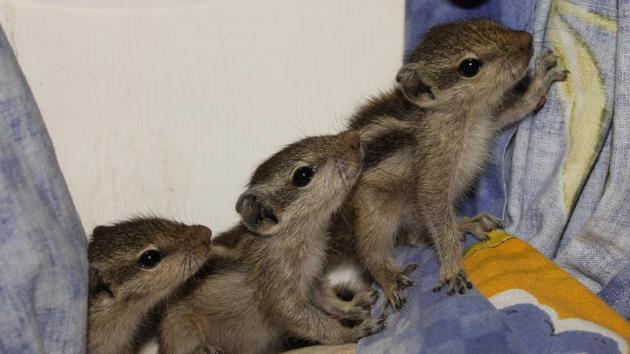
When it comes to the male’s monogamous tilt, devotion to the nesting female and rendering an equal effort in rearing the brood, the Indian Grey hornbill is the proverbial knight in the shining apron. But not too far away from loving hornbills, a stark contrast of paternal abdication plays out in our gardens and parks. Householders adore the frisking-about antics and scolding chatter of Northern Palm squirrels but careful observation of these “cutie pies” reveals a desolate, “unseen” tale.
A female squirrel built a drey comprising filched garden husk/straws, twigs and leaves in a narrow space in our house walls. However, she was evicted by aggressive common mynas and I noticed that mama squirrel had no male to help defend the drey. Neither did other female squirrels gather in solidarity against the mynas. On my curious perusal of scientific literature, I learnt that male squirrels fight over the female and she mates with the dominant rascal. The male then slams the door shut on her, presumably to mount another conquest. Subsequently, she, too, mates with other males and litters 2-3 times a year. Apart from very brief interludes of sexual liaison, squirrels lead a solitary life. None more so than the female who fends for herself and her pups, a widow with hubbies alive but dead indifferent.
The Casanova ‘squirts and scoots’ and upon her is left the Himalayan task of ensuring the reproductive success of the species. The female undertakes hundreds of trips fetching material for the drey. She may even make 2-3 dreys if she feels threatened. Pups are born blind, weaned after six weeks and guided into the world by their doughty mother. Wayward daddy may not even cast a glance upon his frolicking pups, brought to life by a discarded sexual partner.
Alas, if only the female could get a wee bit smarter and pick a tip or two from her high-flying ‘sahelis’ like the Greater Painted snipe and Bustard quail. Quail/snipe females are polyandrous and dominant sex partners. They battle with rival females for possession of successive husbands, and once secured and eggs laid, leave him the onus of incubating them and raising chicks. Meanwhile, she sets out to make fresh conquests!
BIRDS OF WUHAN
As luck would have it, just before Prime Minister Narendra Modi landed in Wuhan for the grand summit, an Indian birder was exploring the avian wonders of that Central China city poised at the confluence of the Yangtze and Hanshui rivers. Renowned for lakes and rivers, Wuhan University puts the avian diversity of the city and its surrounding areas at 343 species. Wuhan lies along one of China’s main migratory flyways, dispersing birds from northern latitudes and East Asia down to India and further in winter.
Hailing from Mumbai, Dr Shailesh Pinto is currently on a China birding tour with Rockjumper Worldwide Birding Adventures. He spoke to this writer on the delights of Wuhan and exotic Chinese species. Sample this, if one thought the Indian peacock had a really long trail of feathers, keep your mind open for a Chinese surprise!
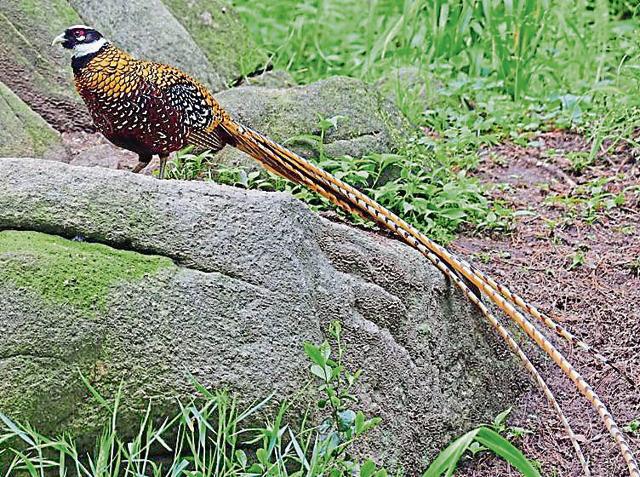
“Our time in Wuhan was spent birding at Changqing Park. We had amazing views of azure-winged magpies, Masked laughingthrush, Chinese blackbird, among others. We headed north to Dongzhai to look for highly-endangered and range-restricted birds such as Reeves’s pheasant and Crested ibis. The male pheasant holds the record for the longest naturally-occurring tail which can measure up to 2.4 m. The ibis was observed in surrounding paddy fields and this species was rescued from the brink of extinction when just seven birds were discovered in 1981. After an intensive breeding programme, the ibis were successfully re-introduced in China and Japan. Dongzhai holds an incredible avian diversity and we observed over 70 species in three days,” Dr Pinto told this writer.
The author can be contacted at vjswild1@gmail.com


