
 E-Paper



Rajasthan elections 2018, a litmus test for BJP poll strategy
The BJP has ensured every booth-level committee has representatives of scheduled castes and scheduled tribes, who constitute about 60% of Rajasthan’s population, a BJP leader familiar with party strategy said.

 Prefer HTon Google


The ruling Bharatiya Janata Party (BJP) has introduced social engineering in booth-level committees and increased its focus on women and retired army personnel in a bid to counter anti-incumbency in Rajasthan.
The December 7 election is seen as a test of the BJP’s ability to win two consecutive terms in Rajasthan — a feat no political party has achieved in 25 years.
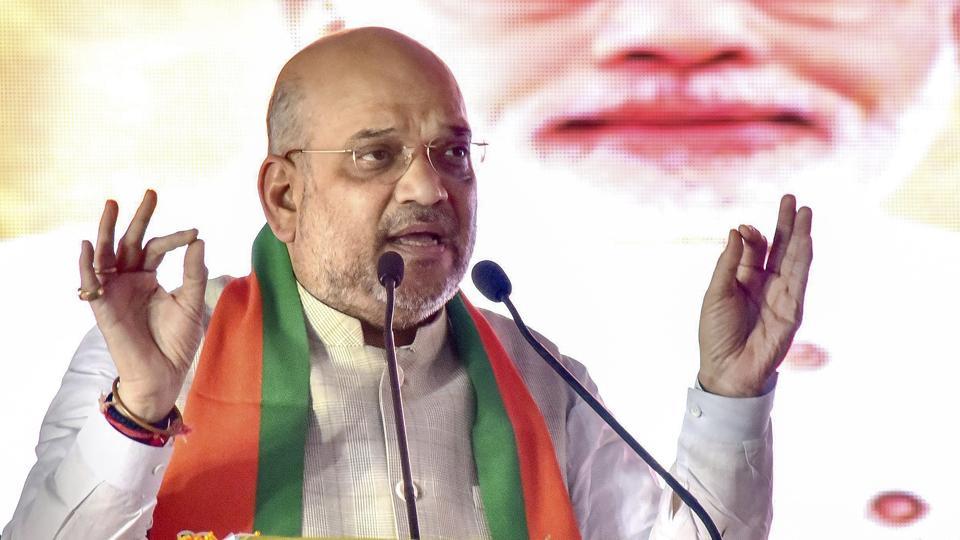
Rajasthan is high on the political agenda of BJP president Amit Shah, who has visited the state at least 15 times between June and October to rejuvenate a cadre demoralised by bypoll losses.
BJP leaders said Shah held meetings with retired personnel of army and paramilitary forces, farmers, members of disadvantaged communities, and women’s groups, apart from addressing the concerns of party workers. As a counter, the Congress has promised ‘One Rank One Pension,’ or OROP and loan waiver for farmers. The NDA government had also implemented OROP but personnel claim it has not been fully implemented.
“We have successfully dealt with the anger of workers,” said Satish Poonia, who, along with Union minister Arjun Meghwal and junior agriculture minister Gajendra Shekawat, has been entrusted by Shah to get feedback on possible candidates. “We prepared a plan to get in touch with 10 million workers ... listen to them and address their concerns. We got them engaged in different activities to make them feel that they are important for the party.”
The BJP has ensured every booth-level committee has representatives of scheduled castes and scheduled tribes, who constitute about 60% of Rajasthan’s population, a BJP leader familiar with party strategy said.
The party has identified 20 million beneficiaries of 12 central and state government schemes. “If we are able to get (votes of) half of them, we will be able to beat anti-incumbency,” said BJP state president Madan Lal Saini.
The party’s central leadership has also engaged independent agencies to gauge the mood of voters. “I got three calls in the past week from different people with similar questions,” said Amit Saini, a resident of Jaipur.
BJP spokesperson Mukesh Pareek said he was not aware of any such calls but did not rule out the possibility of voters being contacted for feedback.
The BJP also believes declaring Vasundhara Raje as the CM candidate will help show there is confusion in the Congress over leadership and attract women voters. “We want to tell people that there is clarity in BJP over the leadership while in the Congress there is confusion between Sachin Pilot (state Congress chief ) and Ashok Gehlot (former CM),” said BJP Rajya Sabha member Kirori Lal Meena.
The BJP is targeting Pilot more than Gehlot to benefit from intense caste rivalries, another leader said. Pilot is from the Gujjar community, considered politically and socially a rival of another dominant community, the Meenas. Their areas of influence overlap in about 50 assembly constituencies of southern and eastern Rajasthan. “...political dynamics are such that if Pilot is seen as a future CM, the Meena will automatically vote against the Congress,” Poonia said.
Congress spokesperson Satyendra Singh Raghav said the party was fighting under Rahul Gandhi and there was no confusion over leadership. “Our party believes in democracy and it is the MLAs who decide their leader. BJP’s statements are out of frustration...,” he said.
Political analyst Narayan Bareth said the BJP’s efforts had worked to its advantage. “In elections, management plays a key role and there the BJP has the upper hand. Anti-incumbency is there, and it remains to be seen how the BJP deals with it.”


