E-Paper



Embassy Group’s Olive Hospitality targets 10,000 keys in AI-led expansion
AI-integrated hotels are emerging as a major growth driver in India’s budget hospitality sector, said Kahraman Yigit, CEO and co-founder of Olive Hospitality

 Prefer HTon Google


Open Hotels, the AI-integrated vertical of Olive Hospitality, part of Embassy Group’s hospitality portfolio, is planning a major expansion. The company is targeting 10,000 keys by the next financial year. One advantage of the AI-led model is that front office staff can manage check-ins across multiple locations through a centralised system. Also, technology-driven standardisation allows the company to onboard existing properties faster without undertaking major physical refurbishments, Kahraman Yigit, its CEO and cofounder, told Hindustan Times Real Estate.
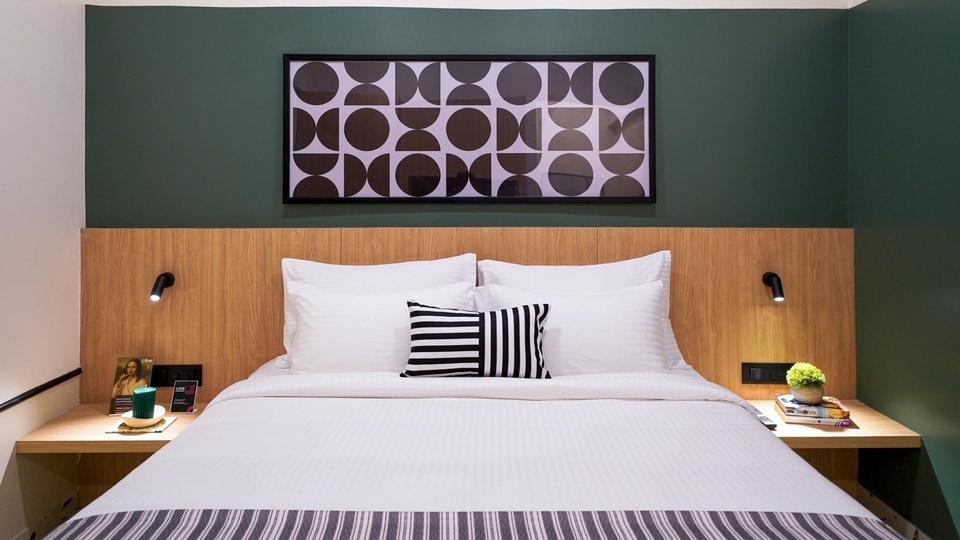
He said Open Hotels currently accounts for about 18% of the platform’s portfolio and is expected to scale rapidly as the company targets 10,000 keys over the next financial year.
Olive Hospitality operates three brands across the budget and mid-scale segments, including Olive Hotels and Spark by Hilton.
“Across our three verticals, we signed 112 properties with 4,615 keys. Open Hotels currently includes 30 properties with 827 keys. As we work toward our target of 10,000 keys over the next 12 months, we see Open Hotels as a significant growth driver within the platform. Given its positioning and scalability, we believe it has the potential to grow at an exponential pace and meaningfully outpace the rest of the portfolio,” Yigit said.
Also Read: Why AI firms such as Anthropic and OpenAI are choosing Bengaluru as their entry point into India
AI can check in guests across multiple locations from a centralised system
Unlike conventional hotels, Yigit noted that Open Hotels relies on an ‘agentic AI’ layer that functions as a 24/7 digital general manager. The system manages several operational functions, including pricing, front-office operations, guest experience, security monitoring and reputation management.
“One advantage of the AI-led model is that our front office staff can manage check-ins across multiple locations from a centralised system. For example, an employee can check in a guest in Goa and the next moment handle a check-in in Vijayawada. With the widespread adoption of UPI and other digital payment systems, customers have been comfortable using AI-enabled check-ins, especially during late-night arrivals. Our staff typically work in Grade A office space and oversees operations across several hotels, making the role more similar to an IT operations role. For smaller budget hotels, this model is becoming essential, and it even has the potential to manage check-ins across cities globally, like New York and London and come back to Bengaluru check in, from a central location,” Yigit said.
While the AI-layer does not eliminate the need for front desk staff, some smaller properties are operated through AI on a 24x7 basis. In larger hotels with more rooms, AI is primarily used during the night shift, he said.
Faster expansion through AI-integrated hotels
The Open Hotels model enables the company to scale quickly by focusing on onboarding existing properties rather than building or refurbishing hotels.
Traditional hotel projects under brands such as Olive Hotels or Spark often take longer to launch. Brownfield conversions typically require six to twelve months, while greenfield developments can take between 18 and 36 months, Yigit said. In contrast, Open Hotels can bring properties online in as little as three weeks by integrating existing hotels with its technology platform.
“We are not doing major physical refurbishment. We take existing properties and use technology to standardise operations,” Yigit said.
Currently, Open Hotels operates in cities including Bengaluru, Hyderabad, Vijayawada, Chikkamagaluru, Visakhapatnam and Murudeshwar.
Also Read: AI in real estate: Will it speed up construction and cut maintenance costs for buyers?
Portfolio across three hotel brands
Across its three verticals, the company currently manages 112 properties with 4,615 keys. The Olive Hotels brand comprises 73 properties with 3,124 keys. Open Hotels currently includes 30 properties with 827 keys.
Room tariffs vary across brands. Olive Hotels typically operate in the ₹2,000– ₹4,000 range. Open Hotels also caters largely to the ₹2,000– ₹4,000 segment, while Spark by Hilton targets the ₹4,000– ₹8,000 price bracket.
Olive Hospitality has also begun expanding into northern markets. The company recently entered the National Capital Region and signed a property under the Olive brand in Gurugram.