E-Paper



Bengaluru’s real estate hotspots lose steam as buyer sentiment wanes amid job woes and high prices
Bengaluru’s real estate market is witnessing a lull as housing enquiries drop 20–25% amid job market uncertainty, policy shifts, and rising prices, experts said

 Prefer HTon Google


Once the flagbearers of Bengaluru’s real estate boom, areas like Whitefield, Sarjapur Road, and the neighbourhoods surrounding Kempegowda International Airport have long attracted homebuyers and investors. With their proximity to major IT hubs and steady infrastructure development, these micro-markets came to symbolise the city’s transformation into a real estate powerhouse. However, the momentum now appears to be slowing, particularly around the tech corridors. Local brokers report a noticeable dip in buyer enquiries over the past two months, despite the ongoing festive season, traditionally a high point for home purchases. The cooling interest comes amid growing job uncertainty, recent policy shifts, and rising property prices, all of which are making buyers more cautious.
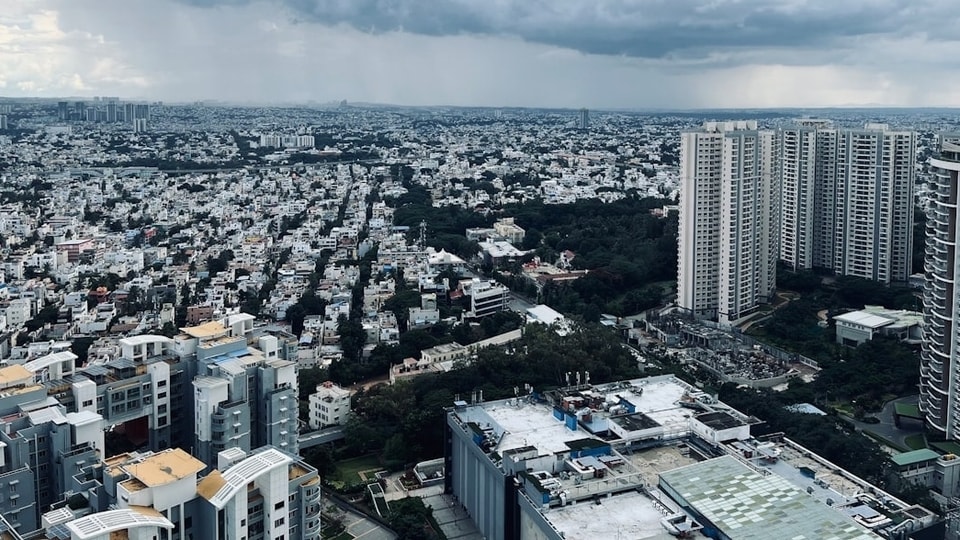
In South Bengaluru, areas like Electronic City and Bannerghatta Road host some of the earliest tech parks and global IT campuses. The eastern IT corridor spans across Whitefield, Outer Ring Road, Bellandur, and Sarjapur Road.
Meanwhile, the IT corridor in North Bengaluru is anchored by the Kempegowda International Airport and upcoming tech zones around Hebbal, Yelahanka, and Devanahalli.
Also Read: Here’s why Mumbai’s redevelopment boom is drawing developers from Bengaluru, NCR, and Hyderabad
Drop in enquiries despite the festive season
According to several real estate consultants operating in East and North Bengaluru, enquiries and site visits have declined compared to the same period last year. “We usually see a rush during Dussehra and Diwali, but this time interest has been more cautious,” said Kiran Kumar, vice president of Hanu Reddy Realty. “Buyers are taking a longer time to decide, and price sensitivity has increased.”
Real estate experts say enquiries have fallen by nearly 20–25% in the last two months, particularly across the IT corridor stretching from Whitefield to Sarjapur Road.
The two key factors believed to be driving the lull are recent government policy changes and a broader sense of uncertainty among potential buyers. Many are choosing to wait and watch, hoping for clarity on new regulations and possible price adjustments before committing to large investments, experts noted.
Kumar said the sentiment is more cautious than pessimistic. “Most buyers still believe in Bengaluru’s long-term growth story, but they are no longer in a hurry. People want to make informed decisions after assessing how new government policies impact the market. The good thing is, genuine end-users have not disappeared; they are just taking a little longer to decide.”
Experts also attribute the lull partly to higher home loan rates and the saturation of certain localities where prices have risen steeply in the past two years.
While demand remains steady in the affordable and mid-segment categories, premium apartments and plotted developments are witnessing slower traction, experts opine.
Ahead of the festive season, housing sales in Bengaluru fell by 8% year-on-year in Q2 2025, dropping to 15,100 units from 16,350 units in the same period last year, even as average property prices surged by 12%, according to ANAROCK’s Q2 2025 report.
The slowdown in sales has been largely linked to affordability pressures, as consistent price escalations through FY2024 have made buyers more cautious amid global economic uncertainty. Analysts suggest that developers may now look to adjust both their launch pace and pricing strategies to bring stability back to the market by late 2025.
“Following an intense phase of rapid launches and record-breaking sales, developers are adopting a more measured and quality-driven approach,” said Anuj Puri, chairman of ANAROCK Group. “The focus has clearly shifted toward completing existing projects and enhancing delivery timelines instead of flooding the market with fresh supply.”
Bengaluru, in particular, witnessed a sharp 30% year-on-year rise in unsold housing stock, the highest among India’s top seven cities, with available inventory increasing from 45,400 units to nearly 58,900 over the past year.
Job market and its impact
In the northern and eastern parts of Bengaluru, areas closer to the city’s major IT corridors, brokers say a noticeable slowdown in enquiries is directly tied to uncertainty in the job market. Many prospective buyers, particularly those employed in the tech sector, are choosing to delay purchase decisions until there’s more stability in hiring trends.
“In areas like North Bengaluru and the eastern belt, clients are waiting for the job market to recover, especially given what’s happening in the US and its ripple effect on the Indian IT industry,” said Sunil Singh, director at Realty Corp. “Last year during Navratri, Diwali, and Dussehra, we sold a good number of units in Sarjapur, Bellandur, and Whitefield. This year, activity has slowed noticeably across all these micro-markets.”
Also Read: Brigade Group launches luxury residential project in Bengaluru, eyes ₹1,000 crore revenue
Singh said that enquiries are expected to pick up again toward the end of the year. “If hiring sentiment improves and the festive offers continue, we should see some recovery by December, especially around Christmas when many buyers finalise year-end purchases,” he said.
However, despite the dip in enquiries, Bengaluru’s overall housing demand remains strong compared to other metros. New projects continue to launch across the city, especially along the airport corridor and the Outer Ring Road–Sarjapur stretch, driven by infrastructure upgrades such as the upcoming metro lines and the peripheral ring road, experts noted.