
 E-Paper



Real estate sector requires ₹50 lakh crore capital by 2030; affordable housing remains underfunded
India’s real estate sector will require nearly ₹50 lakh cr in capital over the next decade, with affordable housing, data centres, and GCCs driving investments

 Prefer HTon Google


India’s real estate sector is expected to require nearly ₹50 lakh crore in capital over the next decade to support its expansion into a $1 trillion market by 2030, with the potential to grow further into a $5–7 trillion sector by 2047, a report titled ‘Powering the Next Decade: India’s Real Estate Finance Transformation Story’ by Anarock Capital has said.
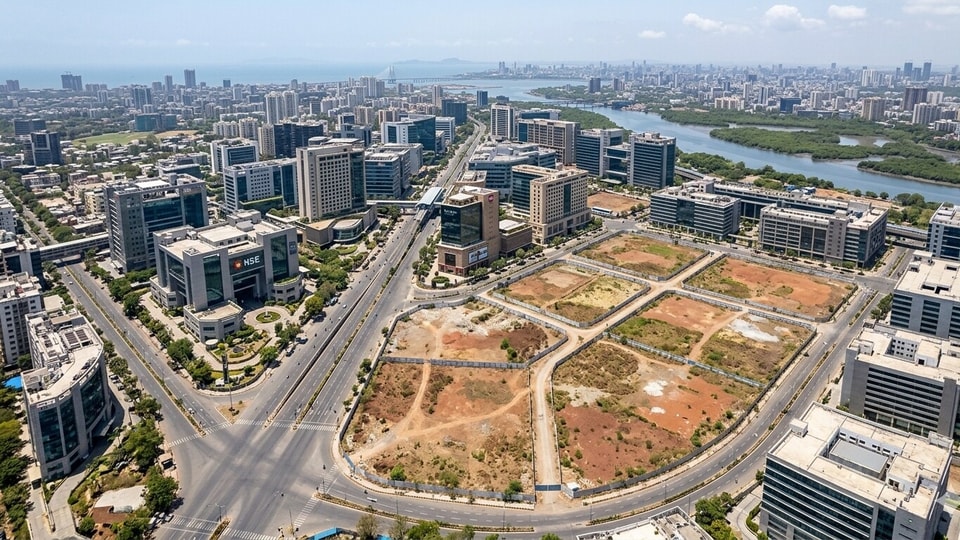
The report notes that the financing ecosystem remains increasingly concentrated around higher-margin projects, while affordable housing, despite delivering the highest social returns, continues to remain outside the focus of formal capital. Institutional funding is still largely directed towards top cities and large developers, leaving affordable housing underserved, it noted.
According to the report, India’s affordable housing challenge is no longer driven by demand constraints, but by structural issues in capital allocation and financing architecture. It adds that the next phase of growth in the real estate sector will depend less on raising fresh capital and more on widening access to capital across segments.
Emerging asset classes such as data centres, logistics and industrial parks, along with GCC-led office developments, are also expected to require significant long-term investment support, it noted.
The report captures significant transformation in real estate finance in decades, from a fragmented, NBFC-dominated ecosystem into a more institutional, transparent, regulated, and diversified capital market. Banks drive the transformation, including Alternative Investment Funds (AIFs), Real Estate Investment Trusts (REITs), private credit, and government-backed initiatives.
“India’s real estate sector no longer faces a shortage of capital. The real challenge is whether this capital can reach beyond the top developers and major metros to fund affordable housing, smaller developers, and emerging Tier II and Tier III cities,” said Shobhit Agarwal, CEO, ANAROCK Capital.
Also Read: Private Equity investment in Indian real estate drops 3% amid global uncertainty
Affordable housing - Biggest funding gap
Despite increasing institutional participation, capital remains concentrated with established developers in the top metropolitan markets. This leaves a critical affordable housing gap, where India is estimated to require 25 million additional units by 2030.
“Despite strong demand, affordable housing remains underfunded and requires dedicated capital structures. There is an urban housing shortage of roughly 10 million units, and at least 25 million affordable homes are needed by 2030. Yet affordable housing supply has sharply declined - homes priced below ₹40 lakh accounted for just 10% of new launches in Q1 2026, down from 26% in 2021. At the same time, premium housing has surged, with homes priced above ₹1.5 crore making up 53% of new launches,” said Vishal Srivastava, head, corporate finance, managing director, Anarock Capital.
"India’s affordable housing problem is no longer a demand issue, but a structural capital allocation and financing architecture challenge," says Srivastava. "The report emphasises that India’s next phase of real estate growth will depend not on raising more capital, but on broadening access to capital."
Also Read: India’s office space absorption up 34% to 42 mn sq ft; Bengaluru leads with 9.95 mn sq ft
The report further notes that a series of structural reforms, including RERA, GST, the Insolvency and Bankruptcy Code (IBC), REIT regulations and tighter RBI norms, have fundamentally changed how real estate is financed in India.
The report also highlights the untapped REIT opportunity in the country. Currently, only 198 mn sf (~37%) of India’s 520 mn sf REIT-worthy office stock is listed.
The report identifies data centres, logistics, industrial real estate, and GCC-led office developments as the next major recipients of long-term capital.


