
 E-Paper



Delhi AQI: Should clean air command higher property prices? Experts divided on linking real estate values to air quality
Delhi AQI worsens: Experts debate if property prices should reflect air quality, with some favouring adjustments and others citing traditional market factors

 Prefer HTon Google


As winter sets in, Delhi-NCR’s air quality continues to deteriorate, raising questions about whether AQI levels should influence property prices. On November 9, the air quality in the city remained in the 'very poor' category, with the overall Air Quality Index recorded at 391, according to the Central Pollution Control Board.
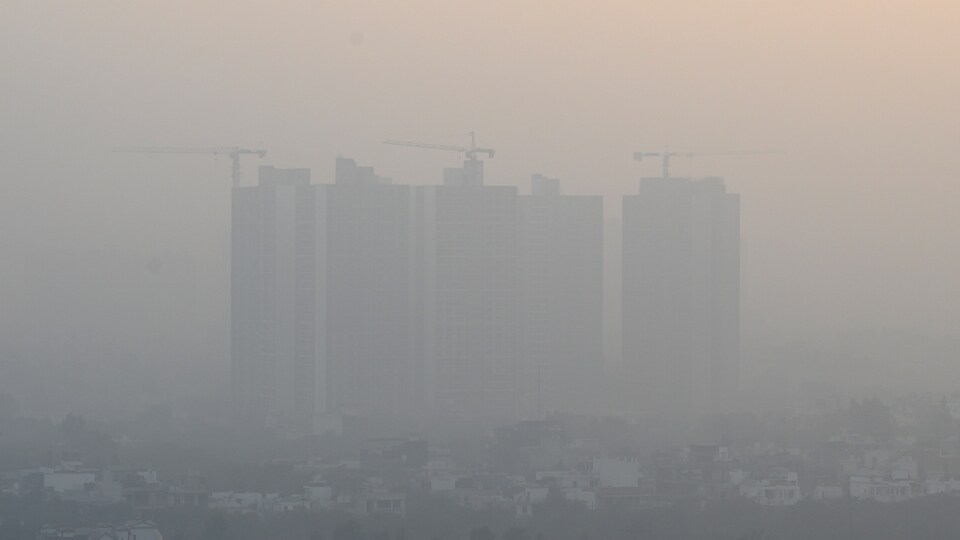
According to data from the Board's Sameer app, 24 monitoring stations in Delhi reported air quality in the 'severe' category, while 11 stations recorded 'very poor' air quality with readings above 300.
It should be noted that an AQI between 0 and 50 is considered ‘good’, 51 to 100 ‘satisfactory’, 101 to 200 ‘moderate’, 201 to 300 ‘poor’, 301 to 400 ‘very poor’ and 401 to 500 ‘severe’, as per the CPCB classification.
Earlier this year, Zerodha co-founder Nithin Kamath had suggested on X that property prices should be linked to air quality. “The higher the AQI, the lower the real estate prices should be,” he wrote, reiterating a proposal he made in November 2024 to introduce ‘property price discounts’ in areas with poor air and water quality as a way to incentivise cleaner development.
This is what real estate experts have to say
However, real estate experts say property values are primarily determined by factors such as land scarcity, infrastructure, connectivity, and demand–supply dynamics, not environmental quality. They note that while the idea of linking prices to pollution is interesting, the market traditionally values qualitative aspects like location and view.
Also Read: Beverage tycoon closes in on Nehru’s first Delhi home in mega real estate deal
Properties overlooking parks, forests, or lakes have long commanded a premium, with developers levying preferential location charges and local authorities sometimes pricing green-facing plots higher.
According to Prashant Thakur, Executive Director and Head- Research & Advisory at ANAROCK Group, there is no historical evidence suggesting that air quality levels influence property prices. “Real estate decisions are primarily driven by core market factors such as land availability, pricing, demand-supply dynamics, and employment opportunities in nearby areas. We have not observed pollution levels affecting property pricing,” he said.
Thakur said that, paradoxically, some of the costliest urban centres also experience the highest pollution levels. “Cities like Delhi, which face severe seasonal air pollution, continue to command premium prices. Pollution has not diminished their real estate value,” he noted.
Builders charge premiums for homes facing greens
Experts point out that charging a premium for properties overlooking green spaces or water bodies is not a new phenomenon. Property prices have long been influenced by the qualitative and aesthetic advantages that a project or neighbourhood offers its residents.
“Take Lutyens’ Delhi, for example. It has remained an ultra-luxury enclave for decades, not just because of its low density but also due to its lush greenery. Interestingly, nearly 18,000 parks are located in South Delhi, which explains why property values there have traditionally been higher than in other parts of the city,” said Akash Vashishtha, an environmental lawyer.
Developers have for years levied preferential location charges (PLC) for homes overlooking golf courses, forests, or water bodies. “Such properties are typically marketed as luxury offerings because they promise a superior quality of life at a premium price. In fact, there have been instances of authorities charging 5–10% extra for plots facing green belts or parks,” Vashishtha explained.
“Kamath’s views highlight that the public must learn to value and pay for the services that environmental assets provide. The growing impact of climate change should push citizens to recognise these resources’ worth and pay a premium for their preservation,” he said.
Guideline rates drive property prices
However, not all experts agree that air and water quality directly affect property values.
“This is fundamentally a consumer-driven market where prices are dictated by land demand and supply,” said Sarang Kulkarni, Managing Director of Bengaluru-based Descon Ventures Real Estate Services Pvt Ltd.
“The government determines guideline values, or circle rates, for different areas and uses them to calculate stamp duty and registration fees. These rates are based on recent transaction data, location, connectivity, infrastructure, and population density.”
Kulkarni said that “Cities must deliver adequate infrastructure, including green infrastructure, as per their Master Plans, which are designed to provide a certain standard of living. Citizens should demand these standards,” he said.
He added that residents often overlook environmental trade-offs when property values benefit. “For instance, when a new mall creates traffic congestion, people rarely protest because they expect it to boost property values nearby. It’s ultimately up to consumers to connect environmental quality with their personal and civic values,” Kulkarni concluded.


