
 E-Paper



How big is America’s “obesity penalty”?
GLP-1s offer a rare insight into the social and economic effects of carrying extra weight


 Prefer HTon Google


WHAT HAPPENS after you lose weight? Doctors tell patients to expect better mobility and less stress on their joints. Metabolic measures, such as blood sugar and cholesterol, improve. People report more energy and better sleep. But these health markers are just one part of what economists call the “obesity penalty”. Studies have long shown that people, especially women, who carry extra weight tend to finish their formal education sooner and are less likely to marry or work. The sudden weight loss experienced by millions of Americans with GLP-1 drugs offers a rare chance to study how much of that penalty disappears when people become slimmer.
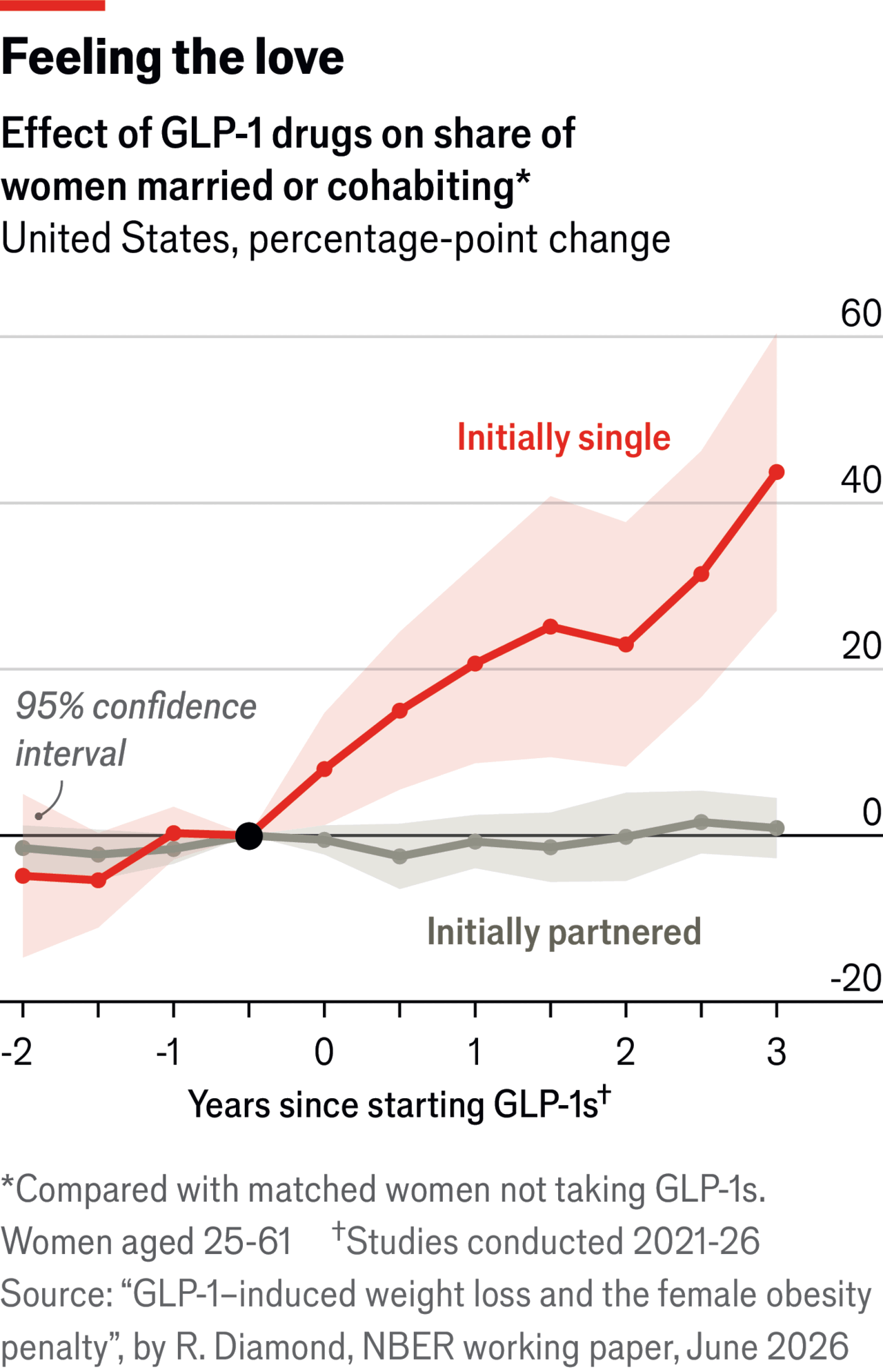
Some 22% of American women and 14% of men have taken GLP-1s for weight loss or for chronic conditions such as diabetes. Rebecca Diamond of Harvard University used data from the Understanding America Study, a long-running survey of 15,000 people, to compare women who began taking the drugs for weight loss with similar women who wanted to take them but had not yet started. (The sample of men on the drugs in the survey was too small to study.) As the first group lost weight, Ms Diamond quantified changes in their personal and professional relationships compared with the second group. The results provide one of the clearest estimates yet of the price American women pay for being obese.
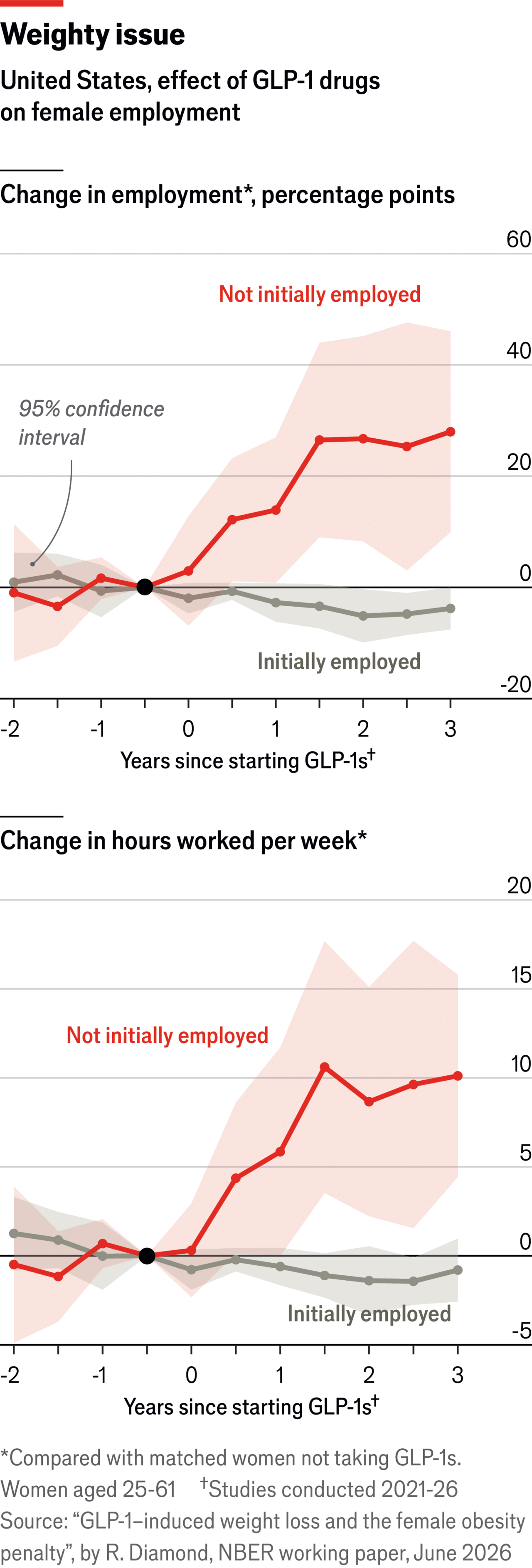
The women in the sample were matched by measures including their body mass index, race, income and self-assessed health. Comparing their outcomes over 18 months reveals a stark divide. Among women who had been out of work, employment rates increased by 27 percentage points for those taking GLP-1s. That change is bigger than the employment gap between American women with a high-school diploma and those with a university degree. A similar penalty is found in the dating market. The chances of a single woman marrying or moving in with a partner increased by 29 percentage points relative to one who had not lost weight.
Better health surely played a role, but does not explain all the gains made by women on GLP-1s. The share of those without jobs who said that illness restricted the work they could do fell by just 14 percentage points over the same period. And most of the women moved into work from unemployment, not disability or retirement. Improved mood or motivation are also unlikely to explain the gains: there was surprisingly little change in women’s self-reported life satisfaction, loneliness and depression after weight loss.
Ms Diamond reckons the most important explanation is a stubbornly persistent bias against heavy women. Weight loss had no effect on existing careers and relationships: women taking GLP-1s who already had a job did not go on to achieve promotions or earn more. Excess weight appeared to prevent women only from getting hired.
Little wonder, then, that girls as young as three say they worry about their size. GLP-1s not only help people become healthier. They may also help them escape social censure.


