
 E-Paper



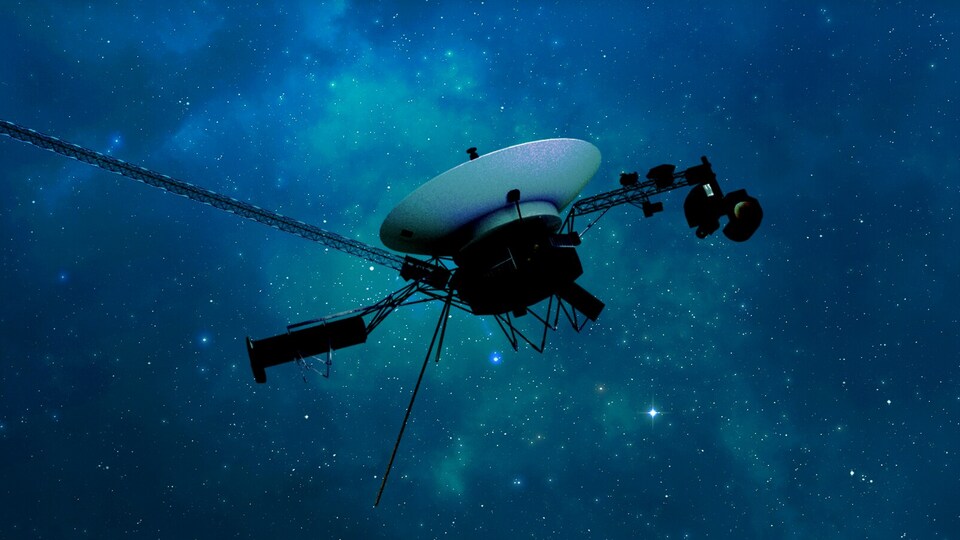
How NASA scientists save Voyager 1, the farthest artificial object from Earth?
Voyager 1 and its twin, Voyager 2, are the only spacecraft to venture into interstellar space, the area between stars

 Prefer HTon Google


After a five-month silence, the Voyager 1 spacecraft, the farthest manmade object, is finally sending back useful information about its health and systems, the National Aeronautics and Space Administration (NASA) said on Monday. Now, the team is getting it ready to send back science data, too.
What was the problem with Voyager 1?
The problem started last November when Voyager 1 stopped sending readable science and engineering data, even though it seemed to work fine. NASA's team at Jet Propulsion Laboratory found out it was because of a faulty chip in one of the spacecraft's computers.
ALSO READ- NASA’s Landsat 9 satellite captures before and after pics of Dubai floods from space
How was Voyager 1 fixed?
The NASA team couldn't fix it; they had to split and move the affected code to different parts of the computer. They've moved the part that handles engineering data and hoped it would work.
A radio signal takes about 22 ½ hours to travel to Voyager 1, which is more than 24 billion kilometers away from Earth. Then, it takes another 22 ½ hours to travel back.
ALSO READ- Indian students bag NASA awards for Human Exploration Rover Challenge
When the mission flight team received a response from the spacecraft on April 20, they confirmed that the modification had been successful. This marked the first time in five months that they could monitor the health and status of the spacecraft.
Now, they're working on moving and fixing the rest of the code.
ALSO READ- 10 stunning images of galaxies captured by NASA's Hubble Space Telescope
Voyager 2, on the other hand, is still working as usual.
Where are Voyager 1 and Voyager 2 now?
Voyager 1 was launched on September 5, 1977 and Voyager 2 was launched on August 20, 1977. Voyager 1 is approximately 24.3 billion kilometres from Earth, while Voyager 2 is about 20.4 billion kilometres away. According to NASA, both have reached "Interstellar space", and each continues their unique journey through the Universe.
Voyager 1 and its twin, Voyager 2, are the only spacecraft to venture into interstellar space, the area between stars, and the farthest and longest-running ones ever. Before entering interstellar space, they explored Saturn, Jupiter, Uranus, and Neptune.


