
 E-Paper



Now, watch this asteroid with your telescope - it is a 2000-foot wide space monster
An asteroid that is 2000-foot wide can be seen through an ordinary telescope - that is how close it got to Earth!

 Prefer HTon Google


Asteroids have been depicted in the negative light since the time humanity first got to know their potential power for destruction. Their purpose seems to be to aimlessly wander around empty space and once in a while crash into a hapless planet and (possibly) alter the balance between species (as happened with the asteroid that killed off all the dinosaurs some 66 mn years ago on Earth). While that one crashed against Earth and changed it forever, there is a new one that got frightfully close.
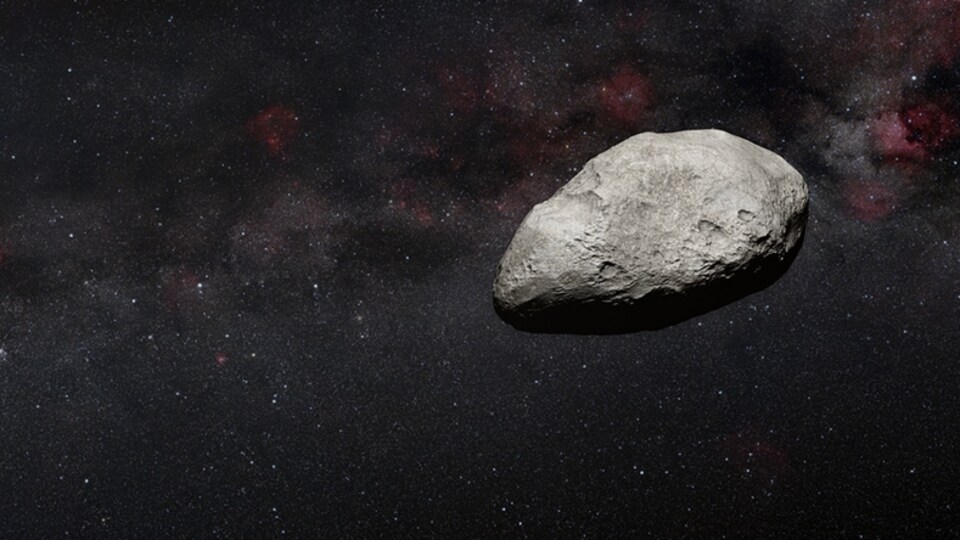
It is a 2000-foot wide space rock that got so close to our planet that you can actually see it with your telescope! Yes, you read that right. However, don’t worry, this space rock will fly by safely and head back into the darkness of space despite having been classified as a potentially hazardous asteroid. The only cause for concern is its size and the fact that it actually came very close to the planet.
Read More: A black hole, 33 times the mass of the Sun, found hiding in Milky Way Galaxy
So, if you want to catch it, you can do so - the dates are between April 15 and April 17. So there is plenty of time.
Named as Asteroid 2013 NK4 it is approximately 2,000 feet wide, EarthSky reported.
How close did it get? As close as 8 times the distance of the Moon to the Earth. Yes, it has already passed Earth, but EarthSky reports that the best view of the asteroid would be on the nights of April 16 and 17. The amazing thing is that it will be in view for the first time ever.
Read More: India aims to achieve debris-free space missions by 2030: ISRO chief Somanath
The asteroid had come close to Earth on Monday at around 3.2 million kilometers, NASA's Jet Propulsion Laboratory (JPL), revealed and it was speeding at approximately 59,000 km/h.
As far as finding the location of the asteroid is concerned, all you have to do is visit TheSkyLive.com.
Read More: NASA reveals truth behind mystery object that crashed through Florida house
The asteroid will come back again to visit Earth, but that will be in the year 2025, on April 23, to be precise, JPL Small-Body Database. revealed.


