
 E-Paper



Christian Eriksen home and recovering after on-field collapse vs Ukraine: ‘ICD did exactly what it was designed to do’
Christian Eriksen is recovering at home after collapsing during a friendly match against Ukraine.

 Prefer HTon Google


Christian Eriksen is recovering at home after collapsing during Denmark’s friendly against Ukraine, with the midfielder saying the shock from his ICD had a “major effect” on him and his family but stressing that the incident was different from his cardiac arrest at Euro 2020.
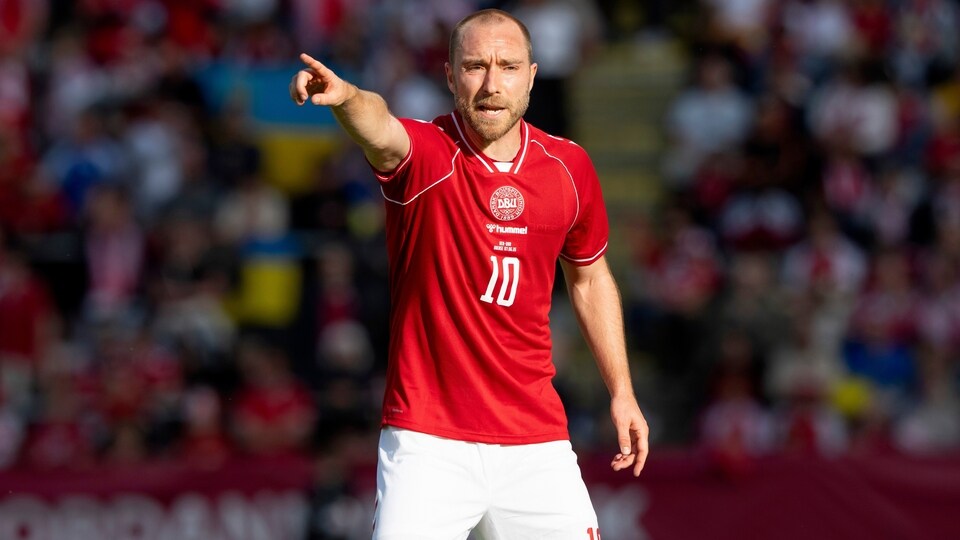
The Denmark international went down in the 65th minute of Sunday’s match in Odense, with Denmark leading Ukraine 2-1. Players from both teams immediately surrounded him as medical staff rushed in, creating a scene that recalled the harrowing moments from Copenhagen in 2021, when Eriksen suffered a cardiac arrest during Denmark’s European Championship match against Finland.
This time, Eriksen regained consciousness soon after treatment and was able to leave the field before further checks. The match was abandoned after discussions between officials, players and staff.
Eriksen says ICD ‘did exactly what it was designed to do’
Eriksen later posted an Instagram update, confirming he was back home with his family.
“I want to let everyone know that I am doing well and that I am home with my family,” Eriksen wrote.
The former Manchester United, Tottenham, Inter Milan and Brentford midfielder said the episode had shaken those close to him, but made it clear that it was not the same as the incident that nearly claimed his life five years ago.
“As you can probably imagine, receiving a shock from my ICD has had a major effect on both me and my family, but I want to assure everyone that this was a different situation from what happened in 2021,” he wrote.
Eriksen had an Implantable Cardioverter-Defibrillator fitted after his Euro 2020 collapse. The device is designed to detect dangerous heart rhythms and deliver an electric shock when needed.
“In addition to being grateful for the support and assistance of all the players and the medical team on the field, I am also incredibly grateful to the doctors who have cared for me and my heart over the years,” Eriksen wrote.
“Thanks to their expertise, my ICD did exactly what it was designed to do: protect me when I needed it.”

Eriksen also said his immediate focus was on “recovering, spending time with my family, going on vacation, and playing football with my children.”
Denmark coach Brian Riemer said the incident had been difficult for the squad to process, even though Eriksen’s condition had improved.
“It has been a tough day for all of us, but fortunately, Christian is doing well and is back home with his family,” Riemer said. “Now he and the players need to have some peace to process the experience, so that everyone can recover from the shock.”
Riemer also praised the response of both sets of players after Eriksen collapsed.
“In a difficult moment, everyone showed a beautiful unity, which I think is what we should remember about this evening,” he said.
Denmark team doctor Morten Boesen said Eriksen briefly lost consciousness but recovered quickly, adding that the pacemaker appeared to have responded properly. “Christian is doing well and walked off the pitch by himself. As I see it, the pacemaker responded as it should,” Boesen said. He was briefly unconscious, but regained consciousness very quickly, and we were quickly in contact with him.”
The incident immediately drew wider concern because of Eriksen’s history. His collapse at Euro 2020 remains one of football’s most traumatic modern moments, but his latest update has brought relief across the fraternity. This time, the story moved from fear to reassurance quickly, with Eriksen himself underlining that the device fitted after 2021 had done its job


