
 E-Paper



Lionel Messi vs Lamine Yamal's blockbuster clash postponed due to US-Iran conflict, Finalissima 2026 in doubt
Finalissima 2026 featuring Messi vs Yamal postponed due to Qatar's sports shutdown, leaving match status uncertain.

 Prefer HTon Google


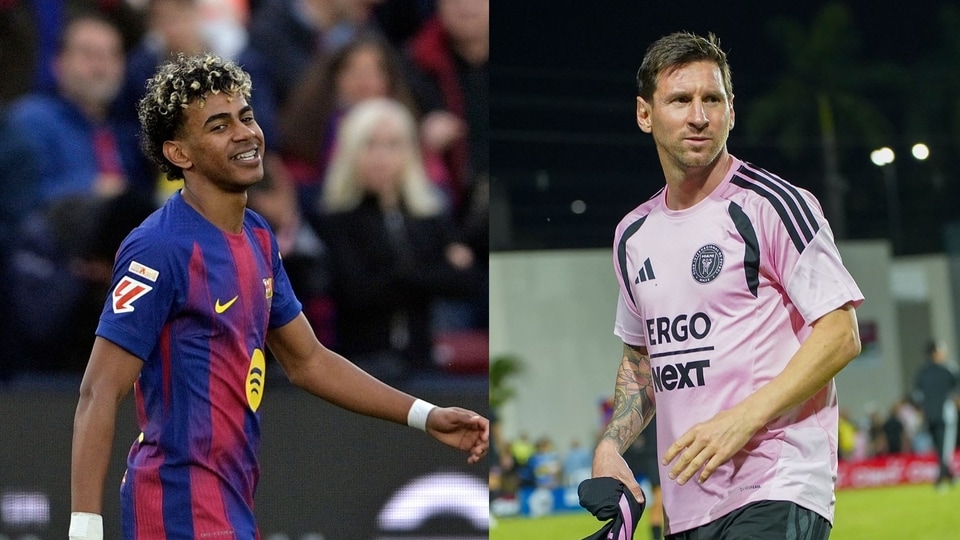
Lionel Messi vs Lamine Yamal — the marquee hook for Finalissima 2026 — has been pushed into uncertainty after Qatar’s football shutdown, with the Spain vs Argentina showpiece now effectively on hold pending further updates from local authorities and organisers. UEFA had officially announced the match for March 27, 2026, at Lusail Stadium in Qatar, billing it as the meeting of the UEFA Euro 2024 and Copa América 2024 champions.
The immediate trigger is a fresh decision reported by Qatar News Agency, which said the Qatar Football Association (QFA) has postponed all sports competitions, championships and matches “starting today until further notice.” QNA also said the QFA would announce resumption dates later through its official platforms.
A blockbuster clash now stalled
For football fans, this was more than just another international fixture. It was set up as a symbolic passing-of-the-torch contest: Messi, the defining star of an era and Argentina’s talisman, against Yamal, the teenage phenomenon who has become the face of Spain’s new generation. The matchup had gathered significant momentum because it blended legacy, narrative, and World Cup-year relevance into one game.
UEFA’s December announcement confirmed the Finalissima as a joint UEFA-CONMEBOL event, with Spain and Argentina meeting as continental champions, and also reiterated Argentina’s status as winners of the revived 2022 edition (3-0 vs Italy at Wembley). That context made the 2026 edition feel like a genuine global event rather than a ceremonial exhibition.
What remains unclear right now is the official competition-specific status from UEFA and CONMEBOL: while the local suspension in Qatar creates an immediate obstacle to the Lusail hosting plan, there has not yet been a fresh public update from UEFA in the material reviewed here confirming a new date, a venue switch, or a cancellation. UEFA’s published Finalissima release still lists the original March 27 date in Lusail.
That leaves the Messi-vs-Yamal storyline in limbo, not dead. If Qatar reopens its calendar in time, the fixture could still be rescheduled there; if not, organisers may need an alternate host. Either way, one of international football’s most marketable matchups now depends less on team sheets and more on geopolitical conditions far beyond the pitch.


