
 E-Paper



‘Messi can be a weakness’: Wayne Rooney identifies Argentina's defensive flaw England must exploit in WC semifinal
Wayne Rooney says Lionel Messi's limited defensive work could give England an opening, but warns his decision-making can still settle the semi-final.

 Prefer HTon Google


Wayne Rooney believes Lionel Messi’s limited defensive contribution could offer England a route to hurting Argentina when the two rivals meet in the FIFA World Cup 2026 semi-final.
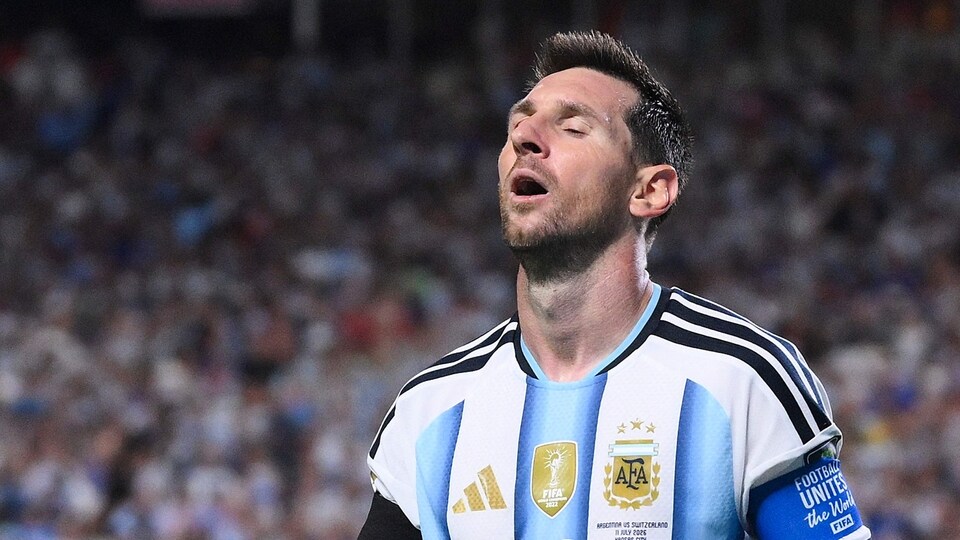
Messi has once again been Argentina’s decisive figure during their title defence, scoring eight goals and helping Lionel Scaloni’s side survive several difficult knockout contests. However, the 39-year-old is no longer expected to press relentlessly or track opposition players deep into his own half.
Argentina instead allow Messi to remain higher up the pitch, conserving his energy and ensuring he is available when they regain possession. Rooney believes that approach could leave exploitable space for an England side equipped with powerful runners and attacking players capable of creating overloads.
“He can be a weakness defensively for Argentina,” Rooney said on BBC Sport. “He doesn’t run back, but he has big moments a bit like with Jude Bellingham. He has big moments and moments of quality.”
Rooney’s assessment was not a dismissal of Messi’s influence. Rather, the former England captain highlighted the tactical compromise Argentina make to maximise their captain’s ability to decide matches.
Rooney highlights Messi’s decision-making
Messi’s scoring streak of nine consecutive World Cup matches ended during Argentina’s quarter-final against Switzerland, but he still made an important contribution by supplying the corner from which Alexis Mac Allister headed home the opening goal.
Argentina were eventually forced into extra time before a 112th-minute strike from Julian Alvarez and a late Lautaro Martinez goal secured a 3-1 victory. The result continued a campaign in which the defending champions have often relied on moments of individual quality rather than sustained control.
Also Read: France, Spain, Argentina, England: Four identities, four routes to the World Cup Final
“The thing with Messi is his decision-making – he comes to life in moments of the game and he makes the right decision,” Rooney said. “Marking Lionel Messi is about concentration and communication. Communicating with your team-mates about picking up positions you might not usually pick up.”
Messi’s tendency to drift between the midfield and defensive lines makes assigning one permanent marker difficult. England’s defenders will instead have to pass responsibility between themselves whenever he changes position, while remaining alert to the spaces created by Argentina’s other attackers.
England could attempt to exploit the area Messi leaves behind by pushing a full-back or midfielder forward on his side. Doing so, however, would carry considerable danger. Losing possession after committing players forward could leave Messi free beyond England’s initial defensive press and give him the time required to launch an Argentine counterattack.
England reached the semi-final after Bellingham scored twice in their 2-1 extra-time victory over Norway. The Real Madrid midfielder is now level with Harry Kane on six goals at the tournament, underlining why Rooney compared his ability to deliver decisive moments with Messi’s.
Wednesday’s contest in Atlanta will be Messi’s first senior international appearance against England and the countries’ first World Cup meeting since 2002. Rooney’s comments, therefore, identify the central tactical gamble facing England: how aggressively they can attack the space Messi concedes without giving Argentina’s greatest match-winner the freedom to punish them at the other end.


