E-Paper



Referee, entrepreneur, innovator: How former football official Oren Simanian became one of sport’s biggest tech giants
As the founder and CEO of Colosseum Sport and the driving force behind Sports Tech Nation, Oren Simanian has emerged as one of the most influential figures

 Prefer HTon Google


The job of a football referee is a thankless one. When they make the right decisions, they fly under the radar, but all hell breaks loose when they get something wrong. For more than two decades, Oren Simanian lived in that world. He spent several years officiating football matches in Israel, eventually reaching the country's top domestic league and earning recognition as one of its elite referees.

He spent eight years officiating in Israel's top football divisions and also established himself as a FIFA futsal referee. The experience exposed him to elite athletes, coaches, administrators and the complex ecosystem that powers professional sport.
Today, however, Oren occupies a very different arena. He is no longer involved in the sport as a referee. Instead, he is helping shape the future of global sport. As the founder and CEO of Colosseum Sport and the driving force behind Sports Tech Nation, Oren has emerged as one of the most influential figures connecting sports organisations, startups, investors and innovators worldwide. His journey from referee to sports technology leader is not merely a career change; it is a story of giving back to the sport.
The seeds of that journey were planted during a match he was officiating, when he realised how desperately the game needed better technology. Speaking to The Hindustan Times Digital in Tel Aviv, he recalled officiating a high-stakes football match in which the losing team would be relegated to the second division. During the game, his assistant referee mistakenly ruled out a legitimate goal. Days later, Oren realised he could no longer rely solely on human judgment and decided to dedicate himself to developing technological solutions to help officials make better decisions.
“There was a big gap between me knowing technology and startups and seeing the need on the pitch. So during this mess in the pitch, I said, Wow, how come we don't have a technology that actually tells us if the goal crossed the line, yes or no? This is simple. We are in 2017,” he said.
“It was almost 10 years ago, right? But the technology was developed enough to tell us and help us with teen-related sports; it's actually pushed and encouraged me to say that sports are among the most important things in our lives today. And yet, technology is not there. Seeing the gap, actually, in a minute, my brain was not in the incident. It was on the technology,” he added.
It's safe to say that the skills he developed while refereeing would later prove invaluable in an entirely different arena: the startup ecosystem. Over the years, he mentored startups, delivered lectures around the world, advised entrepreneurs and helped companies raise funding. By the mid-2010s, he had accumulated something relatively rare: extensive experience spanning both elite sport and high-growth innovation.

The big void in sports tech
As sports organisations around the world began embracing new technologies, Oren noticed a gap. Israel had one of the world's most dynamic technology ecosystems, while sports federations were increasingly seeking solutions in areas such as athlete performance, injury prevention, fan engagement, broadcasting, data analytics, and venue operations.
It was then that he recognised an opportunity. Rather than choosing between sport and technology, he decided to bring the two together. The result was ‘Colosseum’, an international sports innovation group launched in 2017 with the mission of connecting the sports industry with the innovation emerging from Israel's technology ecosystem.
Under Simanian's leadership, Colosseum evolved into an international platform that helps sports organisations discover, evaluate and adopt cutting-edge solutions. His most visible achievement, however, has been Sports Tech Nation. Launched in 2018, the event began as a relatively modest gathering designed to showcase innovation in sport. Over the years, it has grown into one of the industry's leading global conferences, bringing together founders, investors, clubs, federations and technology leaders from around the world.
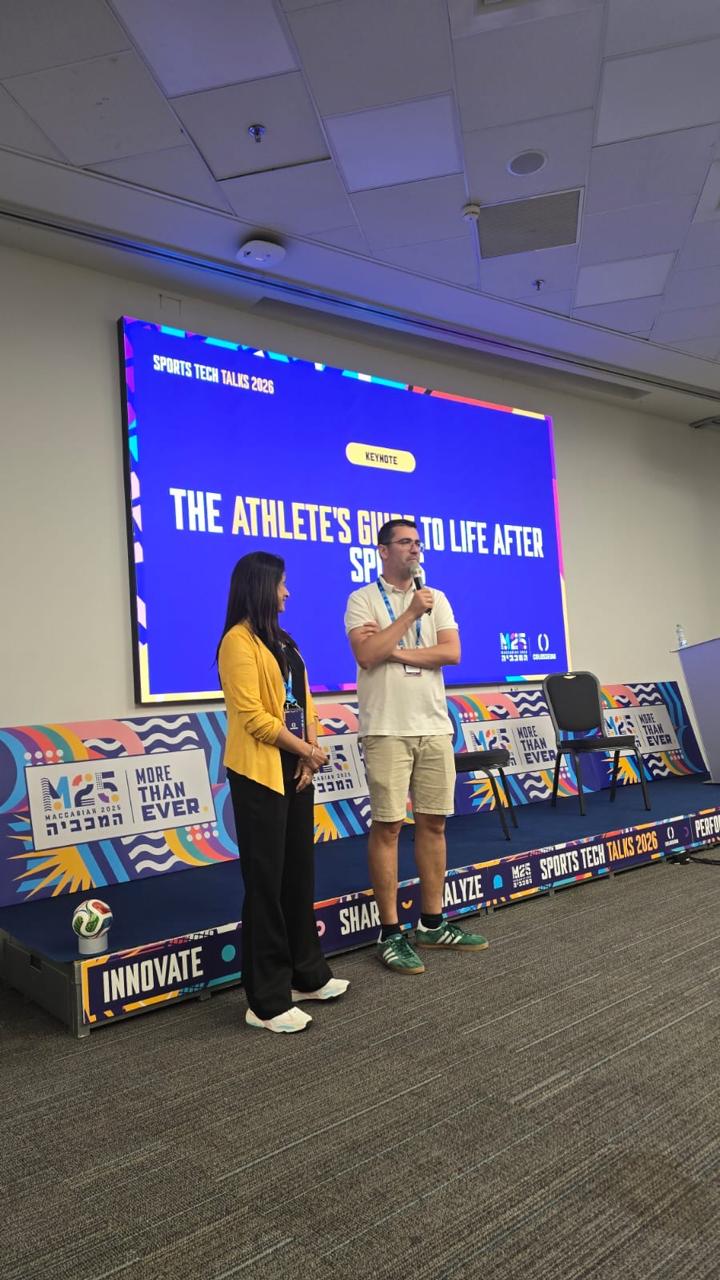
Even so, Oren believes sports federations still have a long way to go. He wants them to embrace technology more wholeheartedly and become far more willing to adopt innovation.
“In a practical way, technology today is not like an action; it is not a question, yes or no. The technology is the base. Innovation is the base. New formats are the basis of building long-term, sustainable, high-quality sports organisations. So when people are being cynical, it’s common. It’s not because they're really silly, it's because they don't have any other opportunities. They cannot allow themselves to do so financially. They allow themselves from an access perspective,” he said
“People are many times cynical because they cannot allow themselves to understand, to know, to have access. So here, we said, we are here too, open to being open and helping you. I'm not telling sports organisations, "Hey, I'll make you rich," or "Hey, I'll make you this." I will make you relevant,” he added.
Message for India
When Simanian began his address, he was quick to ask about India's medal tally at the Paris Olympics (seven). A few minutes later, he explained why, arguing that greater investment in sports technology could give India the extra edge needed to boost its medal haul at future Olympic Games.
“There are several parameters that allow us to increase the level of success in the elite performance, right? One of them is infrastructure, and the other is a learning management system, which means knowledge. One of them is about capital. Technology is everywhere, right? The level of innovation adoption in sports is one of the metrics. It's one of the parameters, but I would say that it's an agnostic one that goes into each one of the elements, because when you're able to arrange infrastructure for support, it needs to be smart and relevant,” he said.
“When you have education, platforms, it has to be very innovative. So I said today, innovation and technology are enabled. So when looking at the importance of this sport, it's not just important; it's vital, crucial. It's irreplaceable, and it's there. Technology is a tool for sport," he concluded.