
 E-Paper



Trial turmoil in Indian boxing and wrestling
Selection to the Indian boxing and wrestling squads often face protests and legal challenges; federations not drawing up the criteria in advance hasn’t helped

 Prefer HTon Google


Two of India’s high-profile Olympic sports have witnessed sparring matches off the playing arena, on the court of law. Athletes seeking legal redress for non-selection to the national team has been routine for some time now, and these challenges spike in the year building up to the Olympics once the qualification process starts.
In boxing, where India has won medals in three of the last four Olympics, the omitted boxers unsuccessfully challenged the process that didn’t include trials, for this month’s women’s world championships. Wrestling, on the other hand, had scheduled trials for the Asian Championships and those left out successfully petitioned for inclusion, one of them even winning the trials.
Contact sport at elite level is very demanding – form, injuries, the need to build a national team that can realistically be expected to challenge for medals in a world-class field all come into play. That calls for tweaking the selection norms from time to time, which can lead to disputes if there is a dip in the level of trust between officials and athletes.
What compounds the problem is a lack of transparency with federations often not spelling out their selection policy at the start of the season.
Also Read: Nikhat Zareen, Lovlina Borgohain head India’s challenge at boxing worlds
In boxing, three women national champions petitioned the Delhi high court against the new selection policy which this season is based on “assessment” in the national camp.
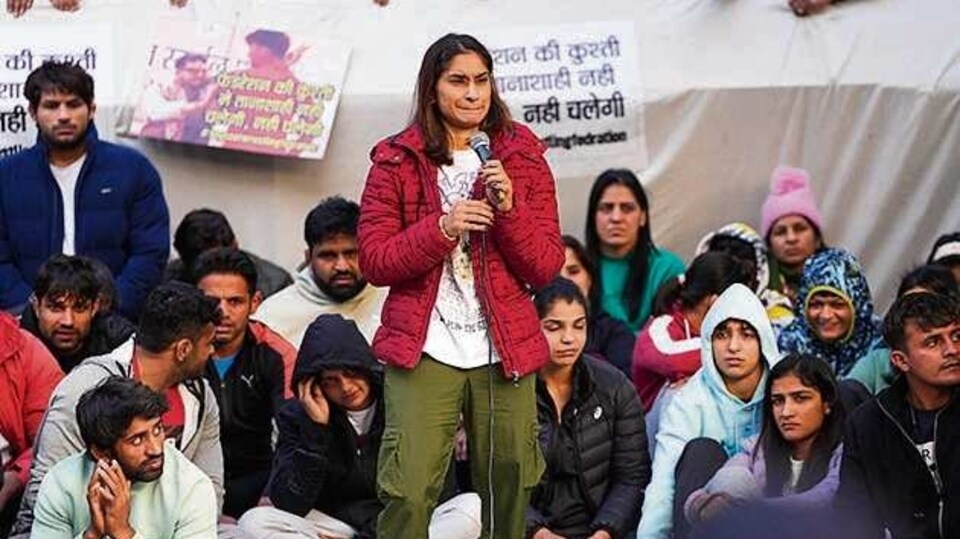
The five wrestlers approach the court contending that they deserved to be called for the selection trials but were not by the Oversight Committee running the sport in place of the suspended Wrestling Federation of India (WFI). The court directed all of them to be included for trials and Anuj Kumar (65kg) won the competition.
While the remit of the Oversight Committee is to probe sexual harassment allegations against WFI president Brij Bushan Sharan Singh and others, the WFI's selection criteria has been criticised as “arbitrary and unfair”, leading to many disputes in recent years. It was one the issues raised by the protesting Olympic and world championships medallists against WFI.
Trials though have not been the solution. Last year, trials were held before every major international event and back-to-back competitions. In a sport where managing weight is as challenging as competition, it left them with little time to recover.
“Ask any doctor or expert – if you cut weight once how much time it takes for recovery. In one month, if we reduce weight once (for trials) and then go to an international event where you must show the weight twice (it can be draining). I challenge any wrestler to give performance after this,” Bajrang Punia, the Tokyo Olympics bronze medallist, said.
Barely three weeks after winning the Commonwealth Games gold last year, Vinesh Phogat was asked to appear for the world championships trials. Her request for an exemption was turned down. The men’s CWG winners were exempted. Vinesh won the trials, and two weeks later, won bronze at the world meet. It meant she had to cut weight thrice in five weeks, which cannot just hamper performance but also trigger injuries.
“I’ve played at the senior international level for 10 years; you think I am scared of the trials? I can say with certainty that had I not taken the trials, I would have won gold,” Vinesh said.
Top wrestling nations plan their selection well in advance. USA and Japan had policies in place last year for this year's world championships and the 2024 Paris Olympics. Both give more weightage to their premier domestic tournaments. USA Wrestling has the Olympic team trials and world team trials as basis for selection through the year. World championships and Olympic medallists are seeded directly into the final round of the trials.
Coach Andrew Cook, who has worked in the US and with the Indian women’s wrestling team, compares the two systems.
“In the USA, we have one trial each year, which is the base for the whole year. The top three will be in the national team and get three international events, besides funding. A series of camps are provided for them. The ability to attend other events and training are up to the individual athletes as the year progresses,” he says.
Cook quit the Indian women’s team after a fallout with WFI in 2020. “From what I witnessed (in India) I would say WFI has more power over the wrestlers than it should have with multi-trials and allowing only certain athletes to get outside opportunities. The US system does not block anyone from attending unless the quota of three athletes per weight has been filled.”
The Japanese federation announced its selection criteria last December with performances in the Emperor’s Cup and Meiji Cup the focus. In Olympic weights, winning both the events will lead to direct selection for the worlds. In case of different winners, a play-off will decide selection.
Boxing selection dilemma
The boxing federation’s new selection policy, though highly debated, is on the lines of top boxing nations like Great Britain where selection panels and high-performance managers have the say, after continuous evaluation during long camps. The idea is to manage and nurture a smaller set of boxers for top performance.
A selection trial or ‘box-off’ is held in a weight category only when the panel feel two boxers are close enough. India’s Irish high-performance director Bernard Dunne, a former European champion who was the Irish team coach for a long time, is a votary of this approach. He does not want his boxers to be exhausted while focusing on trials and instead want them to be ready for the main competition.
“Selecting through trials is an old, traditional way,” says Argentine Santiago Nieva, Dunne’s predecessor. “When you select through trials, you are leaving too much for the judges to decide and on the basis of one bout. A coach sees the boxers every day in the camp and is in a better position to decide. Eventually, it is the coach who is responsible for the results,” says Nieva, now head coach of the Australian national team.
Brazil’s head coach Mateus Alves adds: “The top boxing countries train in permanent camps where the coach gets to monitor them the whole year (in training and competition). The best system is permanent camps in countries like Kazakhstan, Uzbekistan and Russia. USA has a mixed—bout system."
Not many in Indian boxing would agree.
“In India there are so many boxers (in contention), how do you tell them he or she has been selected on the basis of assessment. Too much is at stake for the boxers in every tournament,” says a former India boxer who was also a national selector. “If you hold trials, the boxers are on their toes, and are satisfied at the end of the day.”
A series of haphazardly held trials held last year left top boxers complaining, with some even pulling out. Legal challenges mean the federation is cautious, yet a selection policy well in advance was missing. The squad for the women’s world championships (March 15-31) was picked after a three-week camp that was held after the senior nationals. Dunne’s approach faced a lot of resistance within BFI before it was cleared.


