
 E-Paper



Goa launches AI Policy 2026: Here's how it plans to use AI across public services
Goa announces AI Policy 2026: IT Minister Rohan Khaunte shares the state's plans with HT Tech

 Prefer HTon Google


Goa has unveiled its Artificial Intelligence (AI) Policy 2026, setting out a three-year roadmap to bring the technology into governance, public services and local industries. The policy was announced during the inaugural session of the two-day Goa AI Tech Conclave 2026 at INOX Courtyard. Organised by the Department of Information Technology, Electronics and Communications, the conclave was held under the theme “AI for People, Planet and Progress”. Goa Chief Minister Pramod Sawant, Goa IT Minister Rohan Khaunte and other government officials and industry representatives attended the event. But as governments look to bring AI into everyday services, questions around data security and practical applications remain important. Speaking exclusively to HT Tech on the sidelines of the conclave, Goa's Cabinet Minister for Tourism, IT, Electronics and Communications, Rohan Khaunte, explained how the state plans to protect citizen data and why it wants to start with real problems rather than simply finding uses for new technology. Here's everything you need to know about Goa's AI plans and what the minister told HT Tech.
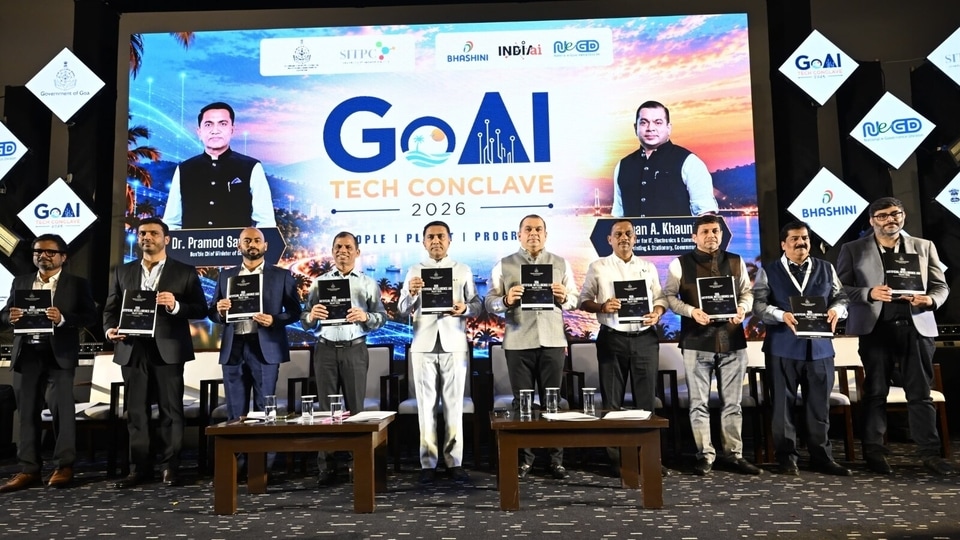

Goa AI Policy 2026 focuses on skills, startups and responsible AI
The AI Policy 2026 establishes a framework for the 2026–29 period and aligns with the Goa AI Mission 2027. The state aims to develop its AI ecosystem by focusing on five areas: skilling and capacity building, support for startups and industries, capital and investments, policy and infrastructur, and responsible, safe and ethical AI.
One of the key targets is to certify 50,000 young people in AI by 2030. The government also plans to support startups and micro, small and medium enterprises through incubation programmes, regulatory sandboxes and departmental testbeds. Funding support and subsidies are expected to help businesses develop and test AI-based solutions.
The roadmap also focuses on infrastructure, including high-performance GPU computing, secure data repositories and digital public infrastructure. At the same time, it proposes safeguards based on the level of risk associated with AI systems, with privacy protections and human oversight forming part of the approach.
The state plans to classify AI systems into four categories: Prohibited, High-Risk, Medium-Risk and Low-Risk. Systems considered high-risk, particularly those that could affect citizen entitlements, healthcare or critical public services, will require human oversight and comprehensive algorithmic audits before deployment.
Goa also plans to establish an IT Techno Centre in Porvorim to support the technology ecosystem. The proposed centre is expected to provide infrastructure, incubation facilities and collaborative workspaces for businesses and innovators.
The AI Tech Conclave featured panel discussions, roundtables, skills workshops, startup pitches and an exhibition with 30 technology experience zones and institutional stalls. The state also launched a hackathon to encourage participants to develop practical solutions to challenges faced by government departments.
How Goa plans to protect citizen data and use AI to solve local problems
Speaking exclusively to HT Tech about data security as AI becomes part of government services, Khaunte said the government intends to retain control over citizen data and secure it through its own systems.
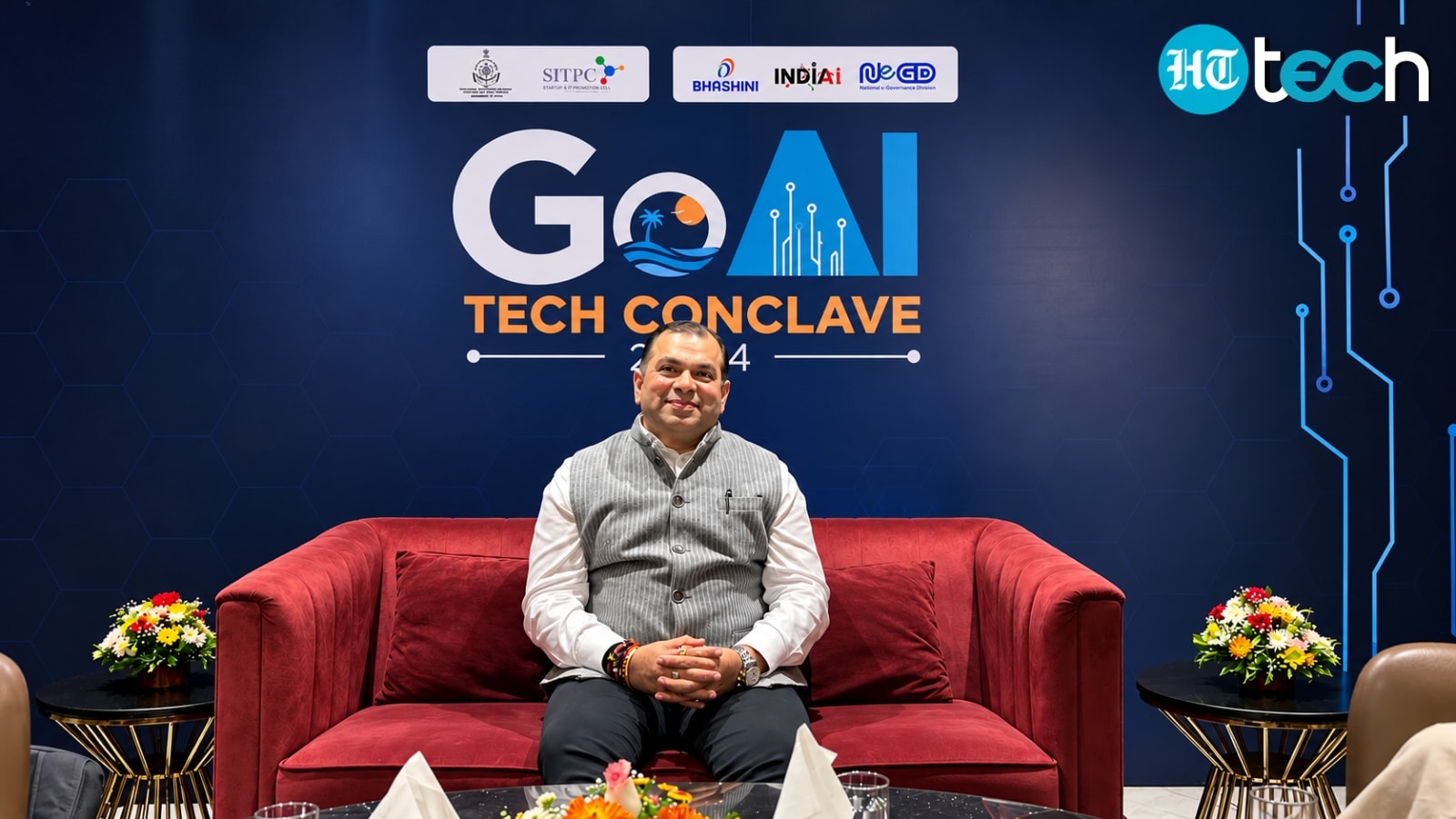
“As far as citizen service centre is concerned, centric services are concerned, if they are AI driven, the data is secured through our own systems. These are the third party data that we share. The data is owned by the government, so it is owned and secured by the government. So whether it's AI driven or the rest, end of the day, it's how we encrypt the data and keep it with ourselves. So the system that we have and the operation that we do, the data definitely encrypted and kept with us, not a shared data. Okay, so that is going to be stored locally.”
The minister also explained how the state intends to identify opportunities for AI in areas such as traffic management, tourism and public services. Rather than adopting AI first and then searching for ways to use it, the government wants to identify specific problems and determine where the technology can make a difference.
Khaunte said government departments had submitted around 99 problem statements covering areas such as tourism technology, healthcare, agriculture, disaster management, solid waste management and climate change.
Initiatives such as the Goa Open Innovation Challenge and the newly launched hackathon are intended to bring colleges, startups and industry participants into the process. They will be encouraged to develop solutions that address these challenges.
The minister said this approach could also create business opportunities for startups. If a startup develops a solution to a problem faced by a government department, it could potentially turn that solution into a business opportunity, while the department could source the technology it needs from the startup.
Through its AI policy, infrastructure plans and innovation challenges, Goa aims to build an ecosystem in which AI adoption is tied to practical public needs, workforce development and responsible use of the technology.


