
 E-Paper



Life beyond Earth: NASA's Webb Telescope detects CO2 on surface of Jupiter's Moon Europa
NASA discovers carbon dioxide on Jupiter's moon Europa, suggesting its underground ocean may contain carbon, an essential element for life.

 Prefer HTon Google


Astronomers, using the James Webb Space Telescope, have discovered carbon dioxide on Jupiter's moon Europa. This carbon dioxide most likely came from the water beneath Europa's icy surface, rather than from external sources like meteors. This finding suggests that Europa's underground ocean might contain carbon, an essential element for life.
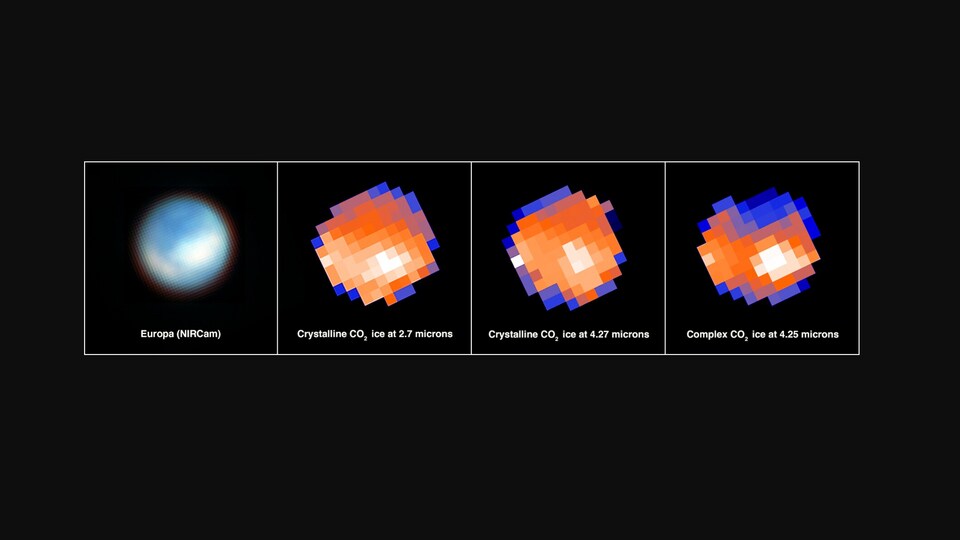
National Aeronautics and Space Administration (NASA) on Thursday shared these findings, revealing that carbon dioxide is most concentrated in an area called Tara Regio, which is a relatively young region with disrupted surface ice. This suggests that there may have been an exchange of materials between the ocean below and the icy surface.
Why is this discovery important?
Well, Europa is one of the few places in our solar system where life could exist. Scientists knew there was a salty ocean beneath its icy shell, but they weren't sure if it had the right chemicals for life, especially carbon.
Geronimo Villanueva of NASA’s Goddard Space Flight Center explained, “On Earth, life likes chemical diversity – the more diversity, the better. We’re carbon-based life. Understanding the chemistry of Europa’s ocean will help us determine whether it’s hostile to life as we know it, or if it might be a good place for life.”
Now, scientists believe they have proof that the carbon on Europa's surface comes from its ocean.
“Previous observations from the Hubble Space Telescope show evidence for ocean-derived salt in Tara Regio,” explained Trumbo. “Now we’re seeing that carbon dioxide is heavily concentrated there as well. We think this implies that the carbon probably has its ultimate origin in the internal ocean.”
Also, carbon dioxide doesn't stick around on Europa's surface for a long time, so they believe it likely came from the ocean relatively recently.
NASA plans to launch its Europa Clipper spacecraft in October 2024, which will make close flybys of Europa to investigate further if it could indeed support life.


