
 E-Paper



Delhi's anti-pollution drive collects ₹68.4 lakh in fines on Day 1, sends back 1,539 vehicles
To curb air pollution, the Delhi government has imposed restrictions, including a ban on non-Delhi vehicles below BS-VI emission standards till 31, 2027.

 Prefer HTon Google


Delhi enforcement drive under the winter action plan resulted in penalties and environmental compensation amounting to ₹68.4 lakh on its first day. Authorities inspected close to 15,000 vehicles at various checkpoints, sent back 1,539 vehicles at the city’s borders and issued 566 challans for failing to comply with Pollution Under Control Certificate (PUCC) requirements.
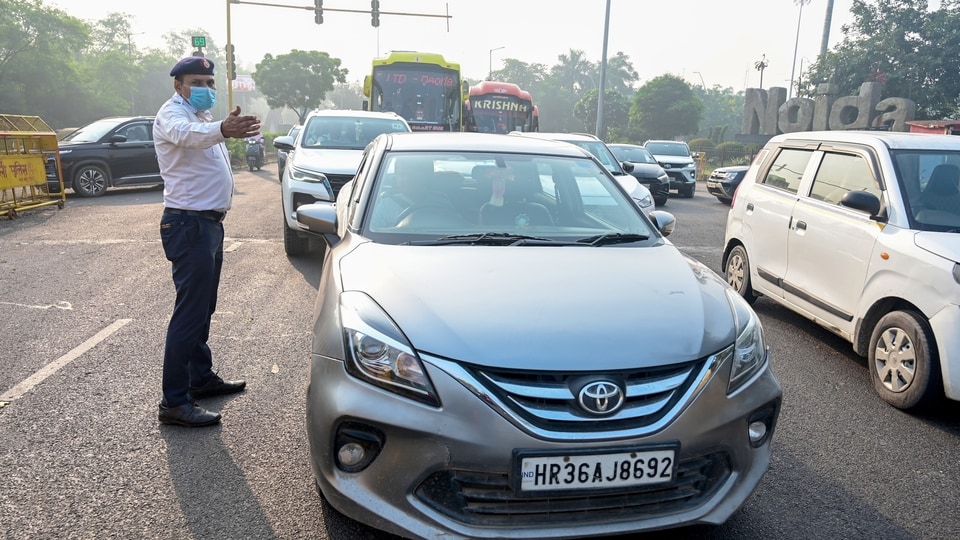
To curb air pollution, the Delhi government has imposed several restrictions, including a ban on non-Delhi vehicles that do not meet BS-VI emission standards from November 1, 2026, to January 31, 2027, and a directive prohibiting fuel stations from dispensing fuel to vehicles without a valid PUCC.
₹56.6 lakh in penalties for PUCC violations
Data released by officials up to 5 pm on Sunday showed that the largest share of the collection came from PUCC-related violations, attracting fines of ₹56.6 lakh, news agency PTI reported. Moreover, ₹2 lakh was imposed for breaching restrictions on vehicle entry into Delhi, while construction- and demolition-related violations accounted for ₹9.8 lakh in environmental compensation.
Deep Dive

As part of restrictions targeting non-Delhi-registered vehicles that do not meet BS-VI emission standards, the Delhi traffic police and transport department jointly inspected 14,930 vehicles. Of these, around 10.31 per cent were denied entry and directed to return at the border checkpoints.
Delhi traffic police face marginal staff shortage amid INDIA bloc’s rally
During a spot check by HT at three border points - the Delhi-Noida Direct (DND) Flyway, Chilla village, and the Kalindi Kunj border, a Delhi traffic police personnel said they faced a marginal staff shortage due to the INDIA bloc’s rally at Ramlila Maidan. However, they said the situation remained manageable.
ALSO READ: Traffic snarls, 'frustrated' public: Anti-pollution restrictions kick in as Delhi's AQI turns 'poor'
“In around five hours, we sent back around six vehicles which were non-Delhi registered and BS-IV. Many had only one vehicle and were headed to places where public transport does not provide last-mile connectivity. We suggested they take the metro as far as possible,” said Pankaj Rana, a Delhi traffic police personnel.
He further said around nine personnel were deployed at the Kalindi Kunj entry point, including two police officers, three transport department officials, and five traffic police personnel.
However, during HT’s nearly 40-minute visit, only two personnel were seen checking vehicles.
ALSO READ: Delhi air quality takes a nosedive ahead of Diwali, anti-pollution curbs kick in
Unis Saifi, a 31-year-old Delhi resident who works in Noida, said, “The bike that I own is BS-IV, and registered in Delhi. I had to go to Noida for some work, but was not sure if I would be allowed. So I took an Uber instead.”
Govt, private offices on 50 per cent wfh arrangement
Government and private offices are also required to limit physical attendance to 50 per cent from November 1 to January 31, with the remaining employees working from home. Essential and emergency services have been exempted.


